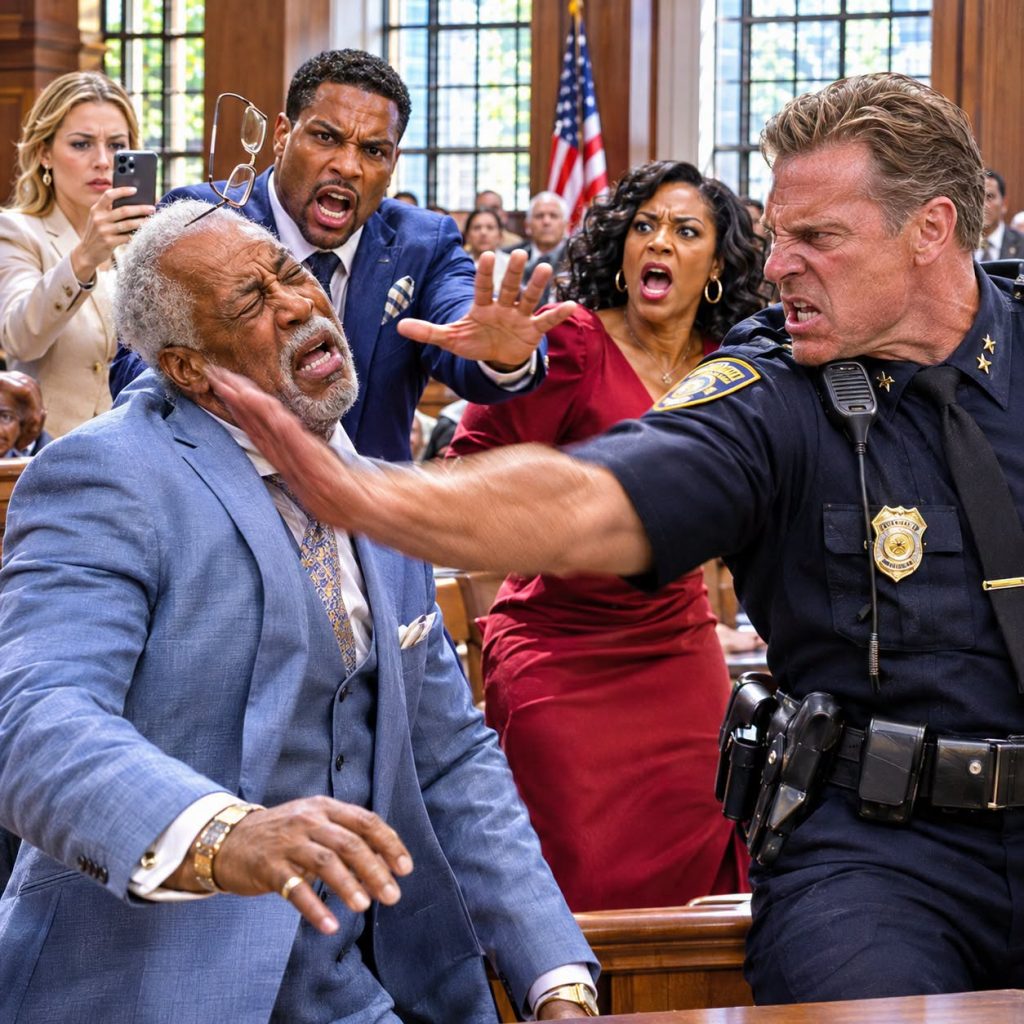
The rain had transformed into a relentless, icy lattice, blurring the rusted skeletal frames of the freight cars at the abandoned Bessemer rail depot into looming phantoms. My fingers were clamped around the cold plastic of my phone, the connection to Room Twelve of UAB Medical West humming with a hollow, distant static.
“Dad?” I shouted into the receiver, my voice cutting through the rising wind. “Dad, talk to me! Who’s in the room?”
There was no answer, only the muffled, heavy thud of a boot against wood, followed by a sharp, metallic rattle as something was dragged across the hospital floor. Then, the line went completely dead, replaced by the flat, monotonous tone of an automated disconnection.
Beside me, Ava Reed gasped, her hands flying to her mouth as the black police SUV forty yards away shifted into reverse, its tires churning up a violent spray of mud and gravel. The backup lights cast a blinding white glare across the wet tracks, illuminating the dark, tactical silhouette of the vehicle as it began to pivot, cutting off any possibility of retreat.
“They’re coming back to finish it,” Ava whispered, her voice cracking into a hyperventilating sob. “Mr. Lennox, they know we have the file. They aren’t going to let us leave Jefferson County alive.”
I pocketed my phone with deliberate precision. The panic that had threatened to unravel me in the federal building back in Atlanta had completely evaporated, replaced by a cold, razor-sharp focus born of absolute fury. This wasn’t a corporate fraud case where white-collar criminals hid behind accountants and shell companies; this was raw, unchecked municipal thuggery operating under the color of law, and they had just made the fatal mistake of crossing state lines and federal jurisdiction by threatening my family inside a secure medical facility.
“Get back in your car, lock the doors, and keep your head down,” I instructed, my tone leaving no room for argument. “Whatever happens, do not roll down that window.”
“What are you going to do?” she cried, her eyes wide with terror in the strobe of the approaching headlights.
“I’m going to make sure they realize they’re no longer playing by Bessemer rules,” I said.
I didn’t run. I walked deliberately out from the shelter of the silver sedan, stepping directly into the path of the oncoming SUV. The heavy V8 engine roared, its exhaust pipe spitting thick black smoke into the damp night air as it accelerated straight toward me, the driver clearly banking on the terror of an impending impact to break my nerve. At the last possible second, I didn’t flinch; instead, I reached inside my coat, flicked open my leather credential folder so that the golden Department of Justice seal caught the glare of the high-beams, and raised my hand in a crisp, unyielding halt gesture.
The SUV’s antilock brakes shrieked with a deafening, metallic wail, throwing a cascade of gravel and muddy water across my shoes as it skidded to a dead stop barely three feet from my knees.
The driver’s side door flung open with explosive force. Two armed patrolmen, their faces obscured by tactical face shields and rain-slicked hoods, vaulted out of the cab, their hands instantly dropping to the holstered sidearms on their heavy duty belts.
“Step away from the vehicle! Federal or no federal, you’re trespassing on active municipal property!” one of them barked, his voice trembling slightly with adrenaline and misplaced authority. “Hands on your head! Do it now!”
“You’re a patrolman out of precinct three, aren’t you?” I asked, my voice cutting through the downpour like a scalpel, completely ignoring their drawn weapons. I took a slow, deliberate step closer, letting the dim amber glow of the rail yard’s dying mercury vapor lamps hit my face. “Do you know who signed the federal arrest warrant for Lieutenant Knox Sullivan twenty minutes ago? The same United States Attorney General who oversees every single federal funding grant flowing into Jefferson County. Every cruiser, every tactical vest, every gallon of gas in your tank is federally subsidized. And right now, you are actively assisting in the unlawful detention and intimidation of a federal witness in a civil rights conspiracy.”
The two patrolmen exchanged a panicked, fleeting glance. The iron-clad certainty in their posture began to fracture. Down here, badges usually meant immunity, but the word federal grant audit carried a terrifying, career-ending weight that no local judge could protect them from.
Before they could stammer a response, a sharp crackle cut through the static of the nearest patrolman’s shoulder radio.
“Unit Four, Unit Seven, status report. What is your 20? Dispatch is receiving an incoming priority secure ping from the Federal Bureau of Investigation Birmingham field office. They are demanding an immediate open line to Courtroom Two and the medical annex. What is your position?”
The patrolman closest to me swallowed hard, his hand sliding away from his holster as if the weapon had suddenly turned white-hot. He looked from my gold badge to the silver sedan where Ava sat frozen, and then back down the wet asphalt toward the county road.
“We were… we were just securing the perimeter, sir,” the officer muttered, his bravado entirely evaporated. “Standard protocol for an unsecured industrial zone.”
“Your protocol just ended,” I said coldly, stepping past them without breaking stride. “Get back in your truck, turn around, and drive back to the precinct. If I find out that a single hair on my father’s head was touched while you were playing enforcers for Judge Vance, I won’t just indict Sullivan. I’ll dismantle the entire municipal bench brick by brick.”
Without another word, they scrambled back into the SUV, threw it into reverse, and tore out of the gravel lot, their tail-lights fading into the misty sheets of rain.





