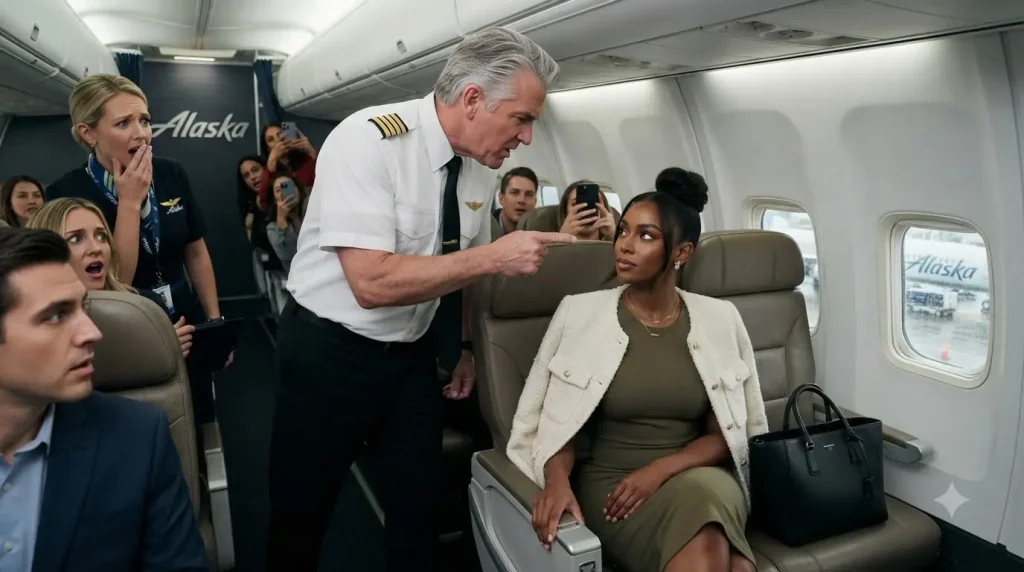
Once the gold standard of transcontinental travel, the carrier had suffered three years of disastrous management. An ill-advised international expansion into South American routes, an IT migration that crashed their reservations database for forty-eight hours over Thanksgiving, and an entrenched, self-satisfied corporate culture had turned Northstar into a punchline on Wall Street. The stock had cratered sixty percent. The board had panicked.
Maya had stepped into the breach with an offer that was both a rescue and an execution: two point one billion in fresh equity, absolute restructuring power, and the immediate resignation of the executive committee.
The transaction was embargoed. The press release was timed for 11:00 a.m. Eastern, deliberately calibrated to drop two minutes after the opening bell on the New York Stock Exchange. Until then, Northstar’s sixty thousand employees believed they were still governed by an interim committee of lame-duck trustees.
Maya had packed her tablet into her leather briefcase and put on her coat.
“You’re out of your mind,” Marcus Cole, Vanguard’s chief operating officer, had said, massaging his red-rimmed eyes as he watched her slide her boarding pass into her coat pocket. Marcus was forty-five, brilliant, neurotic, and had worked beside Maya since her third engine deal. “We have a Gulfstream G650 sitting on the Signature ramp right now. It has a shower, an espresso bar, and a crew that will address you as ‘Ma’am’ until their teeth fall out. Why are you getting on a commercial widebody?”
“Because,” Maya had said, clicking her briefcase shut, “the Gulfstream doesn’t smell like broken galley latrines and indifference.”
“You own the company, Maya. You don’t need to inspect the cabin like a secret shopper from corporate.”
“I don’t own a company, Marcus. I own twenty-eight thousand employees who have spent four years watching their leadership steal from the pension fund while customer satisfaction scores sank below the postal service. If I arrive at headquarters in Queens stepping out of a private jet, I’m just another raider coming to strip their contracts.” She had looked at him over the rim of her glasses. “I want to see what seven hundred dollars buys a stranger at Gate D14.”
“You’re flying first class,” Marcus pointed out. “That’s not seven hundred dollars. That’s twenty-four hundred.”
“Even better,” she said. “Let’s see if they earn it.”
General Counsel Elaine Porter had looked up from her laptop, her expression sour. “The press embargo holds until eleven. If you get into an argument over an overhead bin and somebody recognizes you, the SEC will spend the next three months crawling through our pre-market communications. Please. Just put your headphones on and sleep.”
“I don’t get into arguments,” Maya had said.
The trouble had started not on the aircraft, but at the podium.
The concourse had been humming with the chaotic, wet energy of a rainy Seattle morning: business travelers trailing rolling luggage like obedient dogs, damp umbrellas leaving trails across the linoleum, the smell of burnt dark roast hanging over the boarding queues. Gate D14 had been a bottleneck of confusion.
Maya had been standing five feet back from the priority lane, scrolling through a fleet maintenance audit on her tablet, when a dry, impatient cough sounded directly behind her ear.
She had ignored it.
The cough came again, sharp and theatrical.
Maya turned her head.
The man standing there was roughly fifty-five, wearing a tailored navy blazer with brass buttons, gray pleated slacks, and a pair of split-toe loafers that had been shined with military aggression. He had a round, jowly face that had seen plenty of sun on golf courses, a thick silver watch with three sub-dials, and a matching monogrammed leather duffel slung over his shoulder.
He looked at Maya, then pointed a gold-ringed finger toward the mass of people clustered thirty yards away under the sign for Group 4.
“The back of the plane is over there,” he said. His voice had that flat, breezy condescension that did not anticipate debate.
Maya glanced at the sign directly above her head: PRIORITY / FIRST CLASS.
Then she looked back at him. “Pardon?”
“Main cabin,” he repeated, slower this time, as if speaking through a language barrier. “They haven’t called general boarding yet. You’re blocking the lane for the people who are in first.”
Maya held his eyes for two seconds. Her expression did not shift. “I’m aware of what lane this is.”
The man let out a thin, patronizing chuckle, turning his head as if looking for an imaginary compatriot to share the joke. “Look, sweetheart, I’m just trying to save you the walk of shame when the scanner buzzes red. It slows the whole line down.”
“I’ll manage the risk,” Maya said, and turned back to her tablet.
She felt his glare burning into the back of her neck, hot and indignant. Behind them, the speaker crackled, and the gate agent—a woman in her late forties whose plastic badge identified her as Brenda—announced the pre-boarding of Diamond tier members and first-class passengers.
Maya stepped forward. The man in the brass buttons instantly lunged to cut the corner, trying to shoulder his way in front of her with the casual physical entitlement of someone used to cabs yielding to him. Maya did not give ground; she held her line with the quiet stability of an iron bollard. His sleeve brushed hers, his loafers clicked sharply on the carpet, and he was forced to drop back half a step, scowling darkly.
At the counter, Maya extended her smartphone toward the optical scanner.
The glass surface beeped. A bright green checkmark flared on the monitor. 2A – WASHINGTON/M.
Brenda, the gate agent, didn’t look at the screen. She looked at Maya.
Her eyes drifted from Maya’s fresh white sneakers up the length of the olive dress to the simple boucle jacket. Brenda’s mouth tightened into an instinctive, sour pucker, the institutional reflex of an underpaid gatekeeper who had developed an acute, arbitrary sense of who belonged where.





