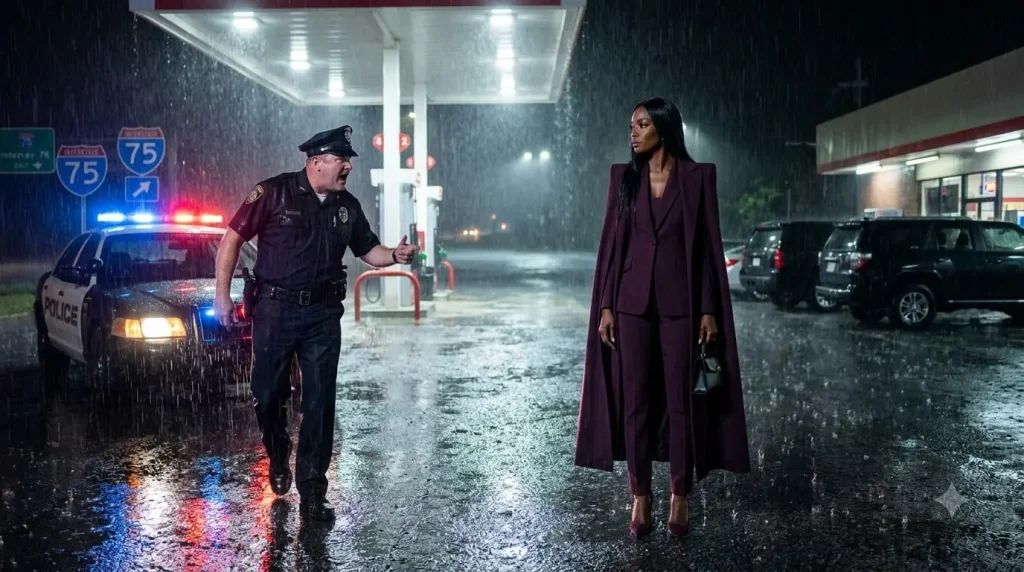
There was a Hispanic framing contractor from Valdosta whose crew payroll of twelve thousand two hundred dollars was seized at midnight because he couldn’t produce W-2 forms on the shoulder of the highway; only four thousand made it into the court docket. There was an elderly Vietnamese nail-salon owner driving north to buy wholesale equipment in Duluth who lost nine thousand dollars and had her Lexus impounded for forty days at Price Brothers Towing & Recovery—a private lot half-owned by Lieutenant Owen Price’s younger brother, which charged ninety-five dollars a day in cash storage fees. There was a Howard University pre-med student driving his father’s new Mercedes back to D.C. who was held in a roadside cage for three hours until he signed over eighteen hundred dollars in tuition reimbursement money.
“They didn’t rob me because I looked like a criminal, Agent Brooks,” a fifty-year-old Tampa antique dealer told Nia across her kitchen table in July, her hands still shaking at the memory of Wade Keller’s flashlight in her face. “They robbed me because I was a Black woman driving a nice car alone at night three hundred miles from home. They knew I had enough money in my purse to be worth taking, and they knew it would cost me ten thousand dollars in legal fees to come back to a county where the judge eats breakfast with the police captain just to fight for four thousand.“
That was how Operation Lantern was born.
They had baited the corridor with precisely what the machine was calibrated to chew up: an expensive, clean SUV registered to a discreet consulting LLC, driven solo late at night by an impeccably dressed Black woman carrying a locked currency case visible from the passenger glass. For three Tuesday nights in a row, Nia had stopped at Exit 41, bought fuel or sparkling water, and driven away untouched while Keller worked crashes or domestic calls elsewhere in the county.
Tonight, on night four, the trap had snapped shut.
Except as Nia sat at two-seventeen in the morning inside a sterile third-floor conference room at the FBI’s temporary command post in Macon, holding a cold compress of sterile gel against the blistered right side of her face while an agency physician checked her corneal abrasion with an ophthalmoscope, she knew the trap had worked backwards.
“Hold still for three more seconds, Nia,” the doctor murmured, shining the low-intensity blue slit-lamp across her right pupil. “You were lucky you turned your head on the first burst. Another half-second of direct hydraulic pressure at three feet and you’d be looking at permanent stromal scarring. As it is, you shouldn’t be staring at a monitor for twenty-four hours.“
“Tell her that louder, Doc,” Marcus Hale said from the doorway, his wet raid jacket replaced by a wrinkled white dress shirt with the sleeves rolled to the elbows. “She’s already threatened to pull rank on two tech agents if they didn’t patch the video monitor into this room.“
“You outrank me, Marcus,” Nia said dryly, keeping her chin steady on the doctor’s rest. “I only threatened to subpoena their workstation logs for slowing down a civil-rights preservation review.“
The doctor sighed, snapping off his scope and handing her a bottle of preservative-free anesthetic drops. “Two drops every hour. If I catch you squinting at single-spaced spreadsheets before noon, I’m filing a medical stand-down with the SAC.“
The moment the physician closed the door behind him, Rebecca Sloan slipped in from the adjacent war room, carrying three cardboard cups of black coffee and a yellow legal pad covered in tight, rapid shorthand. Her rain-soaked trench coat was gone, and her dark hair was pinned back with a ballpoint pen.
“Where are Keller and Price?” Nia asked, taking a cup with her free hand while holding the cooling pack to her cheekbone.
“Locked in separate holding cells at the U.S. Marshals facility downstairs,” Rebecca said, dropping into the swivel chair beside the forty-inch wall monitor. “Price demanded an attorney the second his cuffs came off and hasn’t uttered a syllable since. Keller spent forty minutes swearing he thought you were a Macon courier before his union rep arrived and told him to shut up.“
“And Captain Vance?“
Marcus grimaced, plugging a dark blue encrypted flash drive into the conference table dock. “His unit, 302, was found parked behind the dumpster at a twenty-four-hour pharmacy two miles east of the McKetric courthouse at zero-one-ten. Engine cold, body camera missing from the dashboard cradle, department phone wiped to factory settings and left on the center console. A witness across the street saw a white Ford F-250 pick him up at twelve-fifteen.“
“He’s running,” Nia said quietly. “A thirty-year police captain doesn’t abandon his shift commander, his patrol car, and his pension over a civil-rights excessive-force beef on a patrolman. You run like that when you think the feds just found a body—or a ledger that sends you away for thirty years.“
“Wait until you hear the pre-event buffer from Keller’s camera,” Marcus said.
He tapped the spacebar on the laptop. The forty-inch monitor flickered to life, displaying the timestamped metadata from the federal vendor mirror: 23:37:12 EST — MCPD-214.
On the screen, the view showed the dark, cramped interior of Keller’s Dodge Charger three minutes before he had pulled under the canopy at Laam’s Gas & Go. The cruiser was idling in the gravel pull-off across the two-lane highway, its wipers sweeping rhythmically across the downpour. Because Keller had already flipped his rear deck amber switch into standby, the Axon camera on his chest was actively capturing both video and cabin audio—something Keller clearly hadn’t realized, believing the audio only kicked in when he double-tapped the center activation button on foot.
Resting in the plastic cup holder beside his tactical shotgun lock was an unbranded black prepaid flip phone—not his county-issued Motorola, which lay dark on the passenger seat. The burner phone was on speaker.





