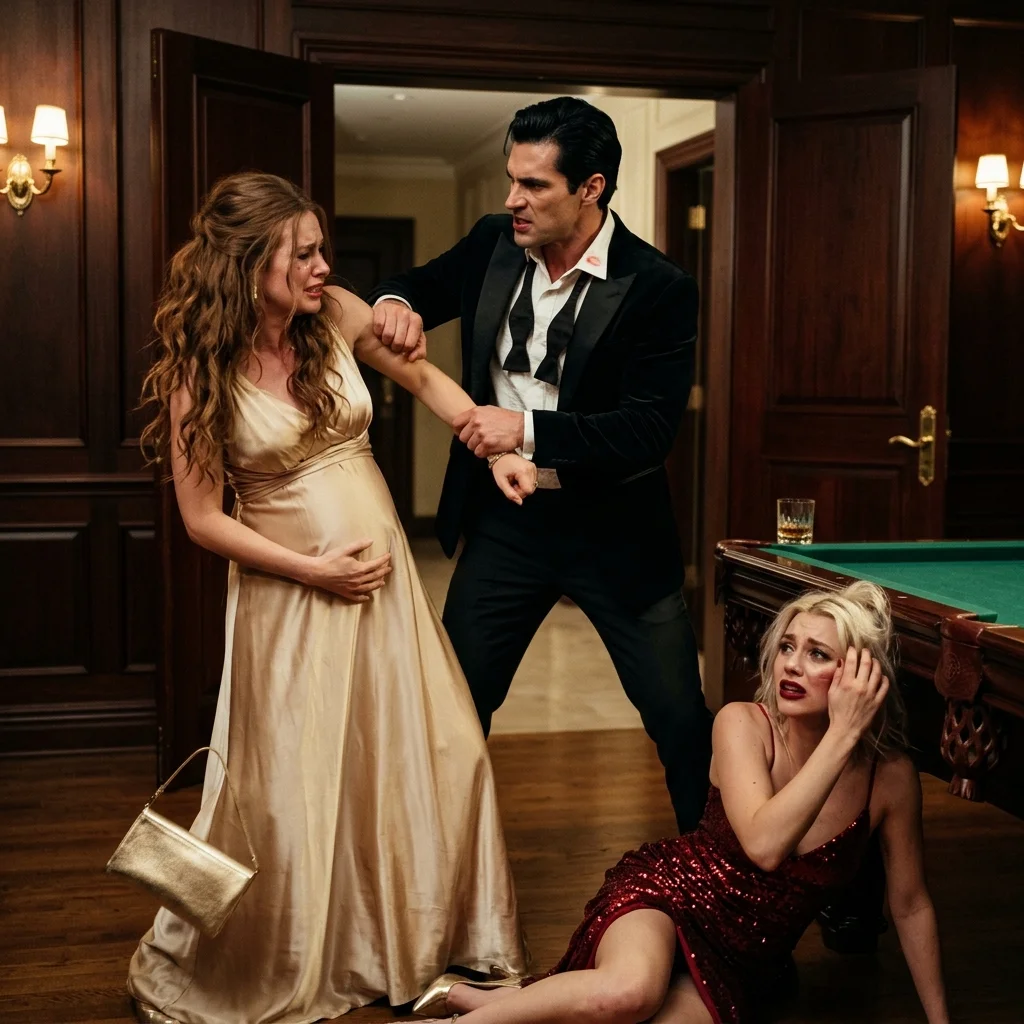
Vivian pressed her palm against the taut, emerald-green silk of her maternity gown, right where a tiny heel was wedged stubbornly beneath her lower right rib.
Easy, little bird, she thought, tracing the outline of the baby’s foot through the fabric until the pressure shifted. Just twenty more minutes until the champagne toast, and then nobody will notice if we go to bed.
Her obstetrician had told Matteo on Tuesday that Vivian shouldn’t be on her feet for more than thirty minutes at a stretch—her blood pressure had been creeping upward since Thanksgiving, a quiet, ticking warning sign of early preeclampsia—yet Matteo had insisted she make an appearance for the first two hours of the New Year’s Eve gala. When the head of the Draven syndicate doesn’t show his wife at the winter table, he had murmured that evening while fastening a three-strand pearl choker around her throat with hands that smelled of sandalwood and gun oil, the capos start wondering if the house is weak. Just stand by the fire for an hour, Viv. Let them see the heir.
She had stood by the fire for ninety minutes, smiling until her cheekbones cramped at federal judges whose campaigns Matteo financed through Cayman shell companies, at union bosses from the Newark shipping terminals, and at Matteo’s underboss, Luca Rossini, who watched every entrance and exit with the flat, lidless eyes of a nocturnal reptile. Around ten-thirty, Matteo had excused himself to take a “private call from the port authority” in the east wing, and Vivian had slipped up the servant’s stair to take her heels off in the shadowy quiet of the gallery.
Only Matteo hadn’t come back. And it was now eleven-forty-two.
Vivian eased her swollen feet back into the butter-soft silver leather flats she had brought down from her dressing room—even those pinched like iron bands now—and pushed herself upright, using the mahogany windowsill for leverage. Her lower back gave a dull, familiar throb. She smoothed the emerald silk over her belly, picked up her beaded evening clutch, and walked down the carpeted corridor of the east wing toward Matteo’s private study.
The second floor of the Draven estate was another world entirely from the glittering circus below. Lined with dark walnut wainscoting and oil portraits of forgotten railroad barons whose great-grandchildren had sold the mansion to Matteo’s father in the eighties to pay off gambling debts, the hallway was hushed, smelling of beeswax polish and winter draft. The thick Persian runner absorbed the sound of Vivian’s flats completely.
She was twenty paces from the study when she realized the strip of floor beneath the study door was dark. Instead, a warm amber bar of light spilled across the carpet from the doorway three rooms closer—the Georgian billiard room, which had been closed off for renovations since November.
And through that two-inch gap in the heavy oak door came a laugh.
Vivian’s heels froze in the pile of the rug.
She knew that laugh. She had heard it through the thin drywall of a shared bedroom in a cramped two-family house in Queens when she was twelve and her younger sister was ten; she had heard it the night Camille wore Vivian’s graduation dress without asking and spilled red wine down the bodice; she had heard it six months ago when Camille showed up at the front gates of Ravenscroft with two battered suitcases and a bruised cheekbone, sobbing that her fiancé in Miami had cleaned out their joint checking account and left her with forty thousand dollars in gambling markers to a South Beach bookie.
It wasn’t Camille’s nervous laugh, and it wasn’t the bright, helpless giggle she used around men when she wanted them to pick up a dinner check. It was a low, throaty, purring sound—the sound Camille made when she had her teeth sunk into something that belonged to somebody else.
“You shouldn’t,” Camille’s voice drifted through the cracked oak door, lazy and thick with expensive champagne. There wasn’t a grain of fear in the syllables. “Luca is right at the bottom of the stairs, Matt. Anyone could walk up to use the powder room.”
“Nobody comes into the east wing without crossing the gallery camera,” a second voice answered.
Vivian’s right hand went utterly motionless against the curve of her stomach.
It was Matteo. His baritone—usually so clipped, cold, and measured that grown men in the waste-management cartels sweated through their silk shirts waiting for him to finish a sentence—was rough, dropped into the intimate, raspy register Vivian hadn’t heard in her own bedroom since the second trimester began.
“And what about my sister?” Camille murmured. There was the soft, dry rustle of heavy silk shifting against wool, followed by the faint clink of crystal set down on mahogany. “She was looking for you by the raw bar an hour ago.”
“She’s upstairs,” Matteo said, and the casual dismissal in the words hit Vivian harder than a backhand across the mouth. “She’s always upstairs now. Resting her ankles or organizing that damn nursery. Come here.”
A roaring, high-pitched static filled Vivian’s ears, drowning out the muffled bass of the jazz band two floors down. Every sensible instinct she possessed—the survival instincts of an architectural conservator who had spent four years married to a man whose name appeared in sealed FBI RICO affidavits—told her to turn around, walk back to the gallery, and keep her face blank until dawn.
Her feet didn’t listen.
She stepped forward and pushed the unlatched oak door three inches wider with the tips of her fingers.
The billiard room was lit only by the dying orange embers in the limestone hearth and the green-shaded brass lamp hanging low over the nineteenth-century Brunswick pool table.
Matteo was leaning back against the carved mahogany rail of the table. He had undone the black satin bow tie at his throat; the top two mother-of-pearl studs of his custom Brioni dress shirt were unfastened, exposing the dark ink of the Saint Michael tattoo curving over his collarbone. A tumbler of neat Macallan sat forgotten on the green baize beside his hip.





