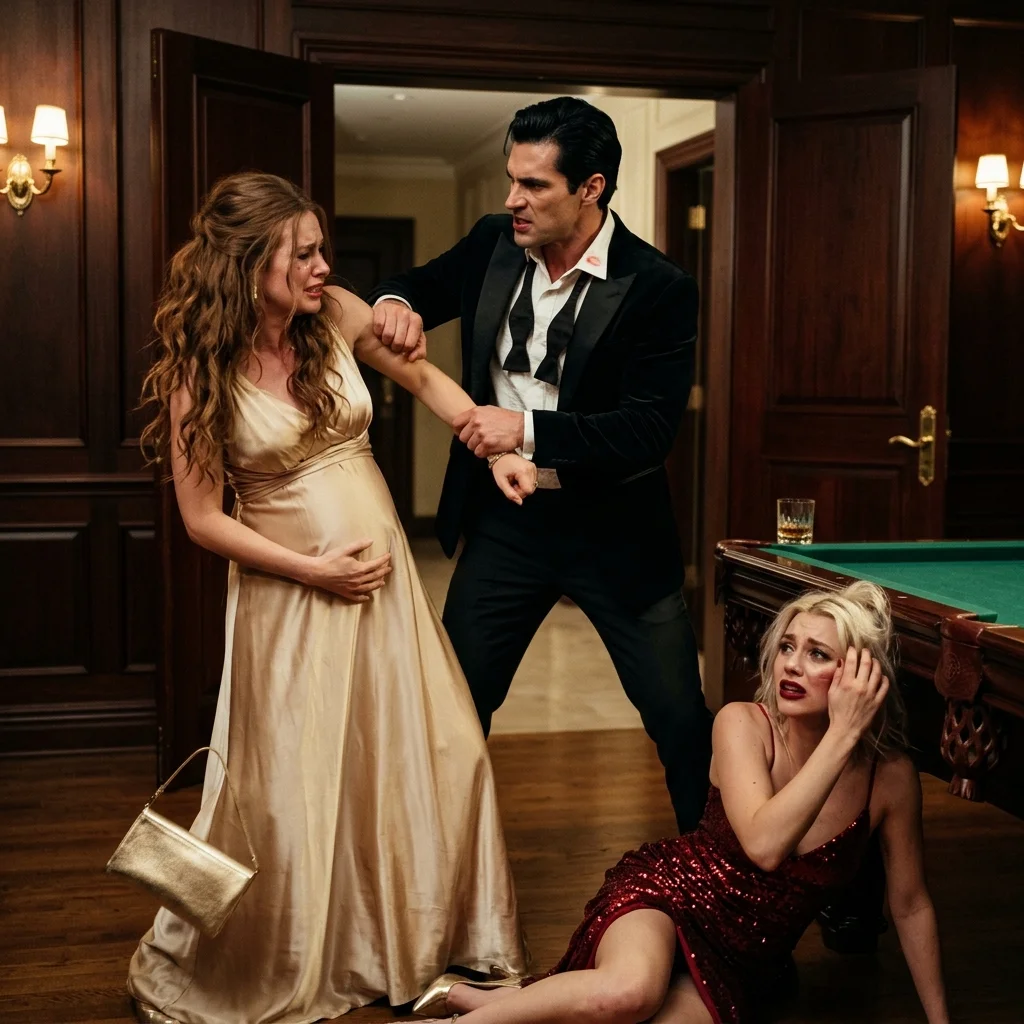
Her father hadn’t suffered a second, inexplicable stroke in his sleep two years ago that left him nonverbal and dependent on Matteo’s private physicians, as Dr. Vance had told her with such solemn sympathy. Her father—a retired civil structural inspector for the New York Department of Buildings—had recognized the soil-boring serial numbers on a set of Red Hook terminal blueprints Matteo had carelessly left on the library table during a Sunday visit, realizing that Matteo was using condemned, toxic-sludge landfill pilings to build a sixty-million-dollar municipal housing project while pocketing the environmental remediation funds. Two days before Thomas Hale was scheduled to meet with a friend in the State Inspector General’s office, a nurse on Dr. Vance’s night shift had introduced forty units of unprescribed potassium chloride and an anticonvulsant into his saline drip, inducing a permanent hypoxic brain injury that kept the old man silent—and kept Vivian bound to Matteo’s checkbook forever out of gratitude to the man who was “saving” her father’s life.
That night in April, Vivian had gone upstairs into the master bathroom, vomited into the porcelain basin while running the cold tap at full blast so Matteo wouldn’t hear her, and washed her face.
She hadn’t confronted him. She was an architectural historian; she knew what happened to fragile structures when they collided with wrecking balls before their foundations were braced.
From that night forward, every time she went into Manhattan for her prenatal appointments or charity committee luncheons with two of Matteo’s bodyguards idling at the curb, Vivian had operated like a prisoner digging a tunnel with a silver teaspoon.
Now, kneeling on the cedar floor of her closet while the bass of the ballroom band vibrated through the joists below, Vivian slipped a tortoiseshell hairpin into the tiny gap between the baseboard molding and the third cedar plank beneath the winter coat rack.
She pried upward. The plank—whose tongue-and-groove edge she had carefully shaved down with an emery board in June and rubbed with candle wax so it wouldn’t squeak—lifted out without a sound.
From the dark cavity between the nineteenth-century subfloor joists, Vivian pulled out a compact, charcoal-gray waterproof nylon dry-bag, no larger than a loaf of bread, and an old, scuffed canvas gym duffel folded flat around a pair of thick wool socks, fleece-lined leggings, a dark navy maternity parka she had bought for twelve dollars in cash at a Goodwill near her obstetrician’s office, and a pair of broken-in New Balance walking sneakers.
She unzipped the waterproof dry-bag.
Inside sat eighty-four thousand dollars in worn, non-sequential fifties and hundreds—skimmed three and four hundred dollars at a time over thirty-two weeks from household petty-cash envelopes, altered antique-restoration invoices, and returned designer garments that she had refunded for cash through a sympathetic clerk at Saks while the bodyguards waited by the Lexington Avenue doors.
Beside the cash sat a pre-paid, never-activated Nokia burner phone wrapped in three layers of heavy-duty aluminum foil to block passive cell-tower pinging; two counterfeit Canadian driver’s licenses and a secondary birth certificate in the name of Clara Elena Mercer that she had purchased in August through an old university colleague who now worked in document restoration in Montreal; and finally, two matte-black two-terabyte SanDisk solid-state thumb drives.
She had told herself, every single Tuesday afternoon when she tucked another folded hundred-dollar bill or another copied ledger partition beneath that cedar plank, that she was just building an insurance policy. She had told herself she was waiting until the baby was born, until her ankles stopped swelling, until her father was stronger.
She had been lying to herself for eight months. She had been waiting for the match that would burn the bridge behind her.
Downstairs in the ballroom, a massive, synchronized roar shook the crystal chandeliers as the band cut the music and three hundred voices began the final ten-second chant toward the new year.
“TEN!”
Working with ruthless speed, Vivian unzipped the side of her emerald silk gown, stepped out of it, and pulled the fleece-lined leggings and a dark gray turtleneck sweater over her belly. Her hands were completely steady. She laced the worn sneakers loosely enough to accommodate her swollen ankles, then strapped the waterproof dry-bag Containing the cash and the two SSD drives directly against her upper ribs using an elastic maternity support belt, hidden entirely beneath the navy parka.
“NINE! EIGHT!”
She stepped out of the closet into the dim bedroom.
On her nightstand sat her everyday iPhone 16 Pro and her diamond-bezel Cartier watch—both of which she knew were synced to Matteo’s corporate Find My network and embedded with secondary GPS tags. She left them sitting right beside her water glass.
Then she reached down to her left hand. Because her fingers were swollen from the pregnancy, the four-carat cushion-cut Harry Winston diamond and the platinum wedding band resisted at the knuckle. She didn’t use lotion; she gritted her teeth and pulled the rings over the bruised skin until they slid free, leaving a deep, pale indentation on her flesh.
“SEVEN! SIX! FIVE!”
Vivian walked to the side of the massive four-poster bed—Matteo’s side, where the silk coverlet was still turned down and smelled faintly of his sandalwood cologne—and placed the two rings dead center on his linen pillow.
Right beside the rings, she laid the antique art-deco sapphire bracelet that Camille had dropped on the billiard room floor when she fled—the bracelet Vivian had quietly nudged into the hem of her skirt before running up the hall, now smeared with a tiny trace of billiard chalk.
“FOUR! THREE! TWO!”
Vivian walked back into the cedar closet, pulled the pocket door shut behind her, and stepped to the rear wall behind the long rack of Matteo’s winter cashmere overcoats.
Ravenscroft Hall had been built in 1894 by a paranoid coal magnate who hated seeing his domestic staff in the main corridors. Four years ago, during her first month as Matteo’s bride, Vivian had spent three weeks cataloging the estate’s original architectural linen drawings in the local historical society archives—blueprints that predated the 1986 security renovation by ninety years and were missing from the digital CAD files Luca Rossini’s security contractors used.





