The news spread like fire catching wind. By the next morning, Holston shook. Citizens gathered outside the police department, many holding photos of Brooks mounted on white poster boards. They told each other stories that had been locked inside silence for years—stories of Bravo Unit shouting, beating, taking money, coercing. The anger long compressed beneath layers of fear now erupted, no longer hidden.
The station gates had to be closed to keep the crowd from pouring inside, but even then, their voices echoed through every hallway: “Brooks deserves justice!”
Bravo Unit was ordered to halt all patrol operations until the DOJ completed its preliminary investigation. This suspension had never happened in Holston’s history. When Hale heard the announcement, he slammed his fist into the conference room window so hard the glass cracked wide, shards scattering onto the stone floor.
Maddox stepped back, careful not to let Hale see the fear flickering across his face.
“They want a war,” Hale breathed hard, rage twisting his voice. “I’ll show them what war means.”
The statement made two officers nearby exchange glances, both understanding that Hale was slipping out of control.
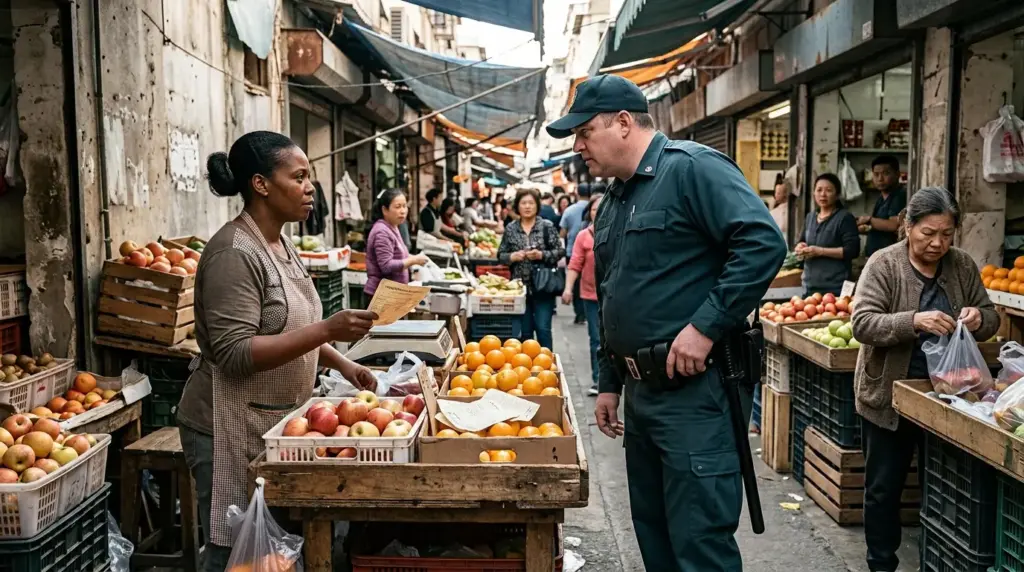
Across the city, Maya returned to Harborline Market. For the first time, people lifted their heads when a patrol car drove past; they didn’t lower their gaze or dodge away. The roll of tires over the pavement seemed to have lost its authority before eyes that were no longer afraid.
Ruth saw Maya and moved toward her, placing a hand on her shoulder. “You saw it?” Ruth pointed toward the corner of the market where Brooks once stood selling goods. “People aren’t silent anymore.”
Maya looked around and felt the shift—a fracture running along the ground, opening a path for light to enter.
Naomi Carter posted a new article on her independent news site. The headline contained only one sentence: Holston’s wall of silence is cracking. The article spread rapidly: photos of Brooks, the clip Omar saved, and the images of Maya being assaulted were stitched together and circulated across every platform. Beneath the post, thousands of comments demanded DOJ prosecution, demanded Holston’s resignation, demanded Bravo Unit be dissolved.
Maya read the article inside the FBI conference room. She hadn’t even put the phone down before Royce walked in.
“You did well,” he said, closing the door. “But this is only the first layer. They’re going to react violently. Bravo Unit has a lot more to lose before they sit still.”
Maya gave a slight nod, feeling the weight press against her ribs. She knew Royce wasn’t exaggerating: when a system is cornered, it fights with whatever it has left.
That night, Maya entered her office to gather documents for the morning briefing. The warm yellow light reflected off the wooden table, illuminating stacks of files filled with dense notes. She shut her laptop, took a long breath, and was just about to leave the building when a young agent rushed in, breathless.
“We have a problem,” he said, dropping a packet of papers onto the desk. “Bravo Unit refuses to cooperate. And Hale slipped out of monitoring.”
Maya’s heart tightened like a cord had been yanked hard around it. “When?” she asked, her voice dropping.
“About an hour ago. He turned off his tracker and his phone. No one knows where he’s going.”
In Maya’s mind, Brooks’s face surfaced, then Omar’s USB, Ali’s recording, and Hale’s furious eyand Hale’s furious eyes in the conference room the day before. When a man like him disappears from surveillance, it always means he’s preparing for something desperate.
Maya left the office, quickening her steps down the concrete stairs. She had barely opened her car door when her phone buzzed inside her coat pocket. A text message from an unknown number glowed on the screen, the words sharp as a blade:
Don’t go home. Tonight, the hunter hunts.
She froze, night wind sweeping across her shoulders, carrying dust and the faint echo of distant sirens. “Hunter” was Hale’s old nickname from his days in fugitive tracking, one he hadn’t used in years—and yet someone had just used it to warn her.
On the morning the federal hearing opened, Holston seemed to wear a different shade of itself. Camera lights blazed along the courthouse steps, and media from everywhere streamed in. The early chill mixed with the murmur of a crowd standing shoulder-to-shoulder, lifting signs that read, “Justice for Brooks.” Some people wrapped scarves around their children; others held photos of Brooks against their chests as if letting go would once again place justice out of reach.
When Maya stepped out of the car, reporters called her name from every direction, but she walked past them in silence. Her eyes stayed fixed on the dark wooden courthouse doors where everything Holston had tried to hide for half a year would be forced into the open.
Royce walked beside her, slow and steady, keeping just enough distance so the reporters would not swarm her. “Focus on your testimony. Do not look at Hale too long,” he murmured, and Maya only nodded.
Inside the courtroom, the white light overhead cast down on every row of seats, creating the sense that every movement, every breath was under scrutiny. The DOJ opened with a sentence that made the entire room fall still as if frozen:
“This is not the case of one man. This is the case of an entire system.”
The words dropped heavy, like an indictment aimed at the entire power structure of Holston. The jurors leaned forward, and reporters bent even closer to their recorders.





