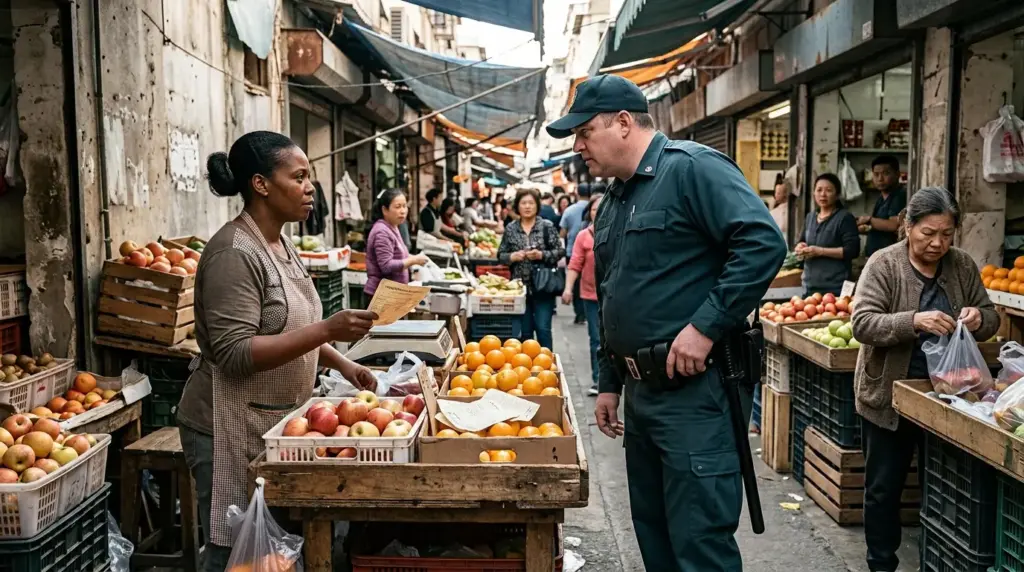
The Holston Police Department was immediately placed under special oversight. At headquarters, officers were ordered to surrender their badges, undergo procedural reviews, and have their records audited. Every action from now on had to pass through a federal committee. A large sign was posted in front of the main briefing room: All use of force procedures must be reported directly to the DOJ. No one dared complain; the silence filling the hallways was not one of obedience, it was one of shock.
Dempsey was stripped of his position that very afternoon. He walked out of the building with a face drained of color, looking like a man who had lost himself entirely. His silver hair was disheveled, his shoulders slumped, his eyes unfocused. As he stepped through the gate, he heard the public shouting words of anger he once believed he would never have to face. He paused for a heartbeat, then hurried away, as if standing any longer would allow their voices to tear him apart.
A young officer in the department watched the Bravo Unit plaque being removed. The metal scraped against the wall and hit the stone floor with a harsh thud, sounding like a funeral for a rotten era long overdue.
“It’s finally over,” he whispered.
But the colleague beside him stared emptily. “So, where do we go now? What do we do?”
No one answered. The collapse of Bravo Unit was not just the end of a group; it was the fall of an entire power structure they had relied on to exist.
Naomi Carter published a new article that same afternoon. The headline read: The Day Holston Looked in the Mirror. The piece instantly gained millions of shares—not just for its information, but because readers felt they were witnessing history. Naomi wrote: “A city cannot change in one night. But today, Holston decided it would no longer kneel to fear.” The comment section filled with gratitude, bitter memories, and lines like, “I’ve lived here for 20 years. It’s time.”
At the field office, Maya stood on the balcony overlooking the city. The late-day sun cast golden light over the streets that had long been weighed down by heaviness. She leaned on the railing and thought of Brooks, of Ruth’s tears, of Omar’s trembling hand as he offered the USB. Each of them had laid a stone on the path to this day, and Maya, trained to detach from emotion, felt a rare warmth rising in her chest. But Holston was no fairy tale, and the fall of an old power did not mean the darkness had vanished.
As Maya turned to head back inside the office, a young agent hurried toward her, face pale as if he had run through bad news. “An anonymous warning came in,” he said, handing her a slip of paper. “Hale’s loyalists… they won’t disappear this easily.”
Maya read the brief message—only a few words, but enough to chill the base of her neck: When the tree falls, the roots remain. She folded the paper, feeling each word like a warning rising from underground.
Night fell faster than usual, as though Holston wished to hide the wound that was trying to close. When Maya returned to her office, she found a black mail pouch placed neatly on her desk: no sender, no postage. She opened it carefully. Inside was a photograph—a photograph of her standing in Harborline Market on the first day she posed as a fruit vendor, shot from afar, blurry, but clear enough to capture every line of her posture, every small movement.
Maya froze. For a moment, the room felt colder. The photograph was not a simple threat; it was a statement. Someone had been watching her from the very beginning—someone patient enough, silent enough, close enough to record the moment she stepped into this fight.
Royce walked in and saw her expression shift. “What is it?” he asked.
he handed him the photo. Royce stared for a second, then exhaled sharply. “Not a civilian. This is targeted surveillance.”
Maya replied, her voice slow but steady, “He knew me before I ever knew him.”
Wind slammed against the window, lifting the curtain like a warning sweeping through the room. The collapse of Bravo Unit was only the surface; beneath it lay the remnants of an old power: Hale’s loyalists, the networks untouched by the DOJ, the roots still gripping the soil.
Morning rose over Harborline Market like a new breath. Sunlight spilled onto the old tarps overhead, but today they no longer looked as gray as they usually did. Voices filled the air—louder, steadier, stretching from the fish stalls to the vegetable stands, from the corner selling old electronics to the small parking lot at the end of the market. The noise was not chaos, but the sound of people relearning how to use their voices, something they had lost after months of fear.
As Maya walked through the crowd, she saw the change slipping into every gesture, every glance, every tentative but warmer nod. The market had come alive—not overnight, but through a long breath the community had been holding for far too long.
Ruth stepped out from behind her stall, silver hair swept to one side, her thin but nimble hands moving as if rearranging her life itself. She handed Maya a bag of carefully chosen fruit, her voice rough but softer than before.
“We’re still standing here because of you,” she said.
In that moment, Maya saw something in Ruth’s eyes she had never seen there before: true relief, as if the woman had finally lifted a stone that had been lodged on her chest for half a year. Maya accepted the fruit not as a simple gift, but as a gesture of gratitude from people who once believed they had been forgotten forever.





