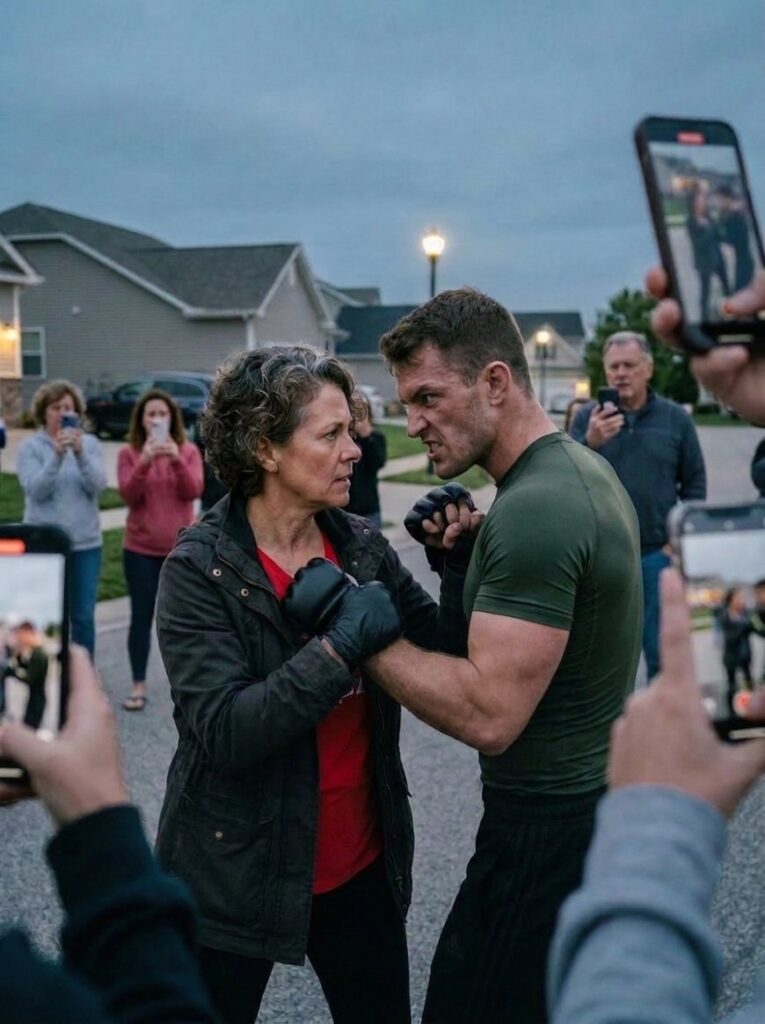
anyone. “Then learn.” “I’ve been fighting since I was twelve. It’s the only thing he’s ever—” He stopped himself, but I understood. It was the only thing his father had ever praised. The only thing that had earned him attention, approval, the kind of love that came with conditions attached. I knew something about that. Not from my own father, who had been a quiet man who fixed cars and never asked me to be anything other than honest. But from the soldiers I had trained, the young men and women who had joined the Army looking for structure, for purpose, for someone to tell them they mattered—and who had discovered that the institution could give them responsibility without ever teaching them how to be loved. “You’re not a child anymore,” I said. “I know.” “So stop waiting for him to see you the way you need to be seen.” Logan’s eyes burned, but he didn’t cry, and I didn’t expect him to. Men like Logan had been taught that tears were weakness, that emotion was a liability, that the only acceptable expression of pain was violence. That lesson had been drilled into him by a father who had never learned it himself. “Take off the gloves,” I said. “Why?” “Because the round is over.” “I didn’t tap.” “No. But you stopped. That’s enough.” Logan looked at his hands, still wrapped in the black MMA gloves, the ones he had thrown at my feet less than ten minutes ago. He peeled them off slowly, one finger at a time, and let them fall to the pavement. They landed with a soft thud, and the street went quiet again. Grant stepped forward, phone still raised. “What are you doing?” Logan didn’t answer. “Logan. Pick up the gloves. The round isn’t over.” “It’s over, Dad.” “I didn’t say it was over.” “You’re not the referee.” Grant’s face flushed. “I’m your father.” Logan turned to face him, and for the first time since I had met him, he looked like a man instead of a boy pretending to be one. “That’s the problem,” he said. Grant’s hand tightened around the phone. “What did you just say to me?” “I said you’re my father. Not my coach. Not my manager. Not the person who gets to decide when I’ve had enough.” “I made you.” “You paid for my training. You didn’t make me.” Grant laughed, but there was no humor in it. “Everything you have, everything you are, came from me.” Logan nodded slowly. “Maybe. But I’m the one who has to live with it.” He reached for the phone. Grant pulled it back. “Don’t.” “Give it to me.” “Logan—” “Give me the phone.” Something in Logan’s voice had changed—not louder, not angrier, but firmer, the way a person sounds when they have finally decided what they are willing to lose. Grant hesitated. The neighbors watched. The cameras recorded. And then, slowly, Grant handed over the phone. Logan looked at the screen, at the livestream still running, at the comments scrolling past—people he had never met, watching a fight that had never been about fighting. He ended the stream. Then he placed the phone in his father’s hand and stepped back. “I’m done,” he said. “Done with what?” “All of it. The videos. The training. The—” He gestured vaguely at the cul-de-sac, the lawn chairs, the neighbors still holding their phones like they were waiting for someone to tell them what to do. “This.” Grant stared at him. “You’ll regret this.” “I already regret a lot of things,” Logan said. “I’m just trying to stop making the list longer.” He turned and walked toward my porch, where Noah was still standing, his arms folded, his expression unreadable. Logan stopped a few feet away. “I owe you an apology,” he said. Noah didn’t respond. “I shouldn’t have touched your bike. I shouldn’t have posted about your mom. I shouldn’t have—” He stopped, swallowed, started again. “I shouldn’t have made you the price of my father’s approval.” Noah looked at him for a long moment. “You think saying sorry fixes it?” “No.” “Then why are you saying it?” Logan considered the question. “Because you deserve to hear it. And because I need to say it, even if you don’t forgive me.” Noah’s arms stayed folded. “I don’t forgive you.” “Okay.” “Maybe I will. Maybe I won’t. But not today.” Logan nodded. “That’s fair.” He walked past Noah, past my house, and down the street toward the Whitmore driveway. Grant stood in the road, still holding the phone, watching his son walk away. He didn’t call after him. He didn’t apologize. He just stood there, the way a man stands when he realizes the audience has stopped watching, and there is nothing left to perform for. The neighbors began to drift away, pulling their lawn chairs back toward their garages, avoiding eye contact with one another like children caught doing something they knew was wrong. One woman, a retired teacher named Margaret who lived three houses down, stopped beside me. “I didn’t know,” she said. “About the Rangers. About everything.” “No,” I said. “That was the point.” She nodded slowly. “Will you be okay?” “I’ve been okay for twenty years. This didn’t change that.” She smiled, just barely, and walked home. Noah and I went inside. I made dinner—nothing special, just pasta and jar sauce—and we ate at the kitchen table without saying much. Afterward, Noah did his homework at the counter while I sat on the back porch with a cup of coffee and watched the last light leave the sky over the mountains. The air smelled like pine and cut grass, the way it had when I first bought the house, when I had believed that quiet was the same as safety. I heard the back door open. Noah sat down in the chair beside me and didn’t say anything for a while. Then he asked, “What were you thinking? When he was coming at
PART 2: “Put Them On, Colonel,” the Rich Neighbor’s Black Belt Son Sneered — The Quiet Single Mom