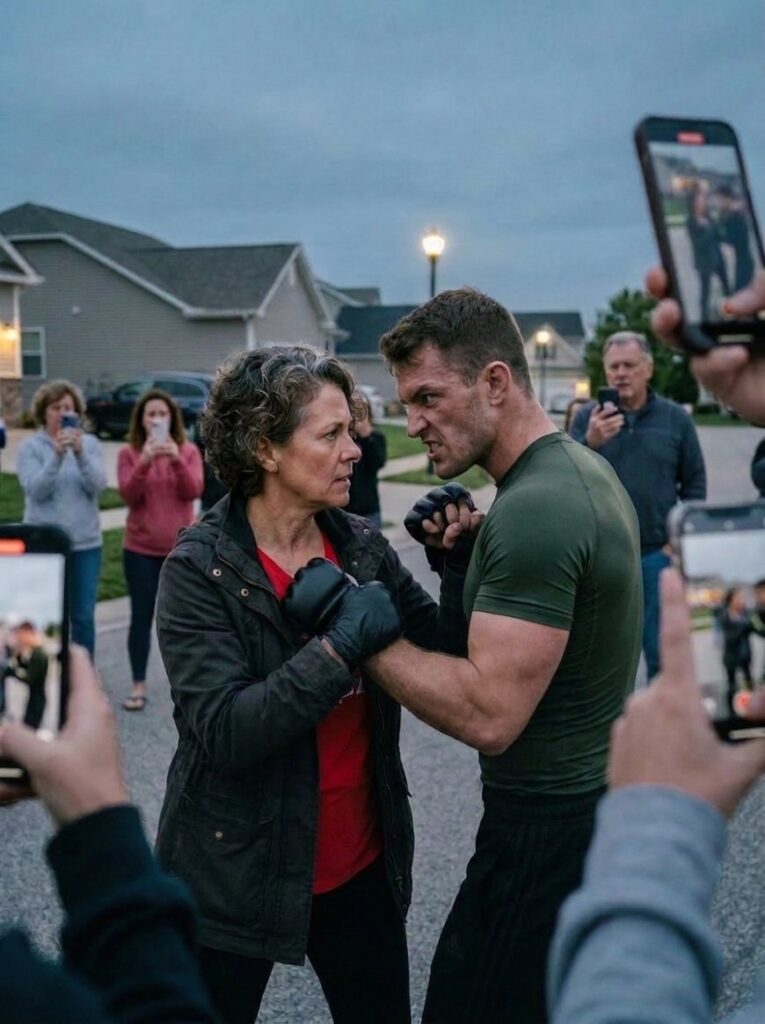
was supposed to be. I slept through the night without dreaming. I woke before the alarm, which was not unusual. What was unusual was the absence of weight on my chest, that old pressure that used to sit there like a boot heel. I made coffee in the kitchen instead of the porch. The window over the sink was fogged with dawn, and the mountains were only a rumor behind it. Noah came down at seven, hair flattened on one side, backpack already slung over his shoulder even though it was Saturday. He had a study group at the library, he said, for calculus. I poured him a mug of coffee, then took it back and poured him orange juice instead. He made a face but drank it. “You’re up early,” he said. “Couldn’t sleep.” “Bad dreams?” “No. Just awake.” He nodded like he understood, and maybe he did. I drove him to the library because his car was in the shop for a brake light. On the way, he asked if I had ever thought about writing things down. Not for anyone else. Just for me. “Why?” I asked. “Because you carry a lot. And I don’t think you’re supposed to carry all of it in your head.” I kept my eyes on the road. “I tried a journal once. In country.” “What happened?” “I filled three pages and burned it.” He laughed, but not at me. “That tracks.” “Watch it.” We stopped at a red light. A woman crossed in front of us with a dog on a leash, and I watched her until she reached the other side. “Can I ask you something else?” Noah said. “You’re going to anyway.” “Did you ever want to quit the Army? Before you had to.” I thought about it. “Every day for the first year. Then only when it rained.” “That’s not a real answer.” “It’s the realest one I’ve got.” He smiled and looked out the window. When we pulled up to the library, he didn’t get out right away. “I’m not going to join,” he said. I didn’t ask what he meant. I knew. “Not because I’m scared,” he added. “Or because of what happened. I just don’t think it’s mine.” “Okay.” “You’re not disappointed?” “I’m relieved,” I said. “And I’m proud.” “Both can be true.” He leaned over and hugged me, quick and fierce, the way he used to after a bad dream. Then he was out of the car and walking toward the library doors, and I watched until he disappeared inside. I didn’t go straight home. I drove to the trailhead and ran the long loop, the one that climbed for two miles before it flattened out along the ridge. My legs burned. My lungs opened. By the time I reached the top, the sun was high and the valley was spread out below like a map of everything I had not lost. On the way back down, I passed a man with a dog and a woman with a stroller. We nodded at each other. No one knew me. That was the gift of this place, if I let it be. When I got home, I went to the garage. The boxes were still there, but most of them were empty now. The shelves held what mattered. I took the gloves off the shelf and turned them over in my hands. They were scuffed at the knuckles, worn thin at the palms. They had been with me through things I would never say out loud. I almost put them back. Then I dropped them into the donation box by the door. Not because I was done with who I had been. Because I was done letting that person be the only one I knew how to be. I opened the last box, the one marked “fragile” in my own handwriting. Inside was a stack of letters tied with twine. I recognized the stamps. I recognized the return address. I untied the twine and read the first one. It was from a soldier I had trained, a kid from Ohio who had been terrible at marksmanship and wonderful at keeping everyone’s spirits up. He had written to thank me. He had written to tell me he was getting married. He had written to say he was going to name his son after me. I read the letter twice. Then I put it on the shelf next to Noah’s baseball. I didn’t cry. I had cried enough for a lifetime, and tears were not the only way to honor someone. That night, Noah came home with a pizza and a movie. We ate on the couch, which we never did. He picked a comedy, something stupid, and we laughed at parts that weren’t even funny. Halfway through, he fell asleep with his head on the armrest. I put a blanket over him and turned down the volume. The house was quiet. The street outside was quiet. But quiet wasn’t safety anymore. It was just the space between two people who had decided to stay. I finished the movie alone, credits rolling over a dark screen. Then I turned off the TV and sat there in the blue light of the room, listening to my son breathe. Tomorrow would be Monday. There would be emails, errands, a leaky faucet I kept forgetting to fix. There would be no cameras in the street, no gloves on my hands, no one to prove anything to. That was the life I had wanted. It had taken a long time to recognize it. I pulled the blanket up to Noah’s chin. He stirred, mumbled something about the calculus test, and went still again. Outside, the mountains held their shape against the night. Inside, we did the same. Monday arrived with a flat white sky and the smell of rain that never came. My alarm went off at five forty-five. I hit it harder than the button deserved. Noah was already in
PART 2: “Put Them On, Colonel,” the Rich Neighbor’s Black Belt Son Sneered — The Quiet Single Mom