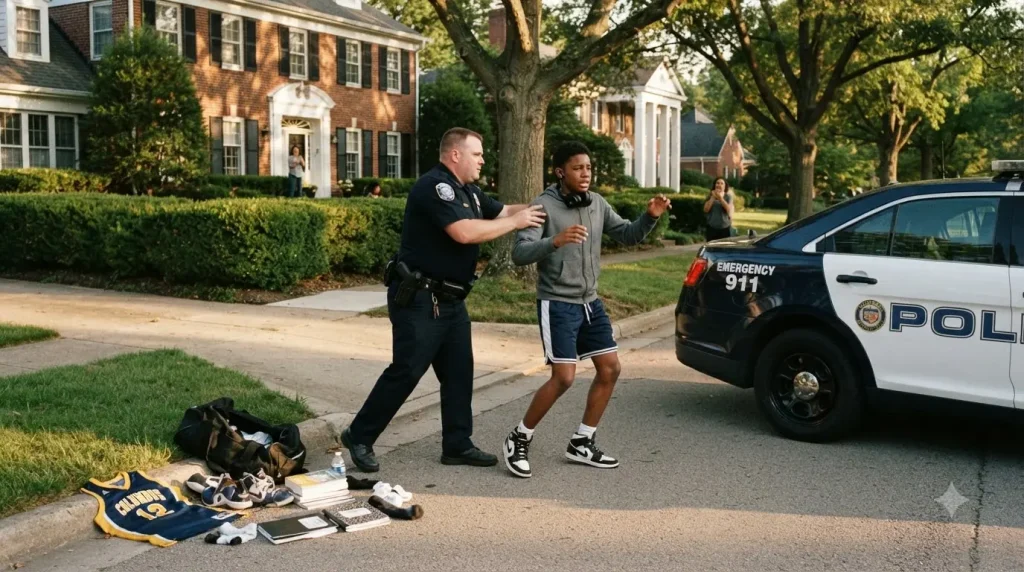
Then picked up her son’s school ID from beside the bag.
She held it between two fingers.
“This was inside?”
“Yes.”
“You saw it?”
“Yes.”
“Franklin High?”
“Yes.”
“Student-athlete?”
“Yes.”
The senior officer’s face tightened.
The mother continued.
“He told you he was walking home from basketball practice?”
“Yes, but—”
“But you dumped the bag anyway.”
“We needed to make sure.”
“Make sure of what?”
The officer said nothing.
The mother’s voice remained calm.
That calmness frightened her son more than shouting would have.
He knew it.
This was the same voice she used in budget hearings when somebody had just said something they would regret on the public record.
The younger officer looked down.
The mother turned toward him.
“Did you believe a search was necessary?”
He hesitated.
The senior officer gave him a sharp look.
The younger officer said:
“I suggested we verify the school ID and home address first.”
The mother nodded.
“Did that happen?”
“No, ma’am.”
The senior officer stepped in.
“With respect—”
The mother looked at him.
“Do not begin that sentence unless you plan to finish it honestly.”
He stopped.
Several neighbors moved closer.
Phones remained raised.
The mother looked toward the white woman across the street.
The woman stepped onto her porch.
Her posture was different now.
Minutes earlier, she had watched confidently.
Now uncertainty had entered her face.
The mother recognized her.
Not well.
But enough.
Neighborhood association.
A fundraising breakfast.
A city beautification event.
They had spoken at least twice.
The mother looked back at the officers.
“Who called?”
The senior officer said, “We don’t disclose callers during an active response.”
The mother nodded.
“Correct.”
That surprised him.
She was not going to use office to demand something an ordinary parent could not demand.
“Then verify my son’s address.”
The younger officer moved immediately toward the cruiser.
The senior officer looked irritated.
The mother watched him.
“Problem?”
“No.”
The younger officer returned to the mobile computer.
The mother bent toward her son.
Quietly:
“You okay?”
He nodded.
“You sure?”
“No.”
That answer almost broke her.
She touched his shoulder.
He looked away because neighbors were watching and sixteen-year-olds hated public emotion.
She understood.
The senior officer watched them.
Then said:
“If we’d known—”
The mother turned.
“If you’d known what?”
He stopped.
She waited.
“If you’d known who his mother was?”
The officer’s expression changed.
The mother continued.
“Would the search have been different?”
“No.”
“Then don’t say it.”
Silence.
The younger officer called from the cruiser.
“Address checks.”
Nobody moved.
“He lives on Parkview Lane.”
The mother nodded.
That was their street.
The younger officer continued.
“School emergency-contact record matches the Mayor’s office family account.”
The senior officer looked toward the mother again.
She did not smile.
Her son’s innocence had not arrived with the database result.
It had existed before anyone checked.
The mother said:
“Pick up his belongings.”
The senior officer stared.
She clarified.
“I’m not ordering you as mayor.”
Then pointed toward the wet textbook.
“I’m asking you as the parent of a child whose belongings you threw across the pavement.”
The younger officer moved first.
He crouched and picked up the notebook.
Then the water bottle.
The senior officer stood still.
The mother looked at him.
Finally he bent down.
He reached toward the jersey.
Her son stopped him.
“I’ll get it.”
The teenager stepped forward.
The senior officer straightened.
The boy picked up his own jersey.
Mud stained one sleeve.
He stared at it.
The mother saw.
Something inside her sharpened further.
The younger officer returned to the cruiser to close the call.
Then stopped.
A notification had appeared on the mobile terminal.
He frowned.
He clicked.
The dispatch notes expanded.
The mother noticed.
“What?”
The younger officer did not answer.
He read another line.
Then another.
His expression changed.
The senior officer called:
“What is it?”
The younger officer looked at him.
“Nothing.”
But his face said otherwise.
The mother walked toward the cruiser.
She stopped several feet away.
“What did dispatch send?”
The younger officer looked uncertain.
The senior officer approached.
“I’ll handle it.”
The younger officer turned the monitor slightly away from him.
That small movement changed the atmosphere.
The senior officer noticed.
“What are you doing?”
The younger officer said, “The supplemental call notes just loaded.”
The mother waited.
The senior officer asked:
“So?”
The younger officer read silently.
His forehead tightened.
Then he looked toward the house across the street.
The white woman on the porch had stepped backward.
The mother followed his gaze.
“What does it say?”
The young officer swallowed.
“Ma’am…”
The mother’s heart accelerated.
“What?”
“The caller knew your son’s name.”
The teenager looked up.
His mother froze.
The senior officer frowned.
“What?”
The young officer read:
“Caller identified subject as the Mayor’s son.”
Silence spread across the street.
The woman across the road lowered her phone.
The mother looked at her.
Then back at the computer.
“That makes no sense.”
The young officer continued.
“Caller said she knows he lives nearby.”
The senior officer’s face changed.
The mother stared.
“So this was never a report about an unknown teenager.”
“No, ma’am.”
The younger officer scrolled.
Then his expression became even more uncomfortable.
“There’s more.”
The mother’s voice went quiet.
“Read it.”
The young officer hesitated.
She did not order him.
She simply waited.
Finally he read:
“Caller stated, ‘I know whose boy he is. That doesn’t mean he should be wandering around here with that bag. Somebody needs to teach him not to make residents uncomfortable.’”
The teenager’s face went blank.
His mother felt a wave of nausea.
Not rage.
Not yet.
Something colder.
The caller knew.
She knew who he was.
Knew where he lived.
Knew he was the mayor’s son.
And called police anyway.
Not because she believed she had discovered a burglar.
Because seeing him in her neighborhood made her uncomfortable.
The senior officer looked toward the porch.
The woman disappeared inside.
The teenager whispered:
“She knew me?”
His mother looked at him.





