She looked at the small fading bruise near the collar of my shirt and didn’t look away this time. “I should’ve said something back in October, Alex. Outside the library. I saw Garrett take your binder, and I just… kept walking because I didn’t want them turning on me.”
I looked at her honestly. A week ago, I might have mumbled It’s fine just to end the conversation and disappear back into the woodwork.
“Yeah,” I said evenly. “You should have.”
Brianna didn’t make an excuse or get defensive. She just nodded once, accepting the weight of it. “Yeah. I won’t next time. Are we still pairing up for the titration lab today?”
“Sure,” I said. “Grab the burettes. I’ll set up the ring stand.”
For the rest of the spring, my days settled into a rhythm that felt entirely my own. I stopped taking the long detour behind the cafeteria loading dock in the rain. I walked right down the center of the main academic corridor between third and fourth period, my shoulders relaxed, my breathing deep. And every evening at seven o’clock, after the last customer drove off the gravel lot at Rivera Auto and the steel bay door rattled shut, I wrapped my hands in red cotton tape and stepped onto the foam mats behind the garage with my father.
Jab. Cross. Switch-step. Check.
We didn’t train for a tournament. We didn’t train for revenge. We trained in the quiet cool of the spring dusk while the crickets started up in the weeds behind the tire rack, the leather pads smacking crisp and clean against my shins as Dad called out combinations in a low, steady rhythm.
On the last Thursday in May, Oak Creek High held its annual Spring Academic and Athletic Honors Assembly in the main auditorium.
Usually, my father skipped school evening events; getting home at six, showering, and trying to find a clean shirt without a faded oil spot on the cuff always made him feel like he was walking onto a showroom floor in work boots. But when the postcard arrived in the mail announcing that I was receiving the Junior Science Department Award for AP Chemistry alongside the district scholarship renewal, I came home on Wednesday to find his dark Sunday trousers hanging on the bathroom door with the steam running to let the wrinkles out.
We sat together three rows from the back of the auditorium, near the center aisle. Dad wore a crisp white button-down shirt with the sleeves rolled neatly twice below the elbows, his dark hair combed back with water, though the faint, warm scent of motor oil and wintergreen rub still clung to him like a familiar shadow.
Up on the stage, beneath the velvet banners of the school crest, the varsity captains sat in a semicircle of folding chairs. Julian Cross wasn’t among them. A quiet junior defensive end named Marcus—a kid who worked weekends stocking shelves at the hardware store Dad frequented—sat in the center chair as the newly elected team captain.
Before the trophies were handed out, Dr. Alvarez stepped up to the wooden podium and adjusted the microphone.
“Every year in this room, we celebrate speed, strength, and academic excellence,” Dr. Alvarez said, her voice carrying clearly to the back rows under the vaulted ceiling. “We hand out plaques for points scored and records broken. Tonight, before we call up our honorees, I want to talk briefly about a different kind of standard—one that isn’t measured by a stopwatch or a scoreboard. True strength in a community isn’t tested when everyone is cheering. It’s tested in our hallways when no one thinks an adult is watching. It is measured by our refusal to treat another person’s dignity as entertainment, and by the courage of those who stand up and tell the truth when it would be easier to look down at a screen.”
Across the auditorium, six hundred heads remained still. Nobody whispered. Nobody checked their phones.
Beside me, my father sat with his hands folded over his knee, listening to every word with quiet concentration. When Dr. Alvarez called my name ten minutes later for the chemistry medal, Dad stood up right there in the third row from the back and clapped louder than anyone in the building, his calloused palms ringing out sharp and clear until the whole row beside him joined in.
After the ceremony let out, we walked out through the double glass doors into the mild May twilight. The student parking lot was awash in the glow of taillights as families headed toward the upscale restaurants on the hill, the air smelling of freshly cut grass and blooming magnolias along the front walk.
We didn’t walk two blocks down the street to hide the truck anymore. Dad had parked the 1998 F-150 right in the front visitor circle beneath the flagpole, nestled squarely between a gleaming white Audi SUV and a brand-new Lexus sedan.
As we reached the curb, I paused and looked back at the illuminated glass facade of Oak Creek High. Through the tall windows of the B-wing, I could see the warm brass gleam of the varsity trophy case in the empty hallway.
“Do you think Julian will ever change, Dad?” I asked quietly, pulling the ribbon of the science medal over my head and slipping it into my pocket. “Up at that academy?“
Dad unlocked the passenger door of the pickup with the brass key first, the way he always did, before walking around the hood to the driver’s side. He rested his forearms along the top of the cab door for a moment, looking back at the brick building with me.
“That’s up to him, mijo,” Dad said simply. “Some men spend their whole lives swinging wild and blaming the floor when they slip. Some men hit the lockers hard enough that they finally learn to watch their feet. Either way, that’s his fight. You don’t have to wait around for him to change before you live your life.”
He opened the driver’s door, the familiar squeak of the hinges cutting through the quiet night air, and climbed behind the wheel.
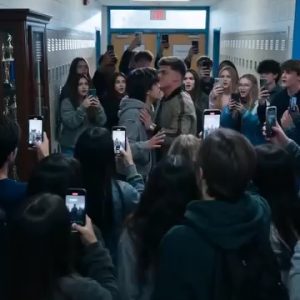
For seven months, Julian Cross had used his weight, his father’s money, and forty raised cameras to try to convince me that I was taking up space that belonged to someone better. He had tried to make me ashamed of the truck idling at the curb and the man sitting inside it.
Looking back at the empty hallway one last time, I realized that the turning point hadn’t been the second Julian’s sneaker missed my ribs. And it hadn’t even been the moment the cameras turned his own arrogance against him. It had been the quiet, unshakable certainty my father had put inside me years before—the knowledge that strength wasn’t the power to make another person afraid. It was the discipline to hold your ground without becoming the thing you were fighting against.
I opened the passenger door, climbed up onto the worn bench seat, and pulled the door shut with a solid thud.
Dad turned the key in the ignition. The old V8 engine coughed once, caught, and settled into a deep, steady purr that vibrated through the floorboards beneath our boots. He reached over to shift the column into drive, his scarred, grease-stained hands wrapping securely around the wheel.
I looked at those hands in the green glow of the dashboard lights, leaned my head back against the headrest, and smiled as we pulled out through the gates toward home.





