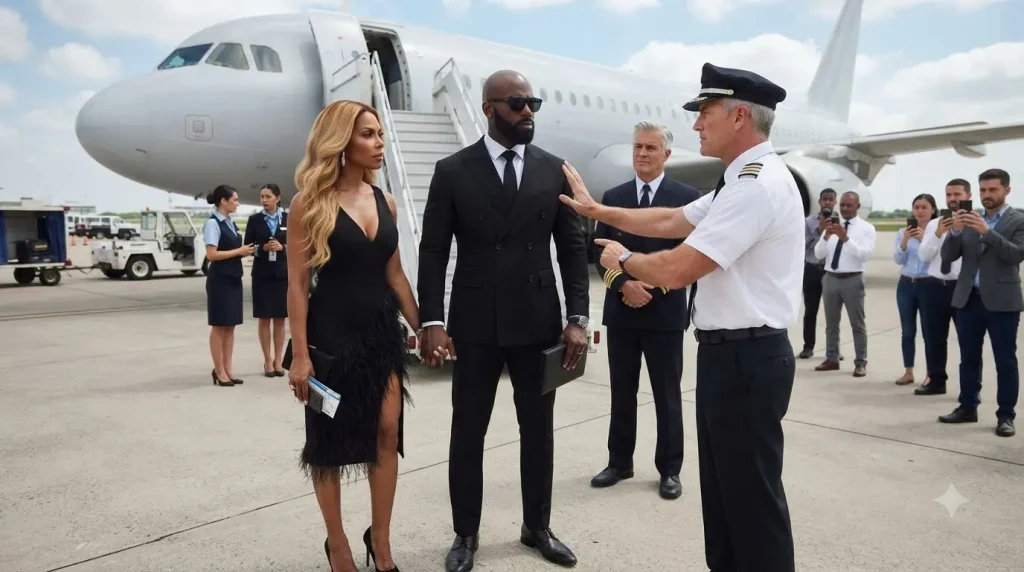
Daniel looked toward the pan.
“Technically.”
“Should I call emergency services?”
“That feels premature.”
She crossed the kitchen and looked into the skillet.
“Daniel.”
“Yes?”
“That is black.”
“Caramelized.”
“It has structural integrity.”
“NASA builds heat shields darker than this.”
Alana laughed.
“Do not blame aerospace engineering for your breakfast.”
He pulled her toward him.
She smiled.
“You smell like smoke.”
“You married me anyway.”
“Under incomplete information.”
He kissed her forehead.
Sixteen years.
Still that easy.
Not perfect.
Never easy in the cheap sense.
They had built Apex together from a twelve-person engineering shop in a rented building outside Huntsville.
Daniel understood operations.
Alana understood systems.
Daniel could walk into a failing organization and identify the human bottleneck before the CFO finished introductions.
Alana could examine two thousand pages of technical architecture and find three assumptions everyone else had accepted because nobody wanted to challenge the chief engineer.
They fought.
Often.
Professionally.
Privately.
Then they went home together.
Their first office had leaked.
Their first major customer nearly bankrupted them by paying eighty-seven days late.
Their first satellite component failed a vibration test forty-eight hours before delivery.
They rebuilt it.
Passed.
Grew.
Apex became one of the largest Black-founded aerospace corporations in the United States.
That label mattered to the media more than it mattered inside the company.
Daniel was proud.
Alana was too.
But neither wanted diversity headlines to become an explanation for engineering excellence.
Apex did not win contracts because Daniel and Alana were Black.
Apex won because equipment worked.
Because data was honest.
Because when something failed, nobody was rewarded for hiding it.
Their company mantra appeared inside every engineering building:
Bad news does not improve with age.
Daniel had written it after a junior engineer once delayed reporting a test anomaly because she feared disappointing a vice president.
The anomaly turned out small.
The cultural lesson was not.
Tell truth early.
Especially ugly truth.
That was why Meridian’s silence bothered Daniel more than Jensen’s insult.
One man’s bias was damage.
A system that knew and buried it was risk.
That morning, however, none of that existed yet.
Only breakfast.
Suitcases.
A vacation.
Alana had leaned against the kitchen island.
“You promised.”
Daniel looked innocent.
“What?”
“No work until Thursday.”
“Today is Tuesday.”
“Exactly.”
“I have one call.”
“No.”
“It’s the Meridian decision.”
“No.”
“The board wants—”
“You have a president.”
“That is you.”
“I’m on vacation.”
Daniel smiled.
“Convenient governance.”
Alana walked closer.
She fixed his tie.
“We have spent sixteen years building a company capable of surviving ten days without us.”
“Have we?”
“If not, we failed.”
Daniel looked into her eyes.
“You always make irresponsibility sound strategic.”
She kissed him.
“That is why you married an engineer.”
They took a car to the airport.
No driver after security drop.
No assistants.
No Apex aircraft.
Daniel specifically wanted commercial.
“I want to remember what normal humans experience.”
Alana looked at him.
“You are six-three wearing a custom suit and a watch that costs more than my first car.”
“Normal-ish.”
She laughed.
The gate experience had begun normally too.
Boarding passes scanned.
Welcome.
Then the first flight attendant looked at them twice.
Not unusual.
Alana was striking.
Daniel was used to people looking at his wife.
Then came:
“Are you sure you’re in first class?”
Daniel had smiled politely.
“Yes.”
The attendant looked at ticket.
“Oh.”
That little sound.
Alana caught it.
Daniel caught Alana catching it.
They moved on.
Inside cabin, Jensen approached.
“Tickets please.”
Daniel handed them.
Jensen inspected longer than necessary.
“You purchased these directly?”
Daniel said, “Yes.”
“With Meridian?”
“Yes.”
Jensen looked toward Alana’s bag.
“Any corporate upgrade certificates?”
“No.”
“Employee travel?”
“No.”
Alana’s voice cooled.
“Is there a problem?”
Jensen smiled.
“No problem.”
Then:
“We sometimes see passengers accidentally enter premium cabin from priority boarding.”
Daniel stared.
“Our seats are 1A and 1B.”
“Yes.”
“Printed on the boarding passes you’re holding.”
Jensen gave them back.
“Of course.”
He left.
Two minutes later, another employee came.
Purchase confirmation.
Then card verification.
Then the alleged manifest mismatch.
Then removal.
Each escalation small enough that someone observing only that moment might rationalize it.
Together, unmistakable.
The source incident that inspired the remake followed that same escalating pattern: valid first-class passengers were repeatedly asked to prove their right to seats and then accused of fraud even after documentation was produced. [English (auto-generated)] Airl…
Now, three hours later, Daniel and Alana sat inside a private airport conference room.
No Paris.
No London connection.
No anniversary dinner.
Meridian executives had brought bottled water, coffee, sandwiches, fruit, and enough apologetic body language to feed fifty people.
Alana touched nothing.
Daniel drank water.
Richard Coleman sat across from them with Meridian’s Houston station manager and a corporate attorney connected by video.
Captain Evans and Jensen had been separated.
The flight was delayed.
A replacement captain had been called.
Meridian wanted it airborne.
Daniel understood.
Hundreds of innocent passengers should not become collateral damage.
He had said exactly that.
“Do not cancel the flight because of us.”
That sentence seemed to confuse everyone.
Revenge was easier to understand than governance.
The corporate attorney asked, “Mr. Harris, are you considering litigation?”
Daniel looked at Alana.
She answered.
“We’re considering dinner.”
The attorney blinked.
Alana continued.
“We were supposed to have dinner in London.”
“No offense, but legal strategy is not currently our first conversation.”
The station manager said, “We can put you on another flight tonight.”
Daniel looked at him.
“No.”
“Private charter?”
“No.”
“Company aircraft?”
“No.”
“We’re going home.”
The man looked surprised.
Alana said, “Our vacation began with your company telling us we didn’t belong.”
“I don’t feel like letting Meridian transport us anywhere today.”
Silence.
Fair.
Daniel turned toward Coleman.
“I want the complaint files.”
The attorney immediately said, “We cannot provide internal privileged—”
Daniel held up a hand.
“I didn’t say give them to me.”
“I said preserve them.”
He looked at Coleman.
“All of them.”
“Not Jensen.”
“Not Evans.”
“All passenger-bias complaints for five years.”





