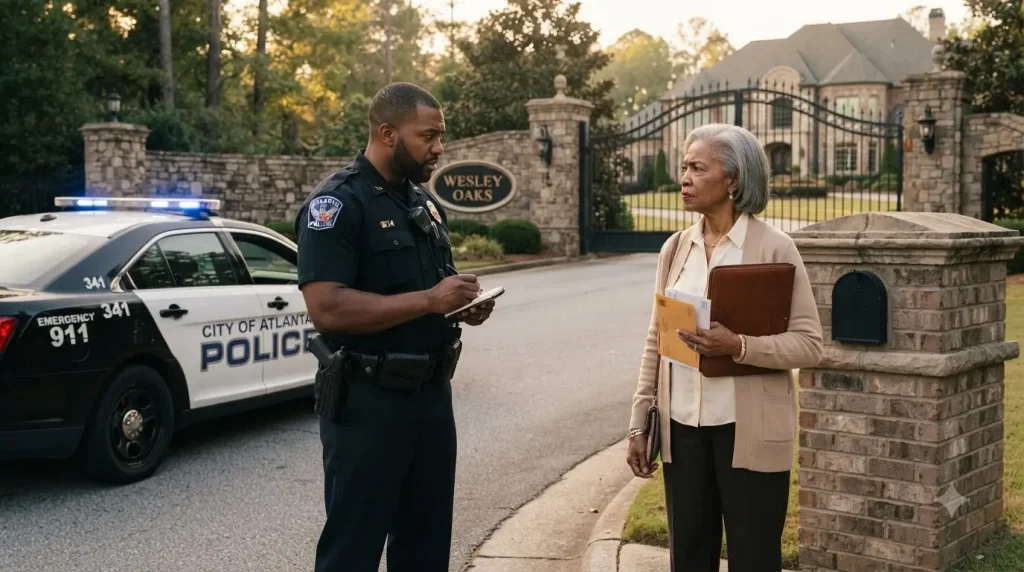
“What happens to me now?” Monroe asked, his voice barely above a whisper.
“Internal Affairs and the Department of Justice will review your body camera,” Evelyn said. “You used unnecessary force against a compliant citizen, you seized private federal documents without a warrant, and you executed an unlawful detention. You will almost certainly lose your badge. Whether you face criminal civil-rights charges will be up to Ms. Brooks.”
Monroe closed his eyes briefly and nodded once, accepting the verdict without a word of excuse. “I understand, Your Honor.”
Evelyn turned back toward the house, then paused, looking over her shoulder at the brick mailbox standing quietly at the edge of the grass.
“One last thing, Officer,” she said.
He looked up.
“The next time you see someone who doesn’t look like your idea of who belongs—wherever you end up working after this—remember that the law was never written to protect judges. Judges have marshals. The law was written for the woman standing at the mailbox with nothing in her hands but three envelopes.”
She didn’t wait for his answer.
Evelyn walked slowly back up the curved driveway, her shoulder aching dully beneath the beige cardigan, the autumn chill crisp against her cheeks. On the porch, Chief Wallace and Rachel Brooks stood waiting beside the open mahogany door, the warm light of the library spilling out behind them onto the white columns.
Tomorrow morning, she would sign the order placing the Bellwood Police Department under federal receivership. The city council would protest, the union would file appeals, and the newspapers would print her name in bold type above photographs of her house.
None of it mattered half as much as the quiet certainty settling into her bones as she climbed the limestone steps. Tonight, for the first time in eleven months, nobody in Bellwood was pretending anymore. And the truth, once spoken aloud on a quiet street, had a way of outlasting every badge in the room.





