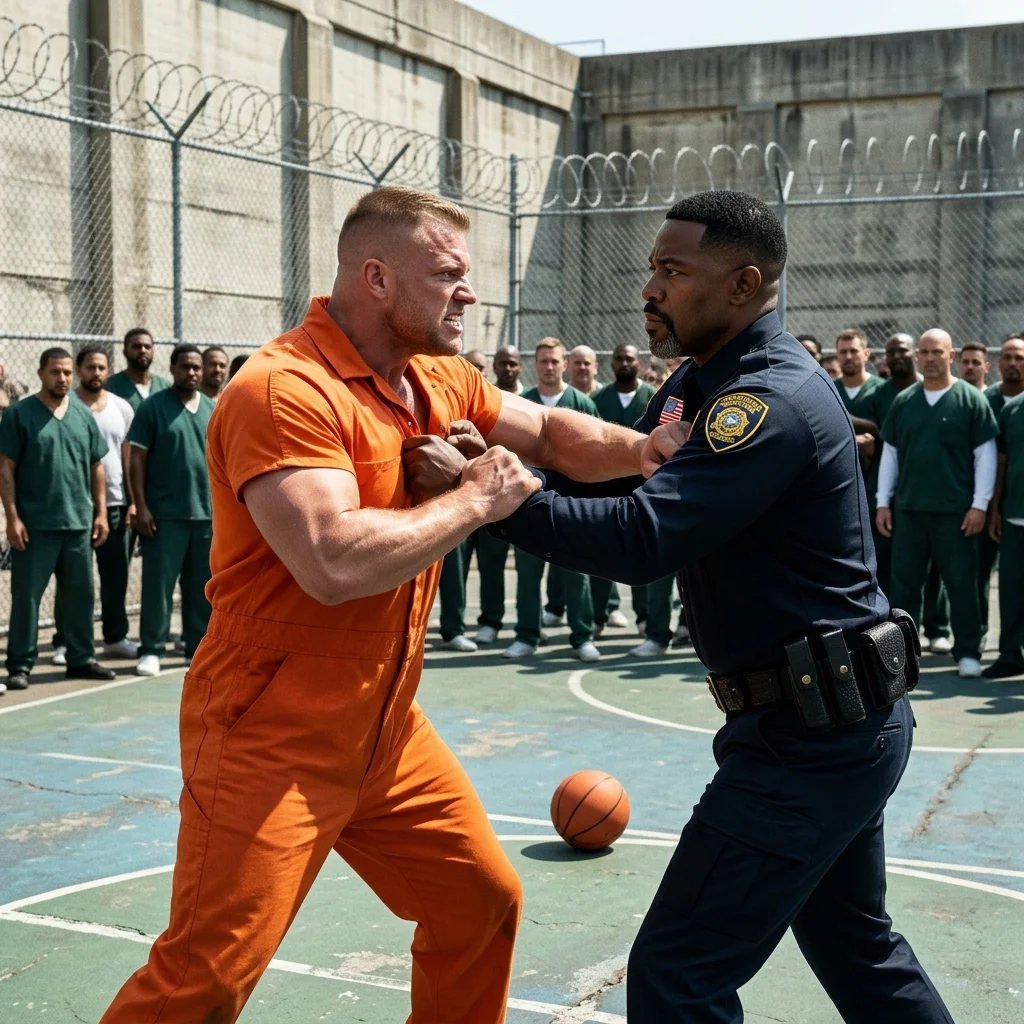
“He’s not one of the eleven.”
“No,” Rebecca said.
“He isn’t.”
“Then why do you have his file?”
Rebecca turned to the final page.
“Because Briggs told you there were twelve.”
Marcus stared at the signature.
A sentencing court had approved a modification of Briggs’s sentence and his release under supervision.
The approval was dated eleven months earlier.
His release had never been carried out.
Instead, an administrative hold had been entered under the authority of Captain Daniel Hale.
Rebecca pointed toward the document.
“The court order required action that the department never completed.”
Marcus slowly looked up.
“You’re telling me Briggs should have been released?”
“Eleven months ago, subject to the order’s conditions.”
Marcus remembered Briggs’s terrified face.
The desperate apology.
The words he had shouted across the yard.
Ask about the men who never came back.
Then he remembered something even more disturbing.
Briggs had been the loudest, most aggressive inmate in the recreation yard.
He had seemingly risked everything just to provoke one correctional officer.
But there was something Marcus still didn’t understand.
If Briggs had known he was supposed to be free, why hadn’t he simply demanded to see his attorney?
And why had almost seventy prisoners fallen silent the moment Marcus restrained him?
Rebecca watched his expression.
“What is it?”
Marcus looked back at the release order.
“I don’t think the fight was supposed to end the way Hale planned.”
Simone frowned.
“What do you mean?”
Marcus slowly closed the folder.
“I think Briggs was trying to make sure the entire prison saw something.”
“And I think the other inmates already knew why.”
The greatest surprise of Marcus Reed’s seventeen-year career came when he discovered that the prison yard had not fallen silent because the inmates were afraid of him.
They had fallen silent because they had made a decision.
And that decision would eventually destroy the secret that had kept twelve men imprisoned beyond their lawful release dates.
Three days after the emergency hearing, Marcus received a telephone call from Rebecca Bennett.
“The court has approved your request to speak with Briggs again,” she said.
Marcus stood beside his kitchen window.
“Where is he?”
“Under independent supervision while his custody status is reviewed.”
“Is he safe?”
“As far as we can establish, yes.”
Marcus closed his eyes briefly.
“Good.”
Rebecca hesitated.
“There’s another reason I called.”
“What?”
“Investigators interviewed the inmates who witnessed the recreation-yard incident.”
Marcus frowned.
“I thought they already gave statements.”
“They did.”
“Then what’s different?”
Rebecca lowered her voice.
“They’ve provided additional testimony about the missing prisoners.”
Marcus gripped the phone.
“All of them?”
“More than forty so far.”
He stared at the wall.
Rebecca continued.
“Some describe conversations with Elijah Ward before his transfer.”
“Go on.”
“Others reported complaints about missing release paperwork.”
Marcus waited.
“And several say they had agreed beforehand that if another serious incident occurred, they would provide truthful statements instead of remaining silent.”
The room seemed to tilt.
Marcus remembered the faces surrounding the basketball court.
He remembered the laughter disappearing.
He remembered the strange intensity with which the inmates watched him restrain Briggs.
He had believed they were stunned by the confrontation.
But perhaps they had been watching for an entirely different reason.
They had been waiting for someone outside their own ranks to take their words seriously.
Briggs entered the interview room wearing standard inmate clothing.
He looked older than he had just days earlier.
His shoulders were still broad, and his physical presence remained intimidating.
But the arrogance was gone.
He sat opposite Marcus and folded his hands.
For several seconds, neither man spoke.
Then Briggs broke the silence.
“They found Elijah?”
Marcus nodded.
“Yes.”
“And Moses?”
“Yes.”
“All eleven?”
“All eleven.”
Briggs lowered his head.
His eyes filled with tears.
Marcus watched him carefully.
He had spent years working around men who concealed their emotions behind aggression.
Briggs had been one of the worst examples.
He mocked weakness.
He dominated conversations.
He tried to frighten everyone who challenged him.
Yet now he seemed overwhelmed by the simple knowledge that other men had finally been found.
“Good,” Briggs whispered.
“That’s good.”
Marcus opened his notebook.
“I need you to explain something.”
Briggs looked up.
“Okay.”
“Why did you choose me?”
The inmate frowned.
“What?”
“You attacked me in front of an entire recreation yard.”
Briggs looked away.
“Captain Hale told me to.”
“That’s not the whole answer.”
Briggs remained silent.
Marcus continued.
“Hale wanted me discredited.”
“Yeah.”
“But you knew the inmates would witness the confrontation.”
Briggs swallowed.
Marcus leaned forward.
“You knew they would tell the truth.”
Briggs stared at the table.
Finally, he nodded.
“Elijah made us promise something.”
“What?”
“That we wouldn’t lie for the administration anymore.”
Marcus said nothing.
Briggs continued.
“Not for favors.”
“Not because we were scared.”
“Not because the person telling the truth was somebody we didn’t like.”
His voice grew unsteady.
“Elijah said the only thing worse than being forgotten was having people watch something happen and then pretend they didn’t see it.”
Marcus looked at him.
“Was that why everyone went quiet?”
Briggs nodded.
“Some were frightened.”
“Of me?”
“Of what would happen afterward.”
Briggs took a slow breath.
“Everybody knew something was wrong with those transfers.”
“Then why didn’t somebody report it?”
“We tried.”
“Who?”
“Elijah did.”
Briggs rubbed his forehead.
“Moses did.”
“Others wrote complaints.”
“What happened?”
“Some got answers that didn’t make sense.”
“Others were told the cases were closed.”
Briggs looked directly at Marcus.
“And every time somebody disappeared from the regular housing units, the rest of us got quieter.”
Marcus felt a painful recognition.
He had spent years believing that silence meant order.
Now he understood how easily silence could mean fear.
“Then why me?” he asked again.
Briggs studied him.
“Because you were the officer who wrote down what actually happened.”
Marcus frowned.
“What do you mean?”
“Remember that incident in the laundry room last winter?”





