He owned a small structural-welding and fabrication shop out by the industrial rail spur on the east edge of town, and when the county sheriff knocked on his door at three in the morning six years ago to tell him his sister’s car had been pulled out of the river, Daniel had walked into family court the very next afternoon in his one dark suit, signed the permanent guardianship papers without blinking, and spent the next six years raising me on welding contracts and burnt pot roast. I had started calling him Dad the summer I turned twelve, after I woke up from a nightmare with a hundred-and-two-degree fever and found him sleeping upright in a wooden kitchen chair beside my bed so I wouldn’t wake up in the dark alone.
He walked through the front glass doors of Oakridge High exactly twenty-six minutes after I hung up the phone.
He hadn’t stopped to change. He was still wearing his heavy canvas Carhartt work jacket with the scorch marks along the cuffs and his steel-toed boots, smelling faintly of ozone, ground iron, and cold autumn wind. The moment he spotted me standing by the trophy case holding my left arm against my stomach, the creases around his dark eyes deepened into hard lines.
“Let me see it, Clara,” he said quietly, dropping to a half-crouch in front of me regardless of the attendance secretary staring over her partition.
I pulled back the torn navy knit of my cardigan sleeve. A thick, mottled bruise the color of a ripe plum had already swollen over the bony point of my left elbow where the steel chair leg had caught me.
Dad’s jaw locked so hard a muscle jumped beneath his graying stubble. “Who did this?“
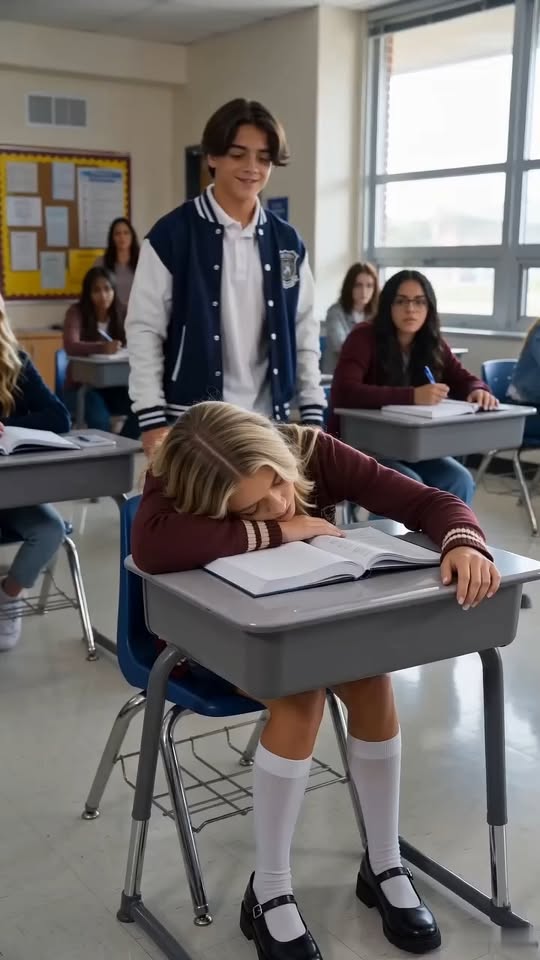
“Ethan Mercer,” I whispered, leaning in close so the secretary twenty feet away couldn’t hear over the hum of the copy machine. “He yanked my chair out from under me while I was asleep in study hall. And when he tried to grab my shoulder after I stood up, I threw him.“
Dad’s eyes flickered up to mine—a tiny flash of startled recognition crossing his face before I kept going.
“Dad, listen to me,” I said, gripping the rough canvas lapel of his jacket with my right hand. “When Ethan hit the floor, his phone fell out of his pocket right in front of me. Three text messages came through from an encrypted relay number while Mr. Holloway was in the hall.“
I recited them word for word, my voice barely above a breath:
“Did she fight back? We need video of the response. If Bennett reacts like her mother, call me immediately.“
Daniel Bennett froze.
I had seen my uncle take a flying spark from an angle grinder across his forearm without flinching. I had seen him argue down crooked general contractors twice his size. I had never, in six years of living under his roof, seen the blood drain out of his face until his skin looked like cold tallow under his shop tan.
“What did you just say?” he asked, his voice dropping an octave.
“The third message said If Bennett reacts like her mother, call me immediately,” I repeated, watching his eyes. “What does that mean, Dad? Why would someone pay Ethan Mercer to ambush me in a classroom just to see if I fight like Mom?”
“Maybe you misread the screen in the scuffle, Clara—”
“Stop,” I whispered fiercely. “Look at your hands. Your hands are shaking. That wasn’t nothing.”
Before he could answer, he looked past my shoulder toward the hallway leading to the administrative offices. “Where is Mercer right now?”
Ethan didn’t answer. He pushed through the heavy fire doors so fast the hydraulic arm hissed behind him.
By the time I reached the main office lobby, the inner oak door to Vice Principal Calder’s private office was already clicking shut. I didn’t sit on the vinyl bench outside the nurse’s room like I was supposed to. Instead, I stepped into the narrow shadowed recess beside the trophy cabinet, pulled my phone out of my cardigan pocket with my good hand, and dialed the first number on my favorites list.
Technically, Daniel Bennett was my maternal uncle, five years older than my mother Rachel.
He owned a small structural-welding and fabrication shop out by the industrial rail spur on the east edge of town, and when the county sheriff knocked on his door at three in the morning six years ago to tell him his sister’s car had been pulled out of the river, Daniel had walked into family court the very next afternoon in his one dark suit, signed the permanent guardianship papers without blinking, and spent the next six years raising me on welding contracts and burnt pot roast. I had started calling him Dad the summer I turned twelve, after I woke up from a nightmare with a hundred-and-two-degree fever and found him sleeping upright in a wooden kitchen chair beside my bed so I wouldn’t wake up in the dark alone.
He walked through the front glass doors of Oakridge High exactly twenty-six minutes after I hung up the phone.
He hadn’t stopped to change. He was still wearing his heavy canvas Carhartt work jacket with the scorch marks along the cuffs and his steel-toed boots, smelling faintly of ozone, ground iron, and cold autumn wind. The moment he spotted me standing by the trophy case holding my left arm against my stomach, the creases around his dark eyes deepened into hard lines.
“Let me see it, Clara,” he said quietly, dropping to a half-crouch in front of me regardless of the attendance secretary staring over her partition.
I pulled back the torn navy knit of my cardigan sleeve. A thick, mottled bruise the color of a ripe plum had already swollen over the bony point of my left elbow where the steel chair leg had caught me.





