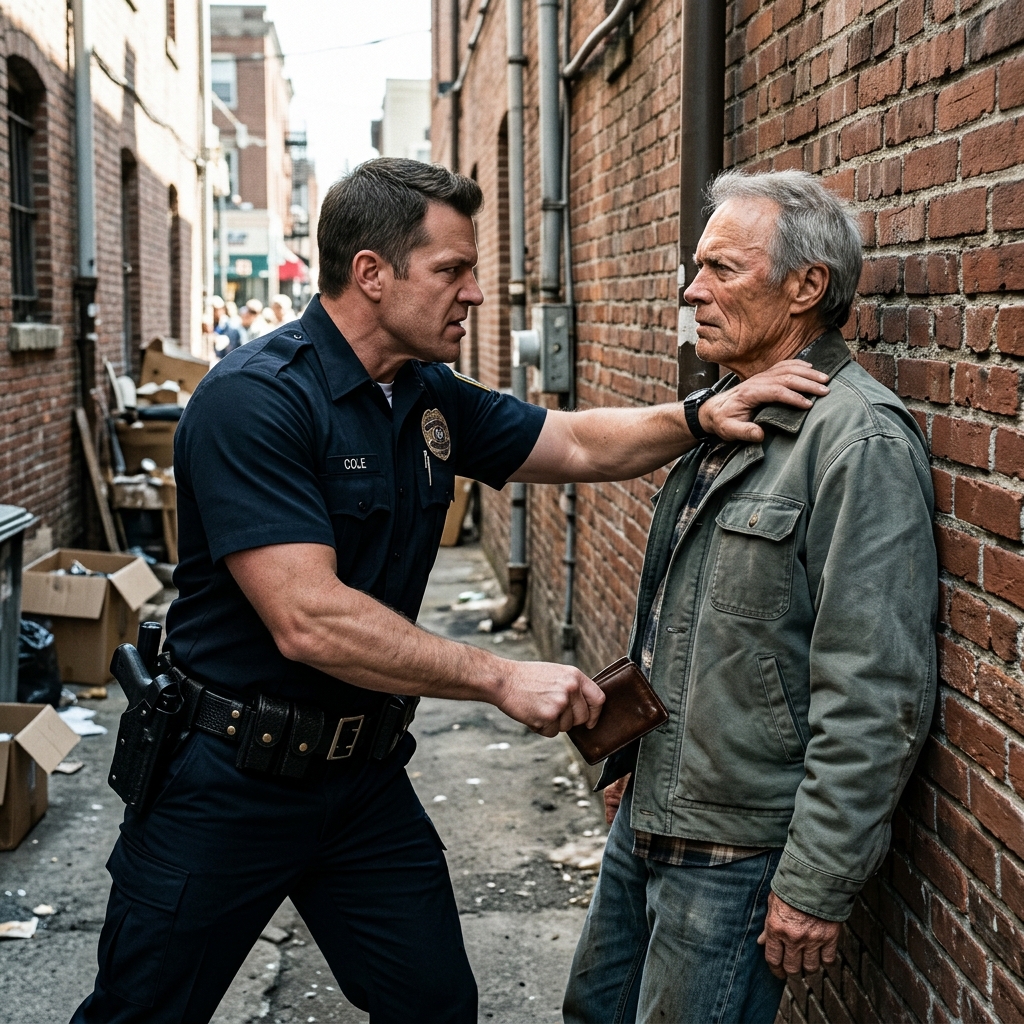
They had fabricated a life-threatening mental health emergency to force the cell provider into instantly handing over my granddaughter’s exact GPS coordinates. That was how they knew she was sitting in the waiting room of the transmission shop. It was a massive, federal-level civil rights violation, cleanly documented in the city’s own server logs.
I used the library computer’s snipping tool to capture the exact CAD log, the timestamp, and the unit number. I saved the image files directly onto all three flash drives. The digital fingerprint of their abuse of power was now permanently linked to the video of the theft.
As I ejected the first drive from the terminal, my phone vibrated sharply against my thigh.
It wasn’t a text message. It was a high-priority motion alert from the cheap, battery-powered camera mounted on the front door of my apartment, five miles away.
I unplugged the second drive, pulled my phone out, and tapped the notification. The screen transitioned to a live, fisheye video feed of the narrow, dimly lit hallway outside my unit.
Officer Cole and Officer Miller were standing directly in front of my door.
They weren’t wearing the casual, arrogant expressions they had in the alley. They looked tense, professional, and entirely ruthless. Miller was standing a few feet back, watching the stairwell for neighbors. Cole reached inside his heavy tactical jacket and withdrew a short, matte-black steel pry bar.
He didn’t knock. He didn’t announce a police presence. He jammed the wedge of the steel bar right into the gap between the door and the frame, just above the deadbolt. With one violent, practiced heave of his shoulder, the heavy brass lock snapped off the interior wood.
The door swung open, hitting the interior wall with a muted thud. They drew their service weapons and moved inside, pulling the door partially shut behind them.
My heart hammered against my ribs, a heavy, suffocating rhythm. I sat frozen in the plastic library chair, staring at the small screen in my hand. I could tap the microphone button on the app right now and warn them I was recording. I could dial 911 on the library phone and report a burglary in progress at my address.
If I called it in, dispatch would send another patrol car. But Cole and Miller were wearing badges. They would simply claim they saw a suspect matching a description flee into the building, or that they heard a cry for help justifying a warrantless entry. The responding officers would back them up. The thin blue line would close ranks, my doorbell camera would be confiscated as “evidence,” and I would be left with nothing.
To trap them, I had to let them commit to the crime. I had to let them destroy my sanctuary.
I swiped over to the camera’s interior feed, which covered my small living room, and hit the record button on my phone.
I watched in silence as the two men tore my life apart. They were looking for the two thousand dollars they assumed I had hidden, or perhaps they were searching for my phone, trying to erase the footage I had captured in the alley. Miller overturned the sofa, slashing the bottom fabric with a tactical knife to check the lining. Cole swept the bookshelf, knocking a row of framed photographs onto the hardwood floor. The glass shattered.
Then, Cole moved to the small teak wood lockbox sitting on my desk. It was where I kept my military discharge papers, a few spare keys, and my late wife’s silver jewelry.
Cole didn’t bother picking the lock. He grabbed the box by the brass hinges and smashed it violently against the edge of the heavy coffee table. The aged wood splintered into pieces, scattering paper and silver across the rug. Cole knelt down, sifted through the debris, and picked up my wife’s silver pendant. He held it up to the light, smiled, and dropped it into his pocket.
The rage that flared in my chest was blinding, a physical heat that made my hands shake. It took every ounce of discipline I had learned in the jungle to keep my finger off the 911 dial. I sat in the quiet library, listening to the soft hum of the fluorescent lights, and watched my home be completely violated. I was trading the safety of my walls for the unassailable, airtight proof of their corruption.
After eight minutes, they found nothing of value. Frustrated, they left the apartment, leaving the splintered door hanging open.
I stopped the recording. I transferred the new, high-definition video of the break-in and the theft of the necklace to the flash drives. The chain of evidence was now complete. I had the initial assault, the illegal GPS ping, and an armed, warrantless home invasion.
I ejected the remaining drives. I slid one down into my left boot, tucked the second into my shirt pocket directly behind my veteran’s ID, and gripped the third tightly in my right hand.
The local police precinct was entirely compromised. Internal Affairs was actively trying to contain the leak. I needed an arena they couldn’t control, a hammer heavy enough to shatter a corrupt precinct.
The regional FBI field office was located twelve blocks south, housed in the massive federal building on 9th and Market. Their public corruption unit handled civil rights violations under color of law. With this evidence, federal agents could bypass the local chain of command entirely.
I left the library and walked the twelve blocks. The air was growing cold as the afternoon shadows lengthened across the concrete sidewalks. I approached the federal plaza, a wide, intimidating expanse of security bollards, tinted glass, and heavy steel barricades.
But as I stepped onto the plaza, aiming for the main visitor screening line, my momentum abruptly died.





