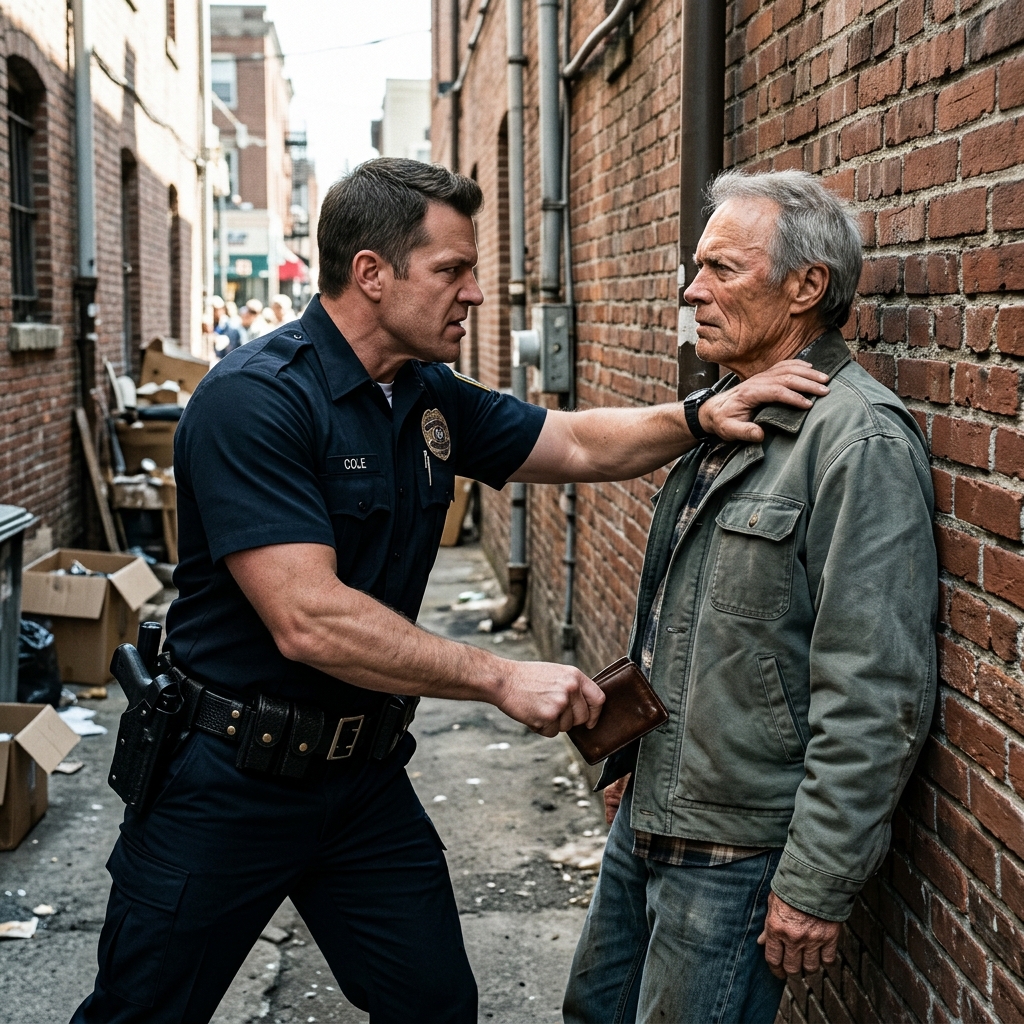
He picked it up, wiped the grit from the cowhide against his thigh, and stood. His joints screamed—the lumbar vertebrae ground together like stones in an iron mill—but his hands were as steady as they had been when he dialed in the windage on an M40 rifle over thirty years of hunting white-tail in the hemlock hollows.
He reached into his field coat and drew the phone from the pocket.
The screen was dark, but when he pressed his thumb to the sensor, the black glass dissolved into the live interface. The red recording indicator in the status bar was still glowing like a live coal: 00:03:42.
Beneath it, in crisp eight-point monospace font, the transmission log scrolled its green confirmation tokens:
SOCKET: OPEN
CHUNK_184: 1048576 BYTES -> UPLOAD_OK
REMOTE_SYNC: [COLUMBUS_RACK_04] -> VERIFIED
SHA-256: 8f4a...d91c
He had the badge. He had the face. He had the silver numbers—7419—and he had the unmistakable, high-definition frame of Cole’s thick fingers peeling twenty federal reserve notes out of an old man’s wallet while his partner watched the street.
Joseph pressed the red square. The capture ended with a soft, electronic click.
He slipped the phone back into the canvas, turned his collar up against the gathering sleet, and stepped toward the mouth of the alley.
Then his coat pocket began to buzz.
It wasn’t a call. It wasn’t the rhythmic ringtone he had assigned to Sarah. It was a short, sharp double-vibration that repeated every four seconds—the specific, high-priority ping of the operating system’s hardware-layer alert.
Joseph stopped under the awning of a dry cleaner’s shop. He pulled the device back out into the light.
Across the black screen, an amber dialogue box was pulsing with the frantic urgency of a radar warning:
BLUETOOTH PROXIMITY ALERT
UNKNOWN DEVICE DETECTED: [TAG_APPLE_AIRTAG_V2]
FIRST SEEN: 1 MINUTE AGO
SIGNAL STRENGTH: -42 dBm (IMMEDIATE PROXIMITY)
Joseph looked down at his left hand.
The wallet was still there, dripping slowly onto his boot.
He didn’t open the bill compartment. He turned the leather over, his thumb tracing the thick, double-stitched hem near the coin pouch—a compartment he hadn’t unzipped since his wife’s funeral eight years ago. Beneath the stiff cowhide, right against the brass teeth of the rusted zipper, his nail struck something small, circular, and rigid.
A hard disc. No larger than a half-dollar, convex on one side, smooth on the other.
A cold, greasy drop of water fell from the awning and hit the back of Joseph’s neck, but he didn’t feel it.
The shakedown hadn’t been an accident of patrol. Beat cops didn’t carry fifty-dollar tracking beacons in their vest pockets to slip into the torn pockets of random vagrants they robbed for cigarette money.
They had waited for him at the bank. They had known he was walking out with cash. And they hadn’t dropped the wallet to humiliate him—they had dropped it because an old man with an empty wallet goes home to sit in the dark, and an old man who sits in the dark brings the beacon directly to his front door.
Chapter 2: The Logic of the Wire
The diesel engine of the 14 Northbound sounded like an iron stove falling down a flight of concrete stairs.
Joseph sat on the long vinyl bench across the rear door, his field coat unbuttoned, his boots planted squarely over the heating grate where the warm, salt-scented air blew up from the undercarriage. He didn’t look out the side windows. He kept his eyes fixed on the convex mirror mounted above the driver’s windshield, watching the reflection of the road behind them.
Two cars back, a black Dodge Charger with blacked-out rims and an unmarked municipal exempt plate was floating between lanes like a shark behind a shrimp boat. It wasn’t tailgating; it stayed forty yards back, tucking itself behind a delivery van whenever the bus slowed for a stop, its low-profile amber running lights glowing like dull embers in the dusk.
Joseph reached into his coat. He did not pull the tracker from the coin pouch. To kill the signal now would be an alert—Cole would see the beacon drop off his dashboard receiver, realize the old man had found the hitchhiker, and pull the cruiser across the bus’s front bumper before they crossed the canal bridge.
With his left hand, he slipped his veteran’s card and the school picture of Sarah out of the clear plastic sleeve and tucked them into his woolen undershirt, flat against his ribs.
Then, as the bus lurched forward from the stop at 8th and Jackson, he leaned toward the window. Between the ribbed plastic back of the bench and the rattling steel wall of the bus body was a narrow, grease-blackened trough where thirty years of gum wrappers, bus schedules, and road dust had compacted into a dry felt.
Joseph slid the empty cowhide billfold into the crack, his fingertips driving it down until the leather wedged hard against the structural mounting bracket of the chassis.
He pulled the bell cord.
The air brakes exhaled with a sharp, pneumatic hiss. Joseph stood, his movements deliberately slow, his back bent into the rounded, shuffling posture of an arthritic retiree who had just lost his winter grocery money. He stepped down through the folding doors onto the slush-covered curb at 9th Street, never once turning his head toward the traffic.
Behind him, the heavy bus roared, its rear tires throwing a rooster-tail of dirty water across the gutter as it accelerated north toward the rail terminal.
In the reflection of a pawnshop window, Joseph watched the black Charger hesitate at the green light. Its turn signal didn’t flash, but its front wheels twitched toward the curb for half a second before the driver saw the bus pulling away. The Charger accelerated, trailing the diesel exhaust of the 14 Northbound like a bloodhound on a leash, its nose pointed toward the industrial flats five miles away.





