Parked illegally in the red zone just outside the federal barricades, its engine idling, was an unmarked black SUV with municipal plates. Leaning against the hood of the vehicle, holding a styrofoam cup of coffee and watching the main entrance, was Officer Miller.
I stopped instantly, stepping behind a heavy concrete transit kiosk before he could spot my canvas jacket.
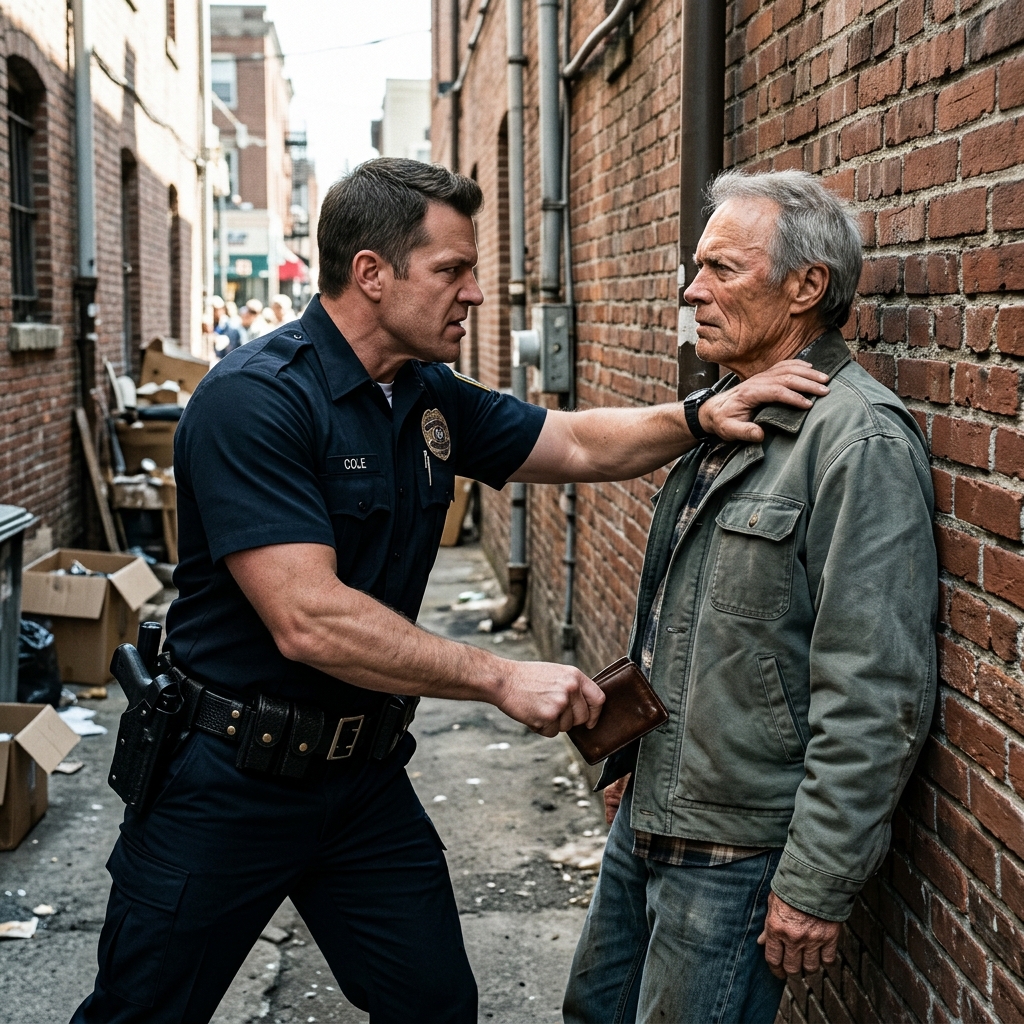
My mind raced, pulling back to the brief, chilling phone call I had made to the Internal Affairs dispatcher. Officer Cole is part of the district’s specialized asset recovery team.
Asset recovery task forces were almost always multi-jurisdictional. They operated on federal grants, sharing seized civil forfeiture funds with federal agencies. Miller and Cole weren’t just local beat cops shaking down civilians; they had federal clearances. They had a working relationship with the agents inside that building.
They knew exactly how the system worked. When they realized they hadn’t found me or the footage in my apartment, they knew the only logical place an aggrieved citizen with heavy evidence would run was the federal level. Miller was waiting to intercept me. If I walked up to that metal detector, he would flag me as a suspect in an ongoing local investigation. The federal guards would hand me over, and I would disappear into a precinct holding cell before I ever spoke to an agent.
I was entirely boxed out of the official reporting routes. The system was guarding its own gates, shielding the men who wore its uniform.
I stood in the shadow of the kiosk, my thumb tracing the hard plastic casing of the flash drive in my palm. The conventional paths to justice were closed. If I couldn’t hand the proof to the authorities, I would have to detonate it where they couldn’t contain the blast.
CHAPTER 3: The Chamber They Couldn’t Lock Down
I stepped deeper into the shadow of the heavy concrete transit kiosk, letting the evening commuter foot traffic flow past me. Officer Miller was still leaning against the hood of the unmarked municipal SUV, fifty yards away, his eyes scanning the security perimeter of the federal building. He took a slow sip from his styrofoam cup, completely relaxed. He wasn’t hiding. He was actively guarding the only door he believed I could walk through.
The realization crystallized in my mind with absolute clarity. The asset recovery task force didn’t just share funding with the federal agencies inside that tinted glass monolith; they shared access. If I walked up to that metal detector, Miller would simply flash his badge to the plaza guards, declare me a suspect in a volatile local investigation, and take custody of me before I ever reached the FBI’s intake desk. The three encrypted flash drives I carried would disappear into a precinct locker, logged as contraband or simply destroyed.
I couldn’t beat a rigged chain of command by walking through its front door. I needed an arena they couldn’t control, a venue that couldn’t be paused, confiscated, or routed through a quiet Internal Affairs filter. I needed a live wire.
I checked my watch. It was 5:45 PM.
During my search on the library computer earlier, I had seen a banner across the top of the county’s public transparency portal. The City Council was holding its monthly open forum tonight. More importantly, those sessions were broadcast live, without a delay, on both the municipal television channel and the city’s unencrypted web portal. It was a completely public record, overseen by elected officials and watched by local beat reporters who sat in the gallery.
I turned my back on the federal plaza and began to walk.
City Hall was located six blocks east, a massive, ornate limestone building surrounded by manicured lawns and heavy wrought-iron fencing. My knees burned with a deep, radiating ache from the shove against the brick wall hours earlier, but my pace remained steady. I kept my head down, avoiding the lines of sight of passing patrol cars, and merged with the crowd of citizens, staffers, and lawyers moving toward the main entrance.
Inside the grand foyer, I encountered a bottleneck. A line of visitors was filtering through a pair of freestanding metal detectors, overseen by three private security contractors rather than municipal police. I joined the back of the queue.





