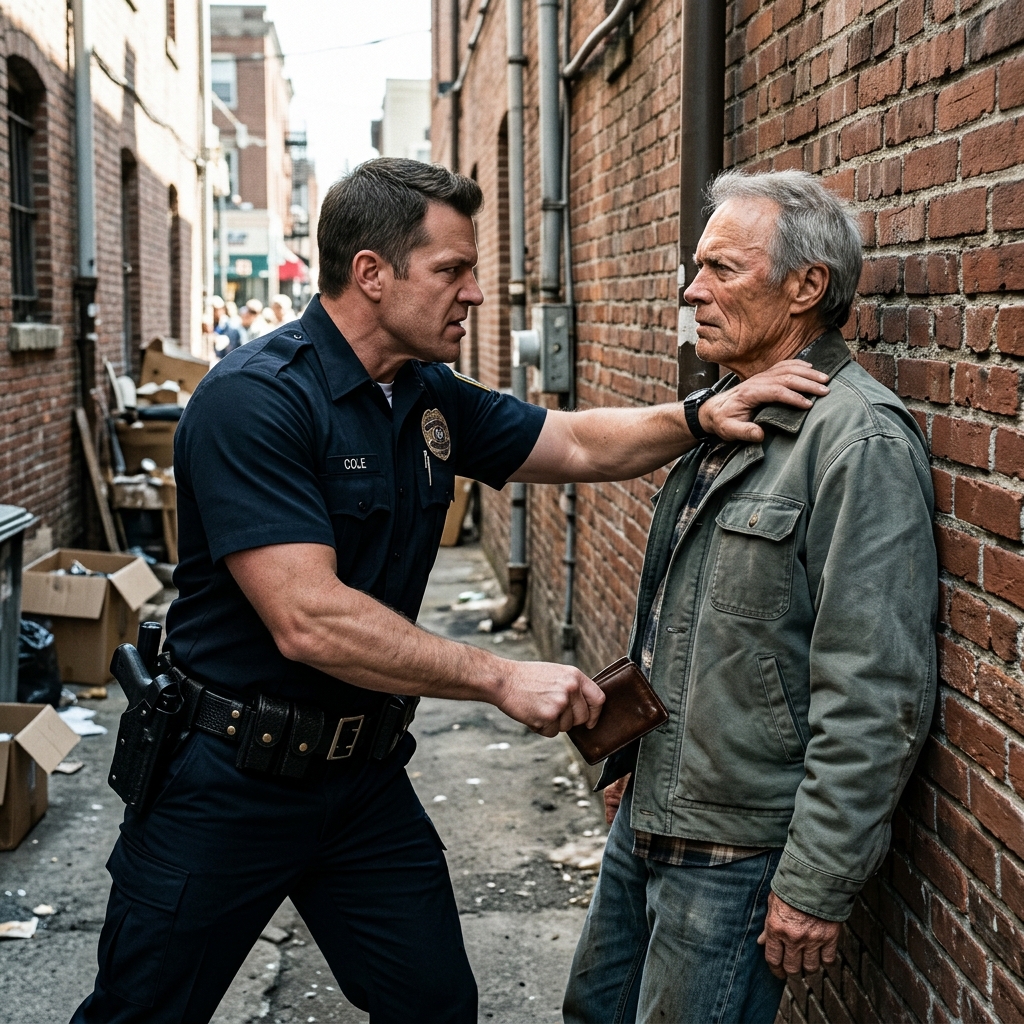
Chapter 1: The Weight of Scraps
The damp in the brickwork on Fourth Street had a way of seeping directly into an old man’s marrow. It was an institutional, sulfur-colored autumn, the kind where the coal-ash grime from the river yards never quite dried, leaving the limestone sills of the First National Bank slick with an oily skim.
Joseph stood on the corner with his collar turned up against the river draft, his fingers buried deep in the right pocket of his field coat. The coat had survived forty years of scrub oak, motor grease, and the salt-slush of northern winters; its waxed canvas had grown stiff as split cowhide, the elbows patched with scrap leather he’d stitched on using an awl and waxed sailmaker’s thread. Inside that pocket, beneath a pair of rusted three-quarter-inch hex nuts and a receipt from the feed store, his thumb remained pinned against the hard, rectangular ridge of his phone.
Across the four lanes of wet asphalt, the neon clock over the transmission shop flickered like an erratic pulse: 2:14 PM.
Twenty minutes earlier, Sarah had sat on the edge of the grease-spotted vinyl bench in the bay office out on the bypass, her knuckles red from the cold, her breath fogging the small square of plexiglass between her and the dispatcher. The three-speed transaxle in her ’04 Civic had dropped its second-gear synchro on the interchange ramp at six that morning, leaving her stranded in the slush with two plastic crates of commercial cleaning supplies in the trunk and four office-park contracts she couldn’t afford to forfeit. The mechanic, a man named Hauer who smelled perpetually of brake-cleaner and stale Virginia tobacco, had laid his greasy palms flat on the counter and given her the choice: two thousand in cash by three o’clock so he could clear the core charge with the distributor in Scranton, or he dropped the unbolted housing onto the shop floor and charged sixty dollars a night for the lift space.
Joseph had drawn the two thousand dollars in twenty crisp, sequential hundred-dollar notes from the First National branch. He had watched the teller—a girl no older than Sarah, her nails painted the dull blue of a bruised plum—count them down with the mechanical, licking snap of a rubber finger-thimble.
One, two, three, four.
The paper had that sharp, sour linen smell of fresh federal reserve ink. It was his property-tax reserve, scraped together forty dollars at a time from sharpening lawnmower blades, turning small brass fittings on his basement South Bend lathe, and the meager pension check the Department of Veterans Affairs deposited on the first Tuesday of every month like clockwork.
He had folded the bills once, slipped them into the center pocket of his split-cowhide billfold, and stepped out into the mist.
He never reached the corner of Fourth and Elm.
The patrol car didn’t use its siren. It came off the curb with a sharp, heavy thump of its front coils, the heavy push-bumper of the Ford Crown Victoria cutting across the wet pedestrian ramp like an iron plow. The front right tire mounted the curb by three inches, grinding a strip of black tread against the concrete, pinning Joseph into the triangular alcove formed by the bank’s emergency fire exit and a padlocked grease trap.
The doors didn’t swing open; they popped with the dry, pneumatic latch-snap of fleet vehicles that had seen too many graveyard shifts.
“Hold it right there, pops,” the driver said.
He was thirty, maybe thirty-two, his broad jaw shadowed by a morning shave that hadn’t quite taken. The nametag pinned into the stiff polyester of his dark-navy breast pocket read G. COLE. Behind him, lingering near the driver’s side A-pillar with his thumbs hooked into the top of his tactical vest, stood a younger man—narrow-shouldered, pale-eyed, his leather duty rig still carrying the mirror-shine of a recruit who hadn’t yet worked a summer riot. His brass plate said R. MILLER.
Joseph didn’t raise his hands, but he didn’t lower them either. He let his heels settle against the mortar of the bank wall. The cold from the brick traveled through the heavy wool of his shirt, through the scar tissue between his shoulder blades where a mortar fragment had taken three ribs down to the bone outside Pleiku in the spring of ’68, and grounded him like an iron rod driven into frozen loam.
“Officer,” Joseph said. His voice was naturally low, raspy from five decades of machine oil and sawdust, but it had the flat, level timbre of an anvil.
Cole didn’t waste time on the customary administrative dance. He didn’t ask for a driver’s license, an insurance binder, or an explanation for why an old man was walking down an alley with his head lowered against the rain. He stepped directly into the twelve inches of air between them. The front of his nylon plate carrier struck Joseph’s chest, the hard edge of a ceramic trauma plate grinding against the veteran’s sternum with deliberate, calibrated malice.
“Keep your hands where I can see them,” Cole muttered, his breath sour with the chemical grease of convenience-store meat sticks.
“My hands are at my sides,” Joseph said.
In the dark recess of his canvas coat, his thumb moved three-sixteenths of an inch.
Click. Click. Click.
The triple-tap on the recessed power switch was an automated routine his hands had practiced every Sunday evening while sitting on the porch steps. Inside the heavy pocket, the phone’s haptic motor gave two microscopic, sub-audible pulses against the seam of his trousers. The micro-camera, peeking through a three-millimeter brass grommet Joseph had pressed into the leather trim of the field pocket with a sail-punch two months earlier, came alive.





