You have twenty minutes, Joseph thought. Maybe twenty-five before the bus hits the end of the line and the driver sweeps the seats.
He walked two blocks east, cutting through the gravel alleyway behind an abandoned auto-electric warehouse. His knees throbbed with a dull, rhythmic ache, but the fog in his mind had cleared. It was the same sensation he had known in the la Drang—that peculiar, crystalline quiet that arrives when you realize the perimeter has been overrun, the radio operator is dead, and the only terrain that belongs to you is the six feet of mud beneath your boots.
He entered the Carnegie Public Library through the basement delivery ramp, avoiding the main rotunda where the security guard sat beside the turnstiles reading a paperback.
The library was an eighty-year-old limestone cavern, cold and smelling of vinegar, wet overcoats, and deteriorating pulp paper. In the periodicals annex on the ground floor, half a dozen retired railroaders sat in wooden armchairs under the yellow lamps, their spectacles resting on the afternoon editions of the Scranton Times.
Joseph walked past them to the row of public computer carrels tucked into the rear corner behind the genealogy stacks.
He didn’t sit at the first terminal. He chose Station 4—the machine whose screen was shielded from the central reference desk by a seven-foot oak shelf holding bound volumes of the county deeds registry from 1912.
He sat down, his boots squeaking on the linoleum. He pulled a small plastic case from his watch pocket, opened it with his fingernail, and drew out three identical SanDisk 32-gigabyte flash drives, their black casings scuffed from riding in his toolbox.
He booted the terminal into a live Debian Linux session from an ancient thumb drive he had carried on his keychain for six years, bypassing the library’s Windows desktop and its mandatory user-login portal. The screen flickered once, resolving into a gray, text-only command interface that drew no attention from the reference librarian seventy feet away.
The green transfer bar crawled across the terminal with agonizing deliberation: 12%… 28%… 44%.
While the bits settled into the flash memory, Joseph opened a secondary browser window and navigated to the public transparency portal for the Luzerne County Emergency Communications Center.
Most citizens thought 911 was an impenetrable vault. They didn’t know that under the Commonwealth’s open-records mandate, the county maintained a near-real-time text feed of active CAD—Computer Aided Dispatch—incidents for regional media outlets, delayed by twelve minutes to prevent rubbernecking at traffic fatalities.
Joseph filtered the feed by Sector 4-B, the municipal district covering the downtown commercial core.
He scrolled through thirty entries—a dumpster fire behind the bakery, a shoplifting complaint at the Rite Aid, a welfare check on an elderly woman who hadn’t brought in her milk bottles.
Then he found it.
TIME: 14:08:12
INCIDENT: #26-88194
UNIT: 4-BRAVO (COLE, G. / MILLER, R.)
DISPATCH CODE: 10-56 (EXIGENT CIRCUMSTANCES / SUICIDAL SUBJECT)
TARGET_IDENT: CELL_TOWER_PING [VERIZON_NODE_414]
IMSI: 311-480-992184120
SUBSCRIBER: VANCE, SARAH M.
COORDINATES: 41.2481° N, 75.8813° W (HOUSTON TRANS_REPAIR, BAY 3)
Joseph stared at the amber characters until they burned into his retinas.
Exigent circumstances.
Under the federal Communications Assistance for Law Enforcement Act, a patrol officer couldn’t ping a citizen’s mobile handset without a warrant signed by a magistrate—unless they invoked the emergency suicide or immediate-harm exception. Cole hadn’t just run an informal shakedown. He had logged into his mobile data terminal inside the cruiser, typed in Sarah’s cell number—which he had pulled off the emergency contact card tucked into Joseph’s wallet—and filed a fraudulent mental-health declaration with the carrier to bypass the fourth amendment.
He had turned the girl’s own phone into a surveillance beacon while she sat on an oil-stained chair five miles away, waiting for her grandfather to bring the money for her car.
The flash drives clicked softly as the transfer finalized:
Joseph reached out, his thumb catching the edge of the first drive, pulling it from the USB slot. He slid it down into the heavy wool of his left boot, wedging the plastic between his sock and the leather ankle support. The second drive went into the small, hidden interior pocket of his field coat, behind the flannel lining. The third he held in his right fist, the hard corners biting into his calluses.
His phone buzzed in his pocket.
Not a system notification. A motion alert.
Joseph drew the phone out and laid it on the edge of the keyboard. The screen displayed the live camera feed from the battery-powered doorbell unit he had mounted to the jamb of his second-floor apartment on Maple Street three years ago, after the mill down the hill had laid off its second shift and the copper-thieves had started checking the back porches.
The lens was wide-angle, slightly distorted around the edges, showing the dark, peeling wallpaper of the hallway.
Two men were standing on the landing.
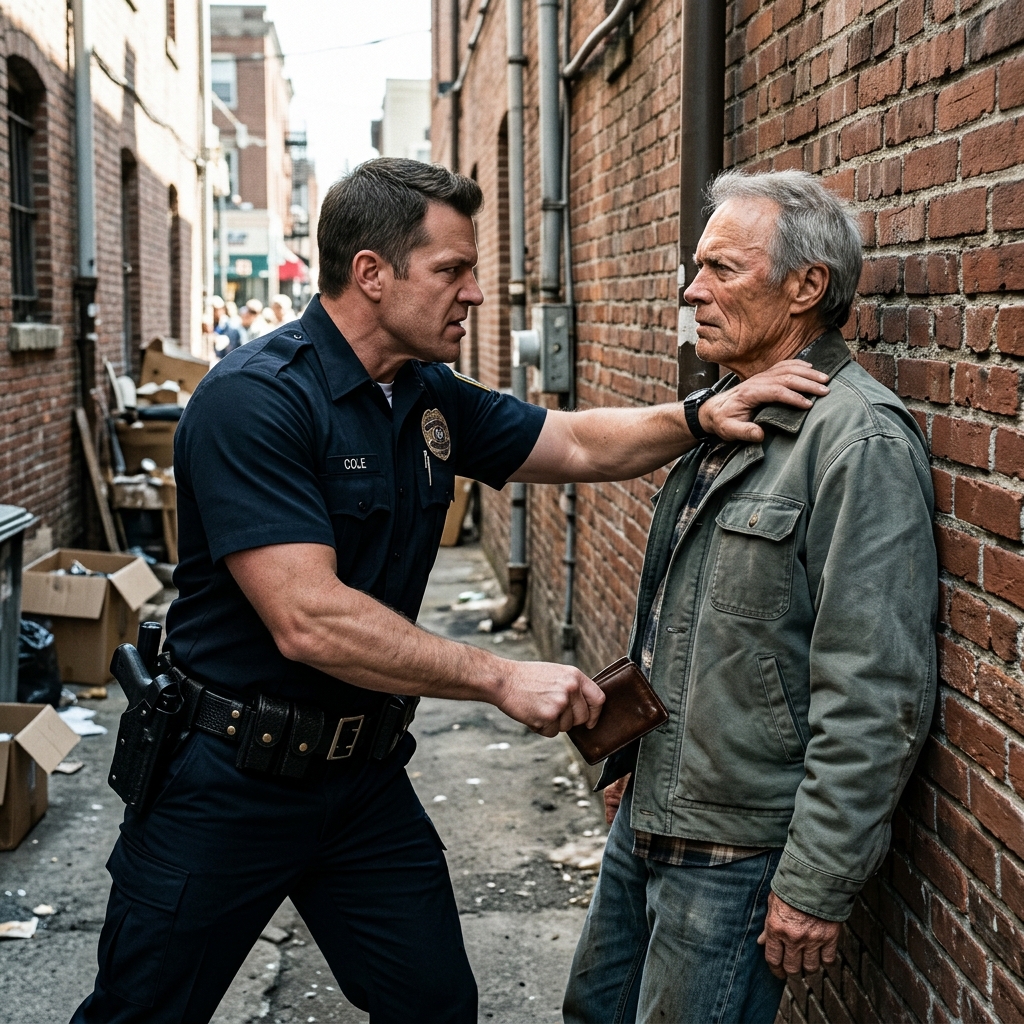
They were not in uniform. Cole had thrown an unzipped nylon windbreaker over his tactical vest; Miller wore a gray hooded sweatshirt with the hood pulled up over his patrol cap. But Cole was holding a sixteen-inch drop-forged steel halligan bar—the compact, heavy entry tool that usually sat in the trunk mount of a supervisor’s unit.
He didn’t knock. He didn’t check the bell.
Cole shoved the adze end of the steel bar into the jamb, two inches above the brass deadbolt Joseph had hand-fitted into the red oak frame twenty years earlier.
On the phone screen, there was no sound—Joseph had disabled the external speaker to save the battery—but he saw the wood buckle. The yellow grain of the oak





