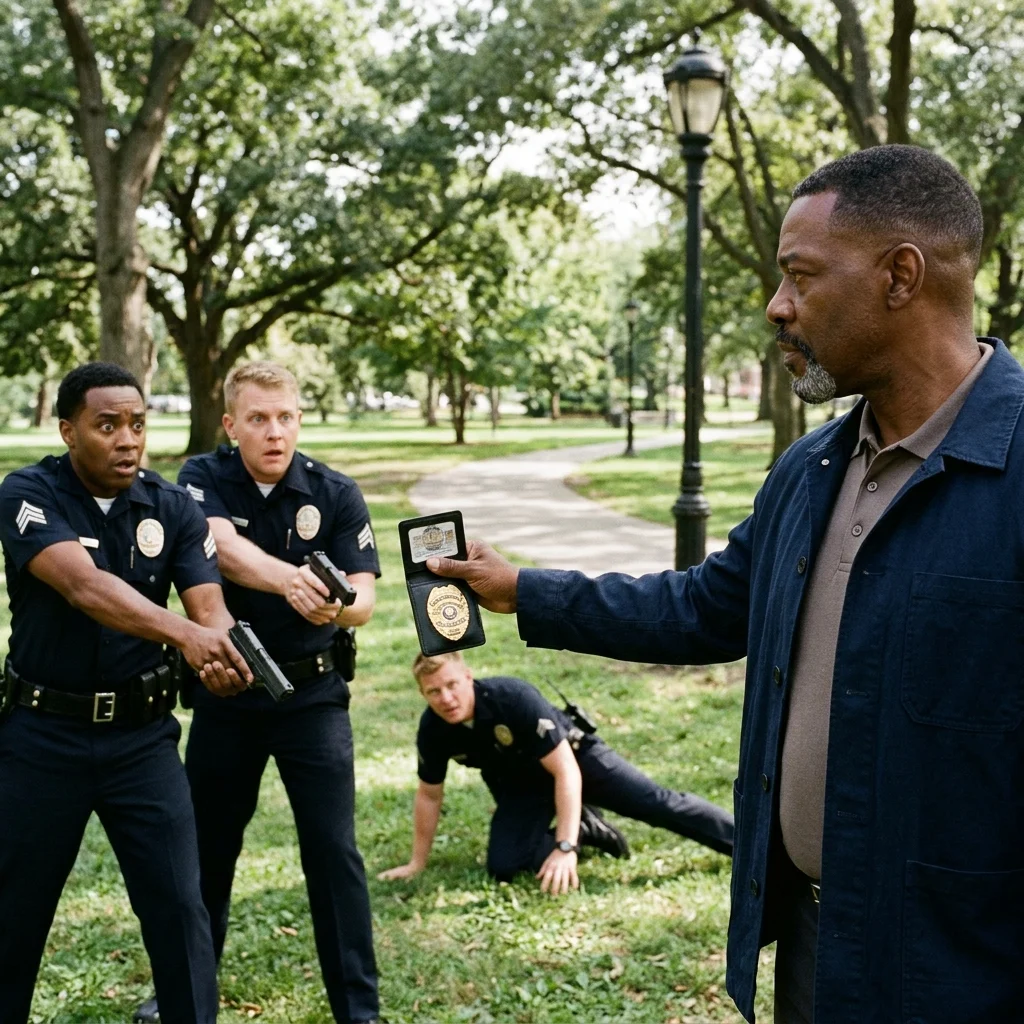
Her voice trembling as she asked him to examine several cases.
He had been exhausted after a long day.
He had promised to help.
Then he had given the folder to Everett Voss.
Voss had returned it two weeks later.
He claimed the allegations were baseless.
Marcus had believed him.
Margaret watched the realization spread across his face.
“Three days after that review, a witness Evelyn had interviewed disappeared.”
Marcus felt sick.
“She never knew whether Voss had identified the witness from those documents.”
He covered his face.
For years, he had imagined himself protecting his family from painful rumors.
Now he understood that his wife had been protecting other people from the consequences of his misplaced trust.
Margaret reached into the final box.
“She left something specifically for you.”
It was a sealed envelope.
Marcus recognized his name written across the front.
He opened it slowly.
Inside was a letter.
He began reading.
My dearest Marcus,
If this letter has reached you, then someone has finally found the evidence I could not bring home.
I know how much you loved Caleb.
I also know that losing him frightened you so deeply that you needed his death to have an explanation you could survive.
But our son was not the person those reports described.
He was brave.
He was compassionate.
And on the night he died, he went to help a woman and her little girl who were afraid of the police.
Marcus stopped reading.
He looked toward Margaret.
“What does she mean?”
Margaret took a slow breath.
“There is something else you need to know.”
Marcus waited.
“Rosalie Vega contacted Evelyn before Caleb died.”
Imani stared at her.
“What?”
“Your mother was helping Rosalie prepare a complaint about evidence theft.”
Marcus felt his heartbeat quicken.
“Caleb knew?”
Margaret nodded.
“Rosalie called Evelyn from Central Precinct that evening.”
“She said officers had discovered she was copying records.”
“Evelyn couldn’t get there quickly enough.”
“So she called Caleb.”
Marcus looked at the letter.
His hands trembled.
Margaret continued gently.
“She asked him to check on Rosalie and her daughter.”
“Caleb agreed.”
“He was an adult, and he understood the risk.”
“He took his recorder because he believed documenting the encounter might protect them.”
Marcus stared at the table.
For fourteen years, he had imagined his son making a terrible mistake.
Now he knew Caleb had gone to that station because someone needed help.
And his mother had known the truth.
Margaret’s voice softened.
“Evelyn blamed herself for asking him to go.”
Marcus shook his head.
“No.”
Tears spilled down his face.
“No, she couldn’t have known.”
Margaret nodded.
“She eventually understood that.”
“But she never forgave herself for surviving the decision.”
Marcus returned to the letter.
I did not tell you everything because I feared you would blame yourself, blame me, or confront Everett before we had the evidence to protect anyone.
I made mistakes, Marcus.
Terrible mistakes.
But the greatest mistake would have been allowing the people responsible to make us stop asking questions.
There was a fourth witness that night.
A frightened little girl who saw what the adults claimed had never happened.
Her name was Elena.
If she is ever ready to speak, please listen to her.
Not because she has become an officer.
Not because she carries a badge.
But because she was there.
Marcus pressed the letter against his chest.
For several minutes, he could not speak.
Then Margaret explained the truth behind the organization.
Evelyn had founded the Fourth Witness Project in honor of the child who had been hidden inside Locker 004.
She spent years searching for Elena after the girl entered foster care.
When Elena became an adult, Evelyn finally contacted her.
She offered protection, counseling, and the first person willing to hear her entire account without calling her confused or dishonest.
Evelyn had believed Elena when the authorities refused to believe a child.
After Evelyn’s death, Margaret continued the investigation.
Elena eventually joined the police department because she wanted to understand how the evidence system worked from within.
She had quietly preserved suspicious records, documented irregularities, and provided information to independent advocates.
When Marcus’s confrontation with Briggs became public, Elena recognized that there might finally be enough attention to reopen the old investigation.
She sent the anonymous photograph of Locker 004.
She sent the authorization document.
And she made certain Marcus understood that the number connected his son’s death to the present-day evidence scandal.
Marcus stared toward the window.
The anonymous whistleblower who had led him toward the truth was the same officer who had lowered her gun in Riverside Park.
The same frightened little girl Caleb had tried to save.
Over the following months, the corruption investigation expanded dramatically.
Former officers came forward.
Evidence technicians admitted they had been pressured to alter records.
A financial investigator discovered payments concealed through maintenance contracts and charitable organizations.
The examination of old criminal cases revealed evidence substitutions, false testimony, and failures to preserve exculpatory information.
Numerous convictions were referred for independent review.
Some defendants were granted new trials.
Others had their convictions vacated.
Briggs was arrested on charges arising from the fabricated stop, assault, and subsequent obstruction.
Investigators also found evidence connecting him to other unlawful arrests.
He eventually agreed to cooperate with prosecutors in exchange for consideration at sentencing.
His testimony implicated additional officers who had participated in the scheme.
Everett Voss faced far more serious accusations.
Prosecutors charged him in connection with the corruption operation, efforts to conceal evidence, and Caleb’s death.
For the first time in decades, the former chief appeared in court without his uniform.
He sat between attorneys.
He wore ordinary clothes.
And no one addressed him as Chief.
Marcus attended one of the hearings.
Voss turned toward him.
“Marcus.”
Marcus stopped.
His former friend looked exhausted.
“We were brothers once.”
Marcus studied him.
“I thought we were.”
Voss lowered his voice.
“I made mistakes.”
Marcus shook his head.





