She described Caleb rescuing her.
She described hearing him assaulted.
And she described being placed into foster care after her mother’s conviction.
Voss’s attorney challenged her memory.
“You were only twelve years old.”
Ruiz looked directly at him.
“I remember every second.”
“Trauma can distort recollection.”
Ruiz leaned toward the microphone.
“Trauma doesn’t explain why your client tried to burn the building where my witness statement could be verified.”
The room erupted.
The presiding judge demanded order.
Then the recovered recording was played.
The chamber fell silent.
When Caleb’s voice pleaded for an ambulance, several people began crying.
Marcus stared at Voss.
For the first time in thirty years, his former friend could not meet his eyes.
After the recording ended, the prosecutor announced that investigators had secured corroborating evidence and that criminal charges were being prepared.
Voss stood abruptly.
“This is a conspiracy!”
The judge ordered him to sit.
He refused.
Two court officers approached.
Voss pointed at Marcus.
“HE SIGNED THE ORDER!”
Every face turned toward the general.
Marcus rose.
The room became utterly still.
“Yes,” he said.
“I did.”
His voice carried across the chamber.
“I signed an authorization without demanding the scrutiny it deserved.”
He looked toward the families.
“And when people challenged the official explanation of my son’s death, I dismissed them.”
Imani began crying.
Marcus continued.
“I cannot ask this city to confront its failures while hiding my own.”
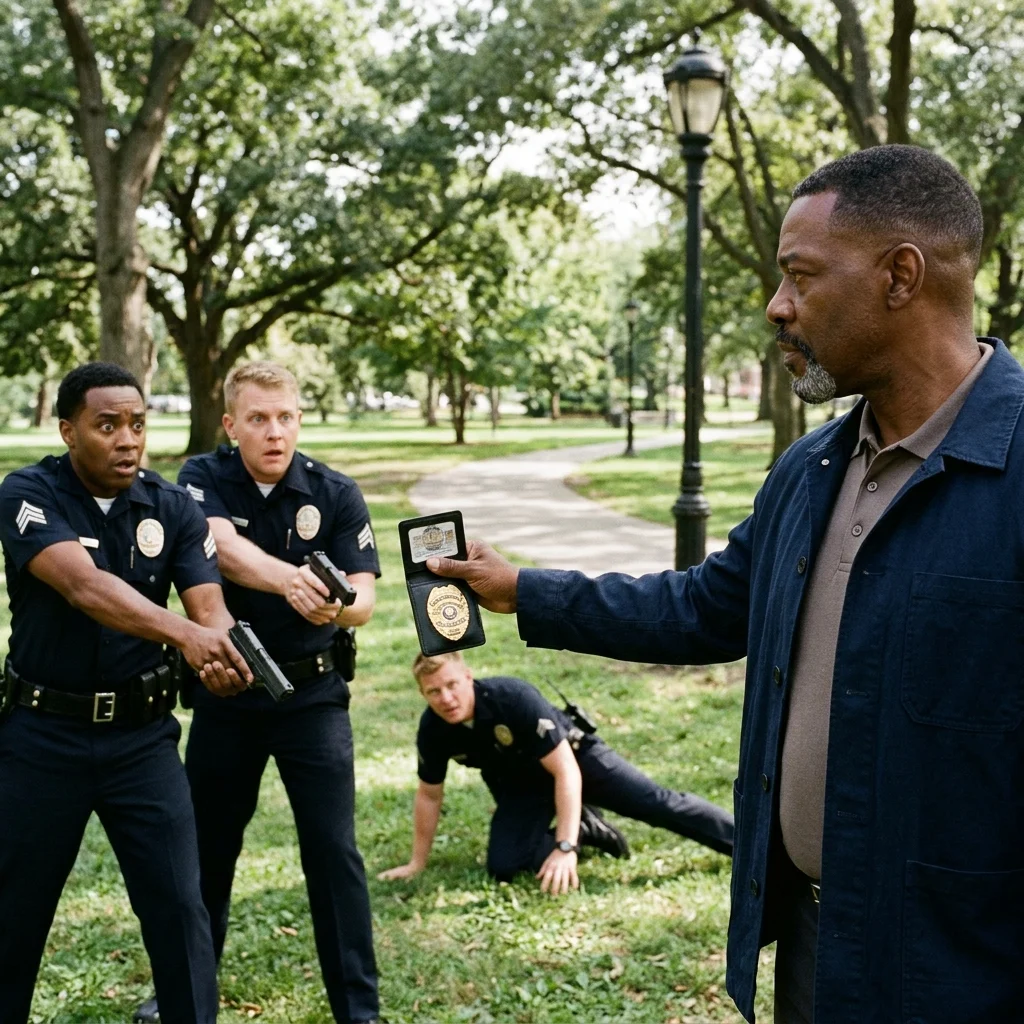
He placed his identification badge on the witness table.
“I have requested that my administrative authority be suspended pending an independent review of my decisions.”
Voss stared at him.
Marcus looked back.
“This is what accountability looks like, Everett.”
The judge ordered the hearing recessed while the prosecutor addressed the evidence.
Voss was escorted from the chamber under guard.
For the first time, Marcus believed the truth might finally survive.
Then Imani’s phone vibrated.
She looked at the screen.
It was a message from an unfamiliar number.
Attached was a scanned letter bearing her mother’s handwriting.
At the top were four words.
THE FOURTH WITNESS PROJECT.
Beneath them appeared a date from eight years earlier.
And under the date was a name that made Imani’s breath catch.
EVELYN HALE.
Her mother.
The woman who had died six years ago.
Imani read the final sentence.
Then she slowly turned toward Marcus.
“Dad, there’s something you don’t know about Mom.”
Marcus stared at her.
“What?”
Imani’s eyes filled with tears.
“She never stopped investigating Caleb’s death.”
Marcus stared at the letter on Imani’s telephone.
His wife’s handwriting was unmistakable.
Evelyn had always written with a slight rightward slant, carefully forming every capital letter.
Even during the final months of her illness, when her hands sometimes trembled, her handwriting retained that familiar elegance.
Marcus touched the screen.
“Where did this come from?”
Imani swallowed.
“An attorney named Margaret Ellison.”
“Who is she?”
“She runs a small nonprofit organization that helps families investigate wrongful convictions.”
Marcus frowned.
“I’ve never heard of her.”
“Mom knew her.”
He looked at the date.
The letter had been written eight years earlier.
Two years before Evelyn’s death.
“Why would your mother be involved in something like this?”
Imani’s expression softened.
“Maybe because she never believed Caleb died from an overdose.”
Marcus closed his eyes.
The words hurt because they confirmed something he had spent fourteen years refusing to acknowledge.
His wife had doubted the official explanation.
His daughter had doubted it.
Even his son had warned him that something was wrong.
And the man responsible for investigating wrongdoing had been the last member of his own family willing to question the police.
The following morning, Marcus and Imani visited a modest brick building behind Riverside Community Library.
A wooden sign beside the entrance read:
THE FOURTH WITNESS PROJECT.
Inside, the walls were covered with photographs.
Families holding pictures of imprisoned loved ones.
Children embracing parents after overturned convictions.
Volunteers sorting documents.
Letters from attorneys.
Newspaper clippings.
And beside the reception desk was a photograph of Evelyn Hale.
She was smiling.
Her silver-streaked hair was pulled away from her face.
She wore the yellow cardigan Marcus had given her on their twenty-fifth wedding anniversary.
Beneath the photograph was a small plaque.
EVELYN HALE — FOUNDING INVESTIGATOR AND ADVOCATE.
Marcus stopped walking.
His eyes filled with tears.
For years, he had believed his wife spent her final healthy years attending community meetings and helping families struggling with legal problems.
He had never realized how much of that work concerned their own son’s death.
An elderly woman approached.
“General Hale?”
Marcus nodded.
“I’m Margaret Ellison.”
She extended her hand.
“Your wife was one of the bravest people I ever knew.”
Marcus could barely respond.
Margaret led them into a private room.
On the table stood four cardboard boxes.
Each was marked with the same blue number.
004.
Marcus stared.
“What is all this?”
Margaret opened the first box.
“Your wife began collecting documents after Caleb died.”
Inside were hundreds of copied police reports, handwritten witness statements, and evidence photographs.
Margaret opened another.
“She discovered several people had been arrested using suspiciously similar evidence.”
Another contained financial records linking officers to private companies that benefited from seized property.
The fourth held letters from families whose complaints had been dismissed.
Marcus slowly sat down.
“How did she find all these people?”
“She listened.”
Margaret’s answer was simple.
“She went into neighborhoods where people were afraid of the police.”
“She sat at kitchen tables.”
“She attended court hearings.”
“She visited prisoners.”
“And when someone said officers had planted evidence, she didn’t automatically assume they were lying.”
Marcus lowered his head.
Margaret continued.
“Your wife believed there was a pattern, but she knew she needed proof strong enough to survive scrutiny.”
“Why didn’t she come to me?”
Margaret looked at him for a long moment.
“She did.”
Marcus looked up.
“What?”
“Five years after Caleb died, she brought you a folder containing evidence irregularities.”
He remembered.
A rainy evening.
Evelyn standing in their kitchen with a thick yellow folder.





