Priya motioned for Marcus to sit.
“There’s something we need to show you.”
She opened the folder.
“The original Riverglass archive contains thirty-two complaints.”
Marcus nodded.
“We know.”
“But the first complaint is different from the others.”
She turned the document toward him.
The report was dated May 16, 2018.
It described irregular transfers of evidence connected to the waterfront redevelopment cases.
Several officers were named.
So were two city officials.
And at the bottom was a signature.
OFFICER DANIEL BROOKS.
Marcus stared at it.
He looked up.
“Daniel filed the first complaint?”
Priya nodded.
“Before Lena Ortiz opened her investigation.”
“Before the altered witness statements.”
“Before the redevelopment properties were transferred.”
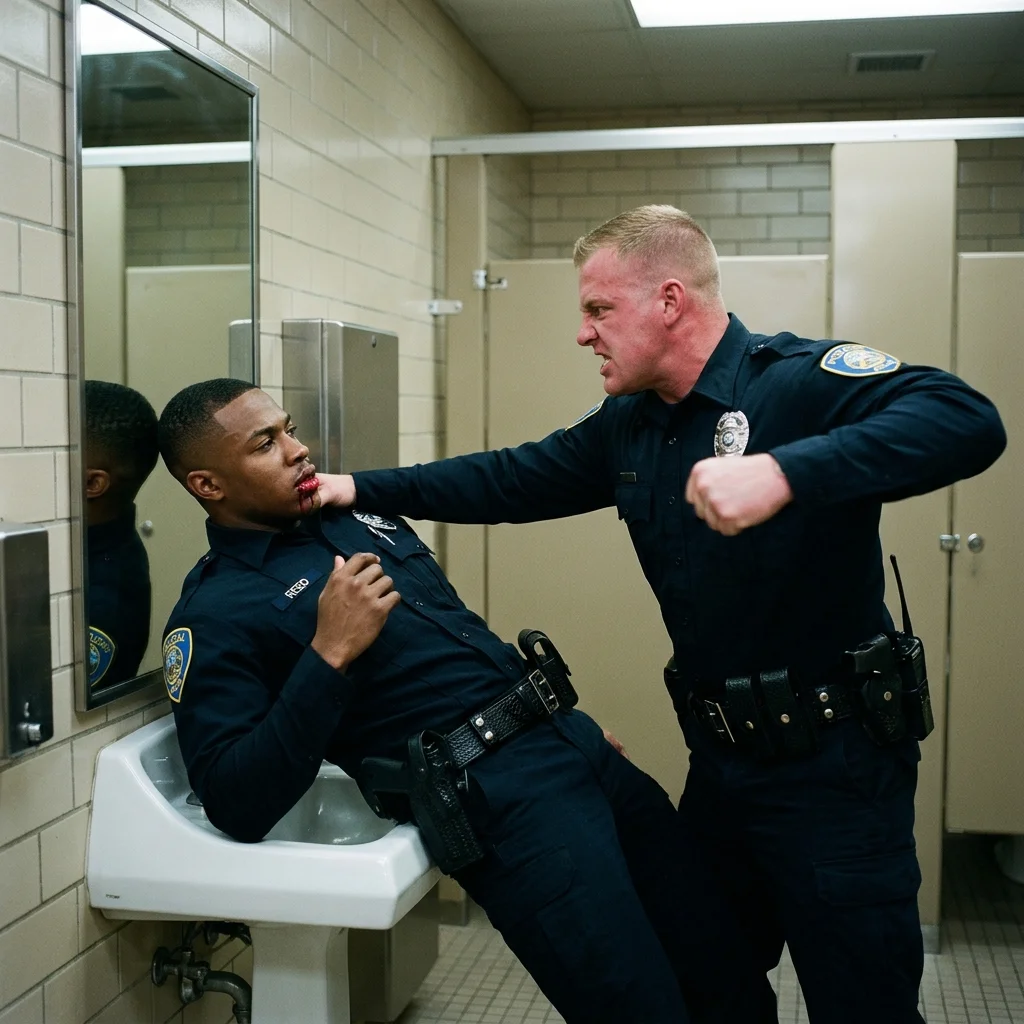
Marcus struggled to reconcile the name on the page with the man who had attacked him.
“He reported them?”
“Yes.”
“What happened?”
Ada answered.
“The complaint was referred to the city legal office.”
Marcus already knew where this was going.
“Julian Ashford.”
Ada nodded.
“At the time, Ashford was overseeing legal reviews connected to the Harbor Renewal Initiative.”
Priya turned another page.
“Rather than pursuing the allegations, the evidence indicates that Ashford confronted Brooks about the complaint.”
“Shortly afterward, Brooks signed the first false supplemental report.”
Marcus stared at the paperwork.
“Why would he do that?”
Priya looked toward the window.
“Brooks says Ashford threatened to expose an unrelated departmental violation that could have ended his career.”
“He was afraid he’d lose his job and custody arrangements involving his daughter.”
“Those claims are being investigated.”
Marcus leaned back.
“So he decided to help them.”
“Yes.”
“And then?”
“He became increasingly involved.”
Priya closed the folder.
“That’s the tragedy of it.”
“The first officer who tried to report the corruption eventually became one of the people helping conceal it.”
Marcus remained silent.
He remembered Brooks’s frightened expression inside the restroom.
The warning.
The desperate look when Marcus mentioned the copied evidence.
Brooks hadn’t merely been afraid of exposure.
He had been forced to confront the distance between the officer he once hoped to become and the person his choices had made him.
“Is he cooperating?” Marcus asked.
Priya nodded.
“He’s providing records and testimony.”
“That may be considered during the legal process, but it doesn’t erase his conduct.”
Marcus agreed.
“Good.”
He thought for a moment.
“Has he apologized to Sofia?”
“Through counsel, he’s asked for an opportunity to make a formal acknowledgment.”
Marcus looked at Lena.
“And to you?”
Lena’s expression remained firm.
“He can begin by telling the truth under oath.”
“Forgiveness isn’t something he gets to demand because he’s finally willing to do the right thing.”
Nobody disagreed.
The months that followed transformed Bellhaven.
The investigation uncovered a network of officials, contractors, and police employees who had manipulated complaints and enforcement records to pressure property owners into selling.
Ashford’s office had used its supposed independence to control which allegations received attention and which disappeared.
Financial investigators traced millions of dollars in improper payments through Palmer Civic Solutions and related businesses.
Several officers resigned.
Others faced prosecution or disciplinary proceedings.
Captain Shaw accepted responsibility for the reports she had signed and testified against the officials involved.
Her cooperation did not spare her from losing her position.
Lena Ortiz’s dismissal was formally overturned.
The department issued a public acknowledgment that the accusations used to end her career had been unsupported and improperly handled.
Sofia Vega finally had the opportunity to give her original testimony before independent investigators.
Her father’s old criminal case was reviewed, and the charges that had helped destroy his business were formally dismissed.
The city also began reviewing compensation claims from families affected by the redevelopment scheme.
For some, the process was slow and painful.
Buildings had been demolished.
Businesses had disappeared.
Years of income and community life could not simply be returned.
But the people who had been treated as obstacles to progress were finally being heard as people whose rights mattered.
Nearly a year after the restroom confrontation, Marcus attended a court hearing where Julian Ashford was sentenced following his conviction on multiple corruption-related charges.
The former integrity director no longer wore expensive suits.
He sat quietly beside his attorneys as the judge described the damage caused by years of calculated misconduct.
Marcus expected to feel satisfaction.
Instead, he felt a strange sadness.
So much suffering had been created by people who believed they could protect their power by hiding the truth.
After the hearing, he stepped outside.
His mother was waiting.
Denise carried the old brass bakery bell in her handbag.
Marcus noticed it immediately.
“Mom, why did you bring that?”
She smiled.
“Because I have something to show you.”
She led him to a small building on Mercer Street.
It wasn’t the location of the original bakery.
That building was gone forever.
But this storefront was only two blocks away.
Fresh paint covered the walls.
New windows reflected the afternoon sunlight.
Above the entrance hung a modest wooden sign.
THE REED FAMILY BAKERY & COMMUNITY KITCHEN.
Marcus stopped walking.
“Mom?”
Denise’s eyes shone.
“The city approved part of our restitution claim.”
“And your father left a little money that I never touched.”
“I found a partner who wants to help us reopen.”
Marcus stared through the window.
Inside, workers were installing shelves and arranging tables.
Near the entrance stood a small counter where community organizations would be able to distribute meals and hold neighborhood meetings.
His mother was rebuilding the place that had once brought so many people together.
“It’s beautiful,” Marcus whispered.
Denise nodded.
“But it’s missing something.”
She removed the brass bell from her handbag.
Marcus took it.
For a moment, he remembered his father standing beneath the bakery doorway, holding out a warm paper bag to a hungry customer who couldn’t afford breakfast.
He remembered the laughter.
The smell of cinnamon.
The sound of the bell every time somebody entered.
And he remembered believing that those ordinary things would last forever.
He carefully hung the bell above the new entrance.
Denise opened the door.





