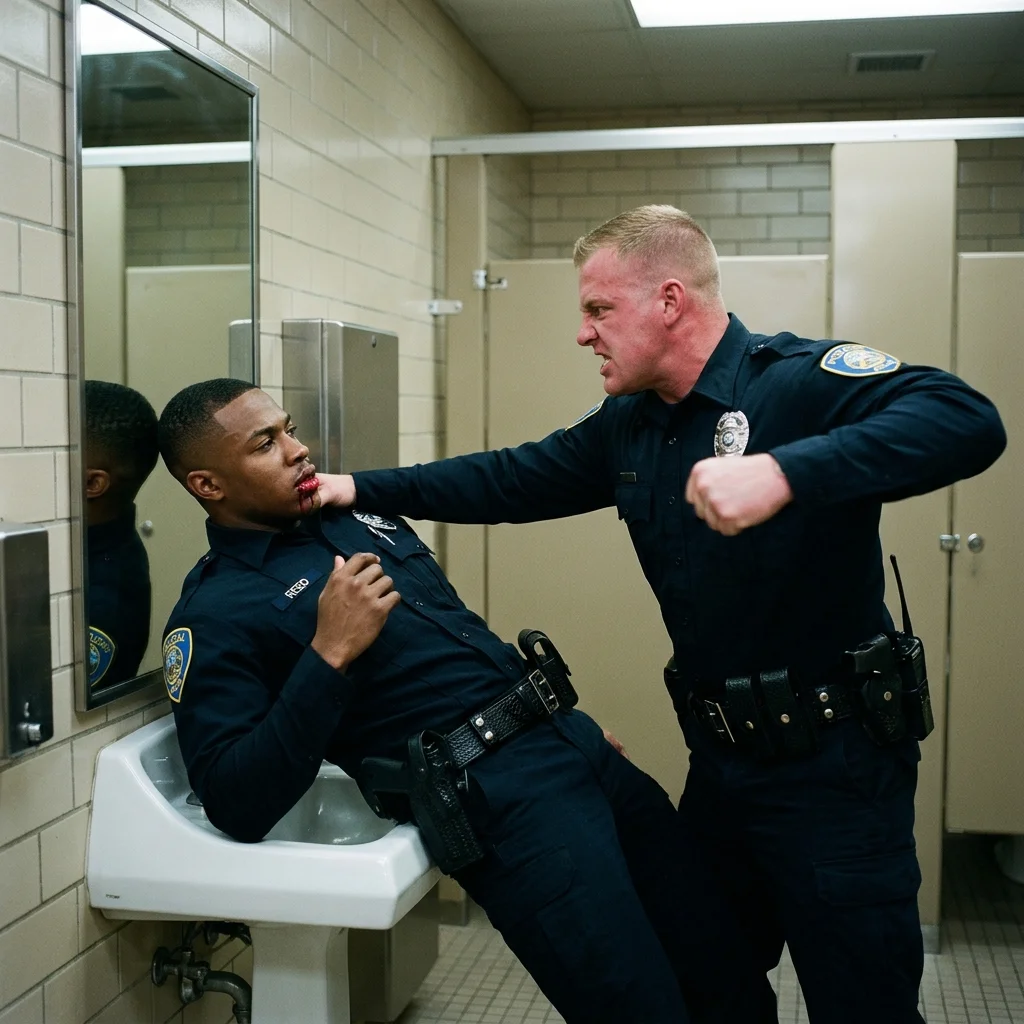
Marcus stared at the television.
The story was about him.
His mother, Denise, switched off the screen.
“Don’t give them the satisfaction of watching you fall apart.”
At sixty-eight, Denise Reed still carried herself with the quiet dignity that had made her beloved among the customers of her former bakery.
Her silver hair was neatly braided, and her hands smelled faintly of vanilla from the pound cake she’d baked that morning.
Marcus looked at her.
“Mom, they’re setting me up.”
“I know.”
“You don’t understand.”
Denise pulled out the chair across from him.
“Then explain it.”
Marcus told her about the missing evidence, the altered reports, the confrontation with Brooks, and the destruction order carrying his name.
He stopped short of revealing where he’d secured the copied records.
He didn’t want his mother drawn into an investigation that had already turned dangerous.
Denise listened without interrupting.
When he finished, she opened a drawer beside the refrigerator.
Inside lay an old brass bell.
Marcus recognized it immediately.
It had hung above the bakery’s front door for as long as he could remember.
His mother placed it on the table.
“Your father kept this after the city took our shop.”
Marcus touched its worn surface.
“I remember.”
“Do you remember what the inspectors said?”
“That the building wasn’t safe.”
Denise shook her head.
“They said the building had been contaminated by chemicals from the hardware store next door.”
Marcus frowned.
“Mr. Vega’s store?”
“Yes.”
She opened another drawer and retrieved a yellowing envelope.
“I found this last year while sorting through your father’s papers.”
Inside was a copy of the city’s inspection notice.
Marcus examined it carefully.
Something about the document seemed familiar.
He checked the case number printed near the bottom.
HR-19-447.
The same number appeared on one of the missing evidence records.
Marcus looked up.
“Mom, where did you get this?”
“From the inspector who shut us down.”
“Did you ever meet him again?”
“No.”
She paused.
“But I saw him on television about three years later.”
Marcus waited.
“He wasn’t working for the city anymore.”
“Where was he working?”
Denise looked at her son.
“For Julian Ashford’s office.”
Marcus felt the air leave the room.
He studied the notice again.
The alleged contamination had never been confirmed by an independent laboratory.
His parents had requested a second inspection, but the city denied the appeal.
Within months, their entire block had been acquired by a development company called Harbor Crown Partners.
The bakery was demolished.
A luxury apartment complex now stood where his father used to knead bread before sunrise.
“What happened to the inspector?” Marcus asked.
Denise shook her head.
“I don’t know.”
Then she reached across the table and covered his hand with hers.
“Marcus, your father didn’t lose hope because he lost the bakery.”
“He lost hope because he believed the truth didn’t matter anymore.”
Marcus looked at the brass bell.
“Then I’m going to prove that it matters.”
The following morning, he received an unexpected phone call.
It came from Ada Finch, the civilian records clerk at the Ninth Precinct.
Ada was fifty-nine, wore oversized glasses, and had worked in the department’s records division for twenty-seven years.
Most officers barely noticed her.
She spent her days sorting paperwork, correcting filing errors, and reminding impatient detectives that official records couldn’t simply be changed because someone disliked what they said.
Marcus had always treated her respectfully.
Now she sounded frightened.
“Officer Reed?”
“Mrs. Finch?”
“Don’t use my name on the telephone again.”
Marcus sat upright.
“What’s wrong?”
“I heard what happened yesterday.”
“Then you know I’m suspended.”
“I know what they want everybody to believe.”
She paused.
“Do you remember the old evidence inventory you asked me about?”
Marcus glanced toward the kitchen doorway.
“Yes.”
“I found something.”
“What?”
“A second numbering system.”
Marcus frowned.
“That doesn’t make sense.”
“It didn’t make sense to me either.”
He heard papers moving.
“Those cases weren’t simply deleted, Marcus.”
“Somebody reassigned their reference numbers.”
“Why would they do that?”
“Because records with active reference numbers can be located.”
She lowered her voice.
“But records attached to closed administrative accounts become much harder to find.”
Marcus understood the implication.
The missing evidence might still exist somewhere.
“Where are the original documents?”
Ada hesitated.
“That’s what I’ve been trying to tell you.”
A door opened in the background.
Someone spoke.
Ada abruptly changed her tone.
“Yes, Lieutenant, the archived inventory will be ready by four.”
Then the call ended.
Marcus tried calling back.
No answer.
Ten minutes later, a message appeared on his personal phone.
REMEMBER WHO TAUGHT YOU THAT PAPER ALWAYS LEAVES A TRAIL.
Below the sentence was an address.
Bellhaven Community History Center, Room 12.
Marcus recognized the building.
It stood across from the old waterfront district.
The center had once been a public library where his mother volunteered to teach children how to read.
He changed into a dark jacket and left through the back door.
Before going, he called an attorney recommended by a retired academy instructor.
Her name was Tessa Monroe.
She had once prosecuted public corruption cases for the state attorney general’s office and now represented government whistleblowers.
Marcus explained enough for her to recognize the seriousness of the situation.
“Don’t surrender your personal records to anyone without legal advice,” she told him.
“And don’t assume someone becomes trustworthy just because they say they’re investigating corruption.”
Marcus promised to call her again.
He reached the history center shortly after three.
Inside, the building smelled of old books and furniture polish.
Photographs of Bellhaven’s early waterfront neighborhoods lined the walls.
Marcus stopped in front of one picture.
It showed Mercer Street in 1998.
His parents stood outside their bakery, surrounded by laughing customers.
His father had flour on his apron.
Denise was holding a tray of cinnamon rolls.
For a moment, Marcus was a child again.
He could almost hear the bell above the door.





