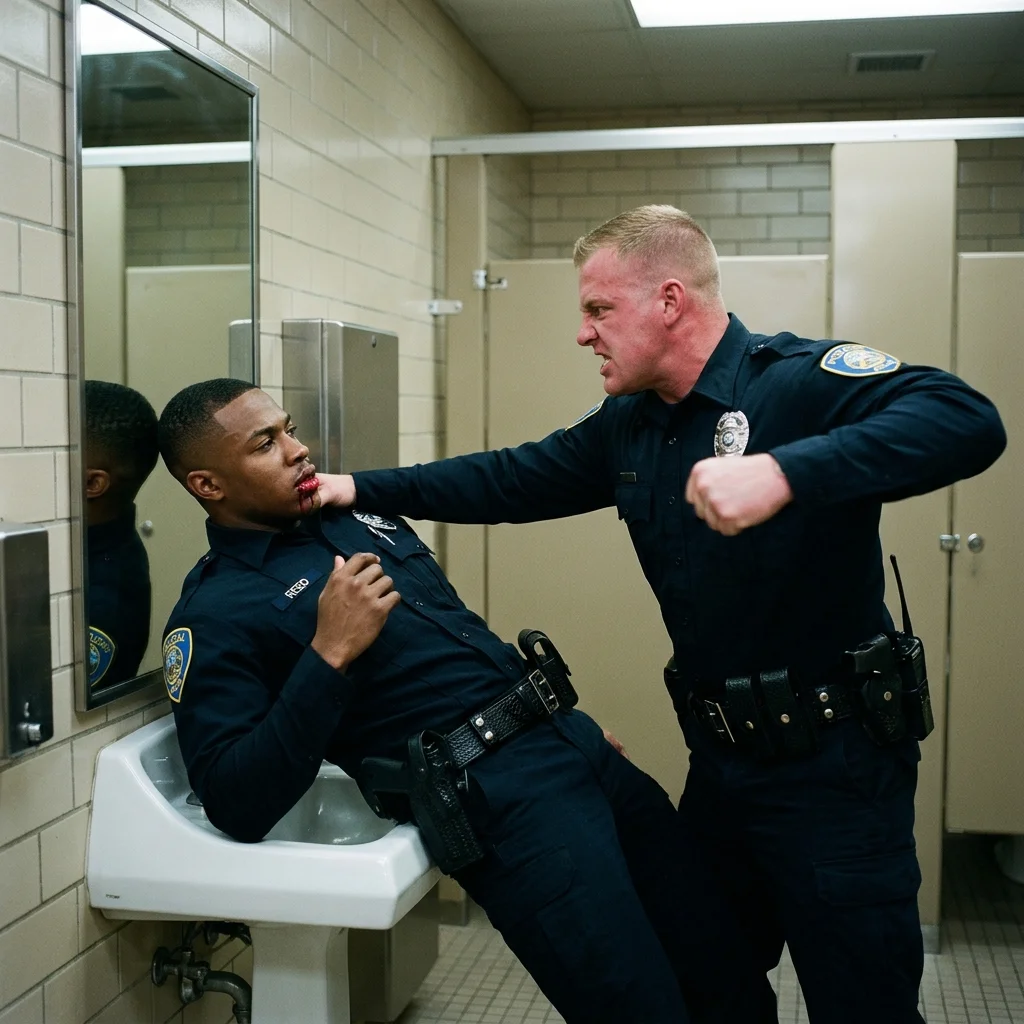
And for the first time, Marcus began to suspect that Daniel Brooks might not have attacked him simply to protect a corrupt system.
He might have attacked him because the truth was about to expose something Brooks had spent eight years trying desperately to hide.
At 8:17 the next morning, Captain Evelyn Shaw walked into Tessa Monroe’s office carrying a sealed envelope and the expression of someone who had finally decided to stop running from her own mistakes.
Marcus was waiting beside the conference table.
The moment Shaw saw him, she stopped.
“I thought you’d be angry.”
“I am.”
She accepted the answer.
Tessa motioned toward an empty chair.
“Captain, before we begin, I need to make something clear.”
“Anything you tell us may expose you to criminal or disciplinary consequences.”
Shaw nodded.
“I understand.”
“Are you prepared to make a truthful statement?”
Shaw looked at Marcus.
“Yes.”
She placed the envelope on the table.
Inside were copies of departmental correspondence, disciplinary reports, and a confidential memorandum dated August 2018.
At the top of the memorandum appeared Julian Ashford’s name.
Marcus read the first paragraph.
It recommended the immediate dismissal of Detective Lena Ortiz for alleged misconduct involving confidential witness information.
Beneath the recommendation was Captain Shaw’s signature.
“You approved this,” Marcus said.
Shaw nodded.
“Yes.”
“Knowing Lena hadn’t fabricated evidence?”
Shaw stared at her hands.
“Yes.”
Marcus felt anger rise inside him.
For years, Lena had lived with a reputation she didn’t deserve.
She had lost her career, her professional friendships, and her opportunity to serve the community she loved.
And the woman sitting across from Marcus had helped make it happen.
“Why?” he demanded.
Shaw swallowed.
“Because I convinced myself that keeping the department stable was more important than protecting one detective.”
Marcus shook his head.
“You destroyed an innocent person’s career.”
“I know.”
“Did Ashford threaten you?”
“Not at first.”
She paused.
“He told me that if Lena continued investigating, the department could lose federal funding, officers would be laid off, and public trust would collapse.”
“He said the allegations were politically motivated.”
“And you believed him?”
Shaw’s eyes filled with shame.
“I believed what was convenient for me to believe.”
The admission silenced the room.
Shaw continued.
“By the time I discovered how much evidence had been altered, I’d already signed the disciplinary order.”
“Then Ashford made it clear that exposing the truth would expose my role in it.”
Tessa leaned forward.
“So you helped conceal it.”
“Yes.”
“Did you authorize evidence destruction?”
“I signed administrative approvals based on inventories I was told were legitimate.”
“Did you ever verify them?”
“No.”
Shaw looked at Marcus.
“And that’s the part I can’t excuse.”
She pushed the envelope toward him.
“I can’t undo what I did to Lena.”
“But I can stop pretending it didn’t happen.”
Marcus opened the next document.
It was a correspondence log between the Ninth Precinct and the municipal redevelopment office.
Several entries carried a reference number.
RIVERGLASS-01.
Marcus recognized the word from the copied evidence inventory.
“What is Riverglass?”
Shaw hesitated.
“It was the internal designation for a restricted review of the waterfront cases.”
“Who created it?”
“Julian Ashford’s legal team.”
Tessa studied the dates.
“These records were supposedly destroyed.”
“That’s what the department believes,” Shaw replied.
“But something went wrong with their plan.”
She looked toward the conference room door.
“Someone kept the original transfer receipts.”
Marcus already knew who.
Ada Finch.
Twenty-seven years of filing paperwork had taught Ada that official documents often revealed more through their movement than through their contents.
She knew which department had requested an archive.
Which supervisor had approved a transfer.
Which official had signed for a box.
And which records were supposed to remain untouched until their legally required retention periods expired.
While everyone focused on the missing documents, Ada had preserved the trail showing where they had gone.
Tessa contacted the state investigator she had spoken with earlier.
Her name was Priya Nair.
A veteran public-corruption investigator, Priya had spent fifteen years building cases against officials who believed their positions placed them beyond scrutiny.
She listened carefully as Tessa explained the available evidence.
Then she asked a simple question.
“Can you establish that the original materials still exist?”
Ada answered from the speakerphone.
“I believe I can.”
“Where?”
“An off-site municipal storage facility.”
“Why weren’t they destroyed?”
“Because the records had already been transferred to a separate legal preservation account.”
Priya paused.
“Who authorized that preservation?”
Ada’s voice became quiet.
“Detective Lena Ortiz.”
Marcus turned toward Lena, who had joined the meeting.
Lena looked down.
“Before I was dismissed, I requested that the originals be preserved while the witness complaints were reviewed.”
“They rejected my investigation.”
“But they never formally cancelled the preservation order.”
Tessa looked impressed.
“That could matter enormously.”
Priya remained cautious.
“We’ll need to confirm the records and obtain the appropriate court authorization.”
“If those materials are intact, they may provide independent evidence beyond the copies you’ve collected.”
Marcus finally felt something he hadn’t experienced since Brooks attacked him.
Hope.
Not because justice was guaranteed.
But because they now had a lawful path toward proving what happened.
That afternoon, Priya’s team began securing the necessary orders.
Meanwhile, another unexpected development occurred.
Daniel Brooks asked to speak with Marcus.
Brooks had been suspended pending the investigation into the restroom assault.
His attorney contacted Tessa and proposed a formal interview with independent investigators present.
Marcus initially refused.
He remembered the fist, the threats, and the cold determination in Brooks’s face.
But Tessa explained that Brooks might possess information no other witness could provide.
“Listening to him doesn’t mean forgiving him,” she said.
Marcus eventually agreed to be present.
The meeting took place in a government interview room.
Brooks entered wearing a plain gray sweater.
Without his uniform, he looked smaller.
His expression was exhausted, and he avoided Marcus’s eyes.
Marcus remained seated.
“Why did you attack me?”
Brooks slowly lowered himself into the opposite chair.





