My Husband Tried to Wheel Me Out of the Hospital to Cook for Olivia. I Stopped Him at the Door and Asked for a Divorce.
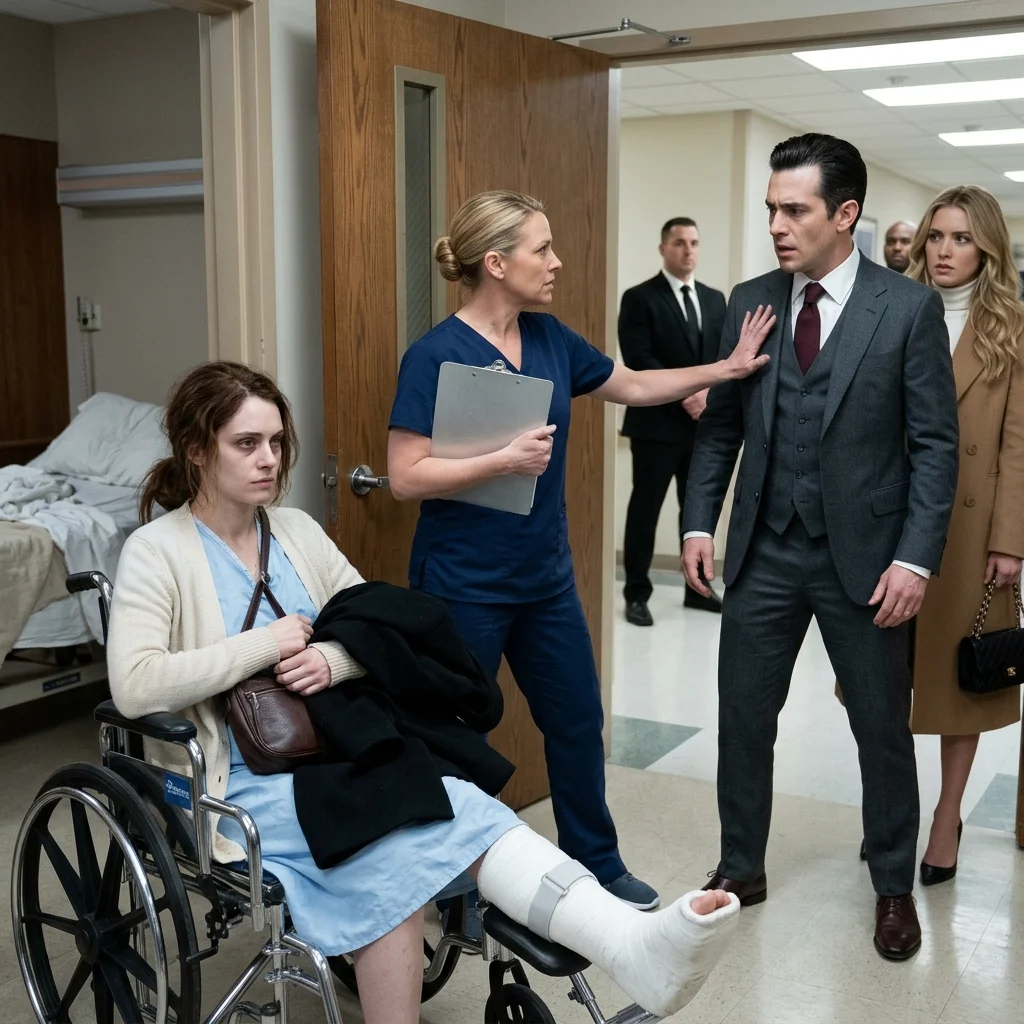
My husband pushed my wheelchair toward the hall. I caught the doorframe. His coat slid off my lap, exposing the fresh cast that ran from my toes to my knee.
“Come home. Cook for Olivia.”
I held on until he stopped pushing.
Alexander came around the chair. I caught his coat before it slipped all the way to the floor and held it out to him. He took it automatically. I’d handed him that coat a thousand times at our front door.
“I want a divorce.”
For a moment, neither of us moved. Then he looked past me at the handles of the chair.
That afternoon, I’d called him from a hospital bed with an apology halfway out of my mouth.
My name is Claire Bennett Moretti. I’d slipped and broken my leg. While the doctor put on the cast, my phone kept buzzing in my purse. By the time I got to it, Alexander had called fifty times.
I thought someone had told him I’d fallen. I thought he’d been trying to find me.
“Where the hell have you been, Claire? Olivia’s been sitting here waiting for you.”
Olivia Hayes had grown up with my husband. He called her his little sister whenever I asked why he couldn’t tell her no. Once, she called him from our kitchen to ask him to call me at work. She wanted to know how much lemon I put in the soup.
I told him. I even asked him to write it down for her.
“I’m at the hospital,” I said. “I fell. My leg’s broken.”
There was a pause. I pictured him reaching for his keys.
“You didn’t break your hands. Take a cab home. She wants that soup you make.”
Olivia had been sick and finally felt like eating. We had people in the house who could cook for her. Alexander could have made it himself. I knew he had the recipe. He’d read it back to me over the phone that day to make sure he had the amount of lemon right.
“Did you hear me say I fell?”
“I heard you, Claire. How much longer?”
I hung up.
It took two tries to get from the bed into the wheelchair. The nurse raised the leg rest until the cast stopped pulling at my knee, then told me she’d be back with my discharge instructions.
“Is somebody coming for you?”
“I’ll arrange a ride.”
When Alexander walked in ten minutes later, I felt relieved anyway. I’d been thinking about the front steps at home. There were only three of them, but I’d started counting the distance from each step to the next place I could put my hand.
He’d brought two bodyguards. One stayed by the bed. The other opened the door wider.
Alexander took off his coat and laid it across my knees. I almost thanked him. Then he moved behind the chair, and the bed started sliding past my shoulder.
At the doorway, after I handed him the coat and told him I wanted a divorce, he finally looked at my leg.
“Over soup?”
He took a step toward the back of the chair again. The nurse was coming up the hall with my discharge papers. She stopped when she saw my hand still braced against the doorframe.
“Are you ready to leave?” she asked me.
“She’s coming home,” Alexander said.
The nurse kept her eyes on me.
“I’m staying,” I said. My hand was starting to cramp. I loosened my grip on the doorframe. “Could you ask my husband to wait outside?”
For a second, I thought I’d have to ask again. Then Alexander stepped into the hall. Both guards went with him.
The nurse asked where I wanted the chair.
“Back by the bed, please.”
She waited for me to take my hand off the door before she moved it.”
The exothermic heat of curing fiberglass was a strange, suffocating thing. As the orthopedic technician wrapped the final layer of pale blue resin tape around my right calf, the chemical reaction beneath the stockinette liner radiated a damp, hundred-degree warmth against my bruised skin—a stark, almost mocking contrast to the black ice on the museum loading dock that had snapped my tibia and fibula two hours earlier.
In my canvas tote bag at the foot of the examination gurney, my phone began to vibrate again.
It wasn’t the polite, two-pulse buzz of a text message. It was the relentless, three-second cadence of an incoming cellular call, rattling the brass zipper pull of my bag against the stainless-steel bed rail. Bzzzz-clink. Bzzzz-clink. Bzzzz-clink.
“Popular lady this afternoon,” the tech—a stocky man in navy scrubs named Paul—remarked mildly, smoothing the edges of the fiberglass cuff just below my kneecap with wet, gloved palms so the hardened ridge wouldn’t chafe my thigh when the swelling peaked. “That thing hasn’t taken a breath since we wheeled you out of radiology. Want me to hand it to you before I strip these gloves?”
“Yes, please,” I said. My voice sounded thin, scraped raw at the edges from the twenty minutes I had spent lying alone on the salted concrete behind the restoration annex before the courier driver found me. Even with two milligrams of intravenous hydromorphone dulling the jagged, lightning-bolt throb inside my shinbone, my ribs still ached where I had landed hard across the wooden crate of seventeenth-century Florentine majolica tiles I had been shielding with my body when my boot heel went out from under me.
The crate had survived intact. My leg had not.
Paul stripped off his nitrile gloves, dropped them into the yellow biohazard bin with a wet snap, and fished my leather tote off the lower crossbar of the gurney.
When I pulled the iPhone from the inner pocket, the glass screen was warm to the touch from continuous battery draw.





