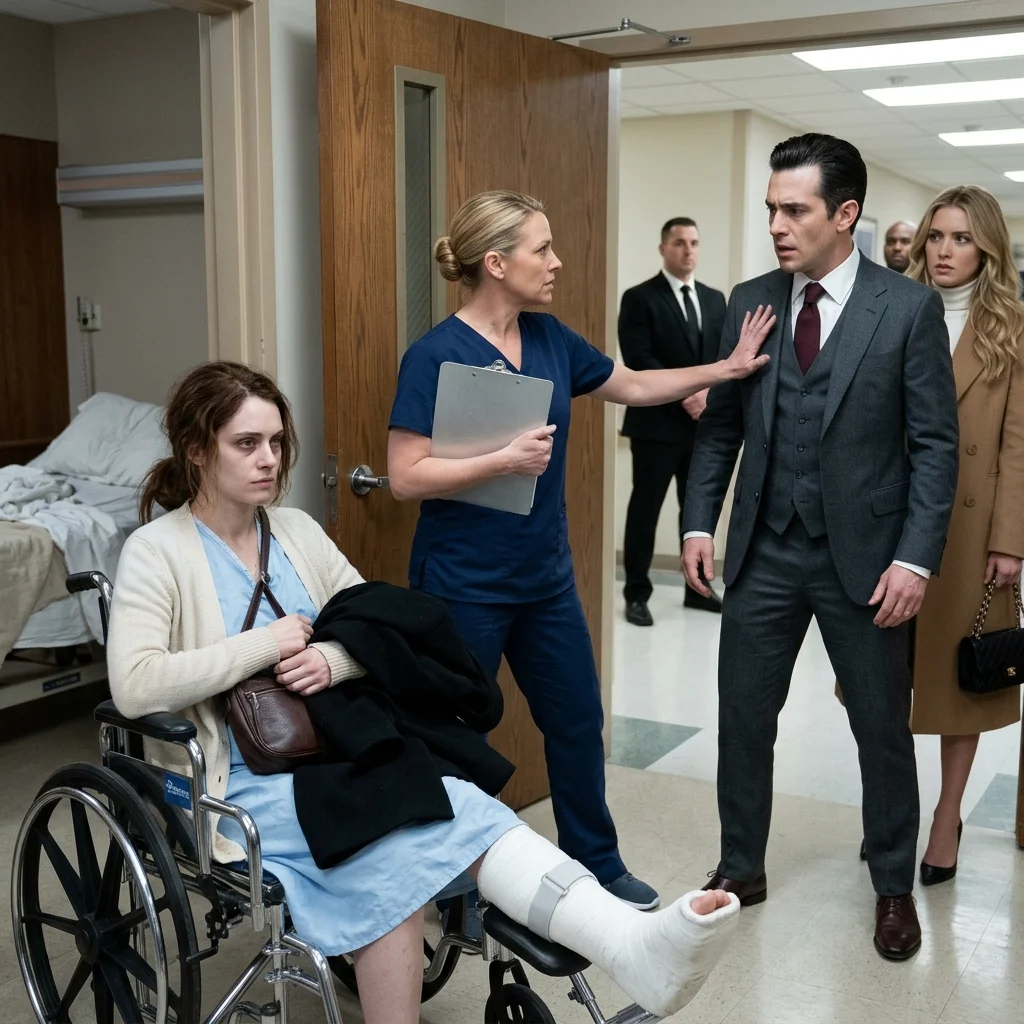
When Alexander stepped through the open doorway of Bay 4, flanked by Dante and Viktor—two former private military contractors in charcoal bespoke suits who served as his executive protection detail—a strange, involuntary reflex flickered inside my chest.
For half a second, before my rational mind caught up, my shoulders dropped an inch in relief.
He was here. He had six-foot-two of broad-shouldered presence, dark hair silvering slightly at the temples, wearing a three-thousand-dollar Loro Piana charcoal cashmere overcoat over a crisp white shirt. In the early days, when my father died during our engagement and the probate lawyers were circling my family’s tiny farmhouse upstate, Alexander had walked into the courtroom looking exactly like that—immovable, decisive, taking the weight out of my hands before I could ask.
“Clear the doorway, Viktor,” Alexander murmured without looking back.
Viktor stepped to the head of the empty gurney and folded his massive hands over his belt buckle. Dante stationed himself outside the curtain track, blocking the view from the nurses’ station.
Alexander walked straight to my wheelchair. He didn’t look at the vitals monitor still blinking on the wall, and he didn’t ask what the orthopedic surgeon had said. In one smooth, practiced motion, he unbuttoned his charcoal cashmere overcoat, shrugged it off his broad shoulders, and draped it lengthwise across my lap and down over the elevated metal leg-rest—covering the thin hospital gown, my bruised knees, and the bright blue fiberglass cast from toe to thigh in dark, sandalwood-scented wool.
The cashmere was still warm from his body.
My lips parted. Out of four years of deeply ingrained habit—four years of thanking him for remembering my birthday through his secretary, of thanking him for letting me use the north studio for my conservation framing—the words Thank you for coming rose to the tip of my tongue.
Then Alexander stepped behind my chair, gripped the rubber push-handles with both hands, kicked the wheel-locks off with the toe of his Italian Oxford, and spun the chair toward the corridor before I had even lifted my elbows off the armrests.
The edge of the examination gurney slid past my left shoulder.
“I left the Maybach idling in the ambulance bay so we don’t have to deal with the Madison Avenue ramp,” Alexander said above my head, pushing the chair at a brisk clip toward the open doorframe of the bay. “Dante already called the house. I told Mrs. Gable to have the chicken stock boiling on the front burner and the lemons sliced on the island so you won’t have to stand around prepping when we pull in. Come home. Cook for Olivia.“
The words hit the back of my neck like four drops of liquid nitrogen.
He hadn’t come to the hospital because he realized his wife had broken two bones in her leg. He hadn’t draped his coat over my lap to keep me warm in the winter air.
He had covered the cast because he didn’t want to look at it—and he had brought two bodyguards to Mount Sinai to physically extract his missing kitchen appliance after I hung up on him, because Olivia Hayes had been waiting two hours for her soup.
The front caster wheels of the wheelchair crossed the metal threshold strip of the doorway.
I did not scream. I did not cry.
I threw both hands outward and locked my fingers around the steel institutional doorframe on either side of the opening, bracing my palms flat against the painted metal jamb and locking my elbows rigid.
The wheelchair jerked to a dead stop against my arms. The sudden deceleration pitched my torso forward an inch, driving the top rim of the fiberglass cast into the swollen flesh behind my kneecap with a sharp, blinding stab of agony that made my vision go white at the borders—yet my fingers did not slip a millimeter on the steel frame.
With the movement, the heavy Loro Piana cashmere overcoat slid off my knees and cascaded down over the elevated leg rest, exposing the stark, thick blue cylinder of the fresh cast running from my purple toes to my knee.
Behind me, Alexander pushed once more against the handles, thinking a caster wheel had caught on the threshold plate.
I held on until the rubber tires squeaked against the linoleum and he stopped pushing.
For two seconds, nobody in Bay 4 breathed. Viktor, standing by the gurney, shifted his weight uncomfortably and looked at the ceiling tiles.
Alexander released the handles and walked around the left side of the wheelchair, stepping into the hallway threshold to look down at me. A crease of baffled annoyance sat between his dark brows—the look of a man whose elevator button had failed to light up on the first press.
Before the bottom hem of his six-thousand-dollar cashmere coat could puddle onto the antiseptic-mopped hospital floor beside my cast, I leaned forward slightly, caught the wool lapel with my left hand, gathered the coat neatly together, and held it out toward his chest.
He took it automatically.
It was pure muscle memory between us. A thousand mornings in Greenwich, a thousand evenings in the Manhattan penthouse, I had stood by the front hall console with that exact charcoal coat held between my hands, brushing a stray lint thread off the collar before he walked out into the world.
He stood there in the doorway of Bay 4 with his coat folded over his forearm, looking down at my empty hands.
“I want a divorce,” I said.
The words were not loud. They didn’t echo down the corridor. They simply dropped into the three feet of air between my wheelchair and his polished shoes, quiet and irreversible as a tombstone settling into wet earth.
For a long moment, neither of us moved. Down the hall, a paging chime sounded softly for a respiratory therapist on the fourth floor.
Then Alexander’s eyes shifted—not to my face, and not to my cast, but past my shoulder to the black rubber push-handles of the wheelchair, as if calculating the shortest mechanical route to override a malfunctioning gear.





