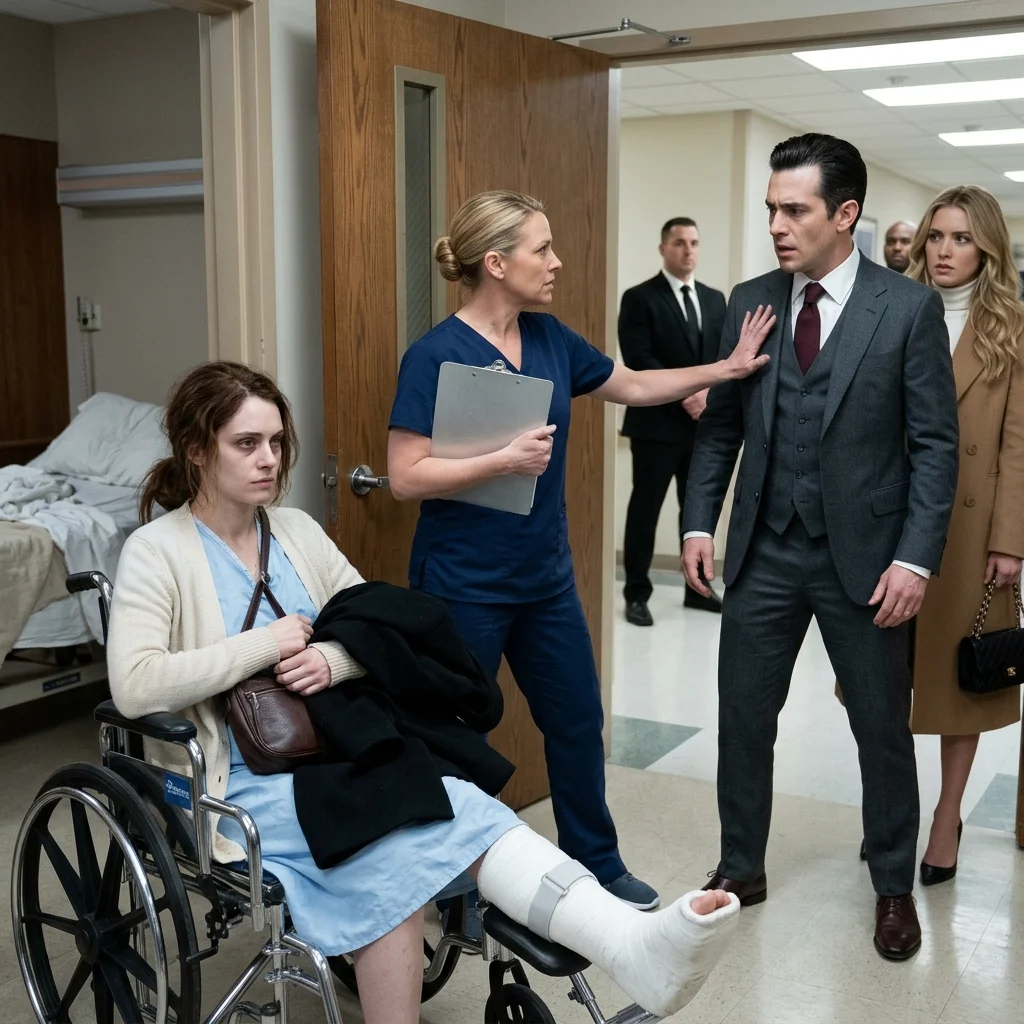
It was remarkable how a man who built eighty-story steel towers could live with a woman for four years and never once ask what her late grandfather—a master tool-and-die maker from Rochester who had bought three hundred shares of Xerox stock in 1961 and left them in an individual, pre-marital fidelity trust that Claire Bennett had never commingled with a single dime of Moretti money—had actually put in her will.
I picked up my phone and dialed Eleanor Vance’s private cell number.
She answered on the second ring. In the background, I could hear the quiet clink of a wine glass and Miles Davis playing on vinyl.
“Claire,” Eleanor said, her sharp, sixty-year-old voice snapping instantly to courtroom readiness. “I just got the automated ping from the shared drive two seconds ago. Why are you uploading video at nine-forty at night?”
“Play the video, Eleanor,” I said calmly. “And then call Judge Halvorsen’s emergency clerk in the Southern District. Because at nine o’clock tomorrow morning, Alexander and Marcus Thorne are bringing a private ambulance to Mount Sinai to move me to Greenwich so they can coerce my signature on the Q4 foundation tax release before two million dollars clears a Cayman escrow account.“
“Hold on one second,” Eleanor muttered. I heard the click of her mouse as she opened the four-minute kitchen recording on her desktop.
For three minutes, the line was completely silent except for the tinny, echoing replay of Olivia Hayes and Alexander Moretti laying out a federal wire-fraud, identity-theft, and fiduciary embezzlement conspiracy in 4K high-definition video with crystal-clear directional audio right beneath their own kitchen ceiling.
When the recording ended, Eleanor didn’t curse. She let out a long, low, wolfish breath that sounded almost religious.
“Sweet merciful heaven,” Eleanor whispered. “He put the kitchen security cameras on the cloud server under your admin login?”
“He never knew how to set up the Wi-Fi mesh router when we moved in three years ago,” I said, looking down at my blue cast. “He told me domestic utilities were a wife’s job.”
“Stay in that bed, Claire,” Eleanor said, and I could already hear her chair rolling across her study floor as she reached for her briefcase. “Do not let anyone other than Nurse Evelyn through that door. By eight-thirty tomorrow morning, before Alexander’s Maybach clears the Triborough Bridge, I am going to turn Room 814 into a federal grand jury annex.”
Saturday morning broke clear, cold, and blindingly bright over Central Park, sending long rectangles of pale gold winter sunlight across the polished linoleum floor of Room 814.
At eight-fifteen AM, Nurse Evelyn came in to disconnect my intravenous line, help me wash my face at the bathroom basin, and assist me into the clothes a courier from Eleanor’s office had delivered at seven: a pair of loose, wide-legged charcoal cashmere trousers whose right seam had been tailored with concealed snaps to fit cleanly over my fiberglass cast, a crisp white silk blouse, and a structured navy blazer.
I didn’t look like an invalid waiting to be bundled into an ambulance. Sitting in the high-backed leather armchair beside the window, with my cast resting comfortably on a padded hospital ottoman, my hair brushed back into a neat low chignon, and a fresh cup of black coffee in my hand, I looked like the Co-Chair of the Moretti Family Foundation preparing to gavel an executive session to order.
At eight-forty-five, three people entered Room 814 through the service elevator corridor and took seats on the vinyl visitor sofa along the far eastern wall, partially concealed behind the half-drawn privacy screen near the bathroom alcove.
The first was Eleanor Vance, immaculate in a pinstripe charcoal suit, with a slim silver MacBook Pro open across her knees.
The second was a quiet, balding man in his fifties wearing wire-rimmed spectacles and a dark blue suit: Special Agent David Miller of the Internal Revenue Service Criminal Investigation Division—Tax Exempt & Government Entities Task Force.
The third was an Assistant Attorney General from the New York State Charities Bureau, holding a sheaf of blue-backed emergency asset-freeze injunctions signed at seven-thirty that morning by a federal magistrate judge at his breakfast table in Brooklyn.
“Remember,” Eleanor murmured, tapping her watch as the corridor outside began to stir with the morning shift change. “Let him put the Q4 release document on the table and make the demand in front of Marcus Thorne first. Under New York Penal Law, attempting to compel a fiduciary signature through unlawful medical removal while knowing the underlying instrument is forged upgrades the charge from simple embezzlement to First-Degree Scheme to Defraud and Coercion.“
“I won’t interrupt him,” I said, setting my coffee cup down on the windowsill. “He hates being interrupted.”
At exactly nine-zero-two AM, the heavy doors at the end of the eighth-floor private pavilion swung open.
This time, Alexander had not come merely with Dante and Viktor.
Walking half a pace behind him as he strode into Room 814—without knocking—was Marcus Thorne, the sixty-year-old managing partner of Thorne, Sterling & Associates, carrying a thick oxblood leather alligator briefcase, and Dr. Gregory Rossi, a private concierge internist whose practice on East 72nd Street was funded almost entirely by Moretti Holdings retainers, accompanied by two private paramedics in navy jumpsuits pushing a wheeled Stryker ambulance cot into the hallway outside my door.





