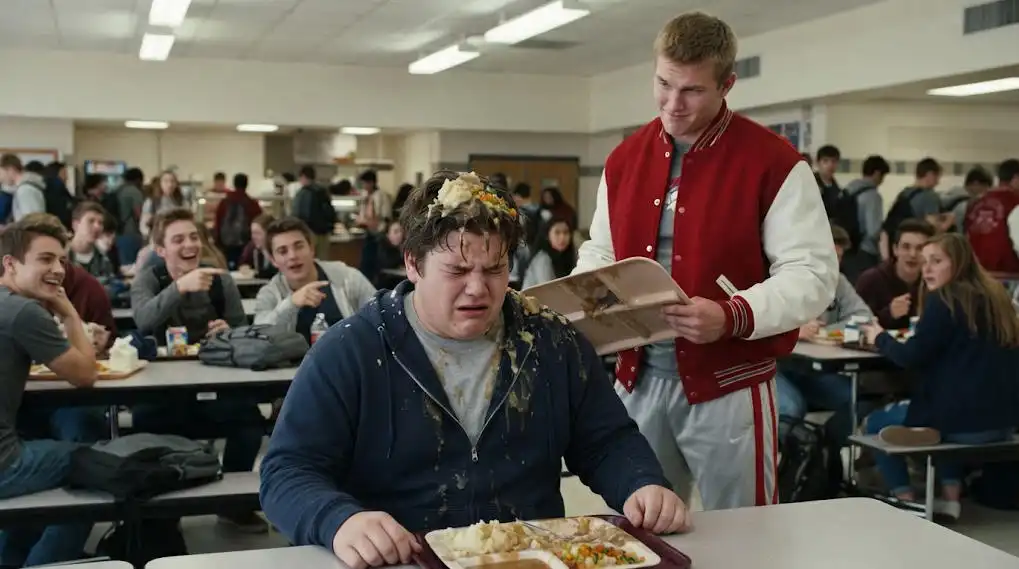
He thought about what forgiveness meant. It wasn’t pretending that the cruelty hadn’t happened. It wasn’t telling Mason that it was okay so that Mason could sleep without the weight of his own reflection.
“I hear you, Mason,” Ethan said softly. “And I’m glad you watched the tape.”
Mason waited, his shoulders tense, looking for the easy absolution that his father usually bought him. “Are we… are we good?”
“No,” Ethan said. “We aren’t friends, Mason. And an apology doesn’t wipe the grease out of that day. But you don’t have to look at the floor when you walk past me anymore. Just do your community service. Clean the tables you made a mess of.”
Mason swallowed hard. He looked at Ethan for three seconds, his jaw tightening, before nodding once—a sharp, stiff movement of his chin.
“Yeah,” Mason murmured. “Fair enough.”
He turned and walked back down the gravel path, his boots crunching in the silence, disappearing around the brick corner of the science building.
Ethan stood in the doorway for another minute, watching the empty lane. He didn’t feel triumphant; he didn’t feel small. He felt level. He felt like a structure that had been tested against a heavy wind and had discovered that its footings were set deep into stone.
He pushed open the heavy wooden door and stepped into the warm, humid air of the greenhouse.
Ava was sitting on an overturned plastic milk crate, sorting dried zinnia pods into paper envelopes. Jordan was whistling an out-of-tune pop song while sweeping peat moss from the center aisle with a straw broom.
Jordan leaned on his broom handle, peering over his glasses. “The speech was decent, Miller. A little dramatic with the whole ‘people who laugh are terrified’ bit, but I’ll give it a solid B-plus for execution.”
“Shut up, Jordan,” Ava said without looking up from her seeds, though a broad, brilliant grin broke across her face. “He was incredible and you know it. You were crying into your collar during the second minute.”
“It was an allergic reaction to the gym wax,” Jordan insisted, though his ears were bright crimson. “The custodial staff uses excessive petroleum distillates.”
Ethan smiled. He walked down the aisle, his boots leaving faint, damp prints on the gray concrete.
He stopped at the high wooden shelf beneath the south-facing glass.
There, sitting in its six-inch terracotta pot, was the dark circle of potting mix he had watered two weeks ago.
The soil was no longer flat. In the center, pushing aside the heavy black grains of earth with a slow, irresistible hydraulic force, was a thick, pale-green loop of stem. It had broken the surface that morning, arched like a spine under load, carrying two tiny, tightly folded seed-leaves that were just beginning to turn their faces toward the high, pale autumn light.
Ethan reached out with his bare hand, his index finger lightly touching the damp crumb of earth beside the stem.
It was tiny. It was fragile. A careless elbow or an overturned watering can could snap it in an instant.
But it was rising.
It had spent two weeks in the dark, beneath the dirt, ignored by the entire building, and it had simply decided to keep growing until it broke through the floor.
Ethan pulled on his green canvas gloves, adjusted the terracotta pot so the green shoot caught the direct angle of the sun through the glass, and went to work.





