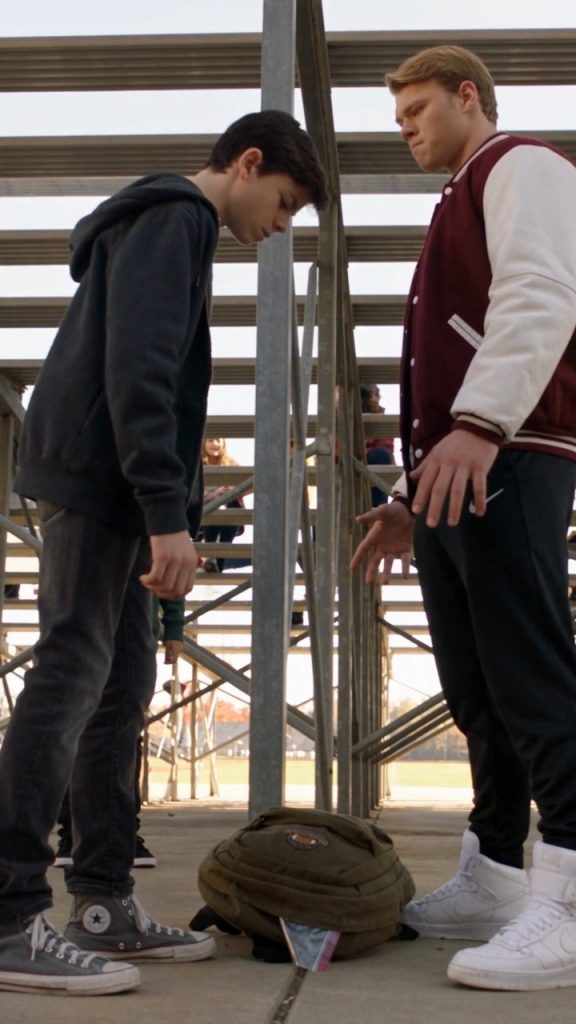
Over the next week Northbridge issued a public correction. It stated that the former student’s expulsion and theft finding had been overturned after independent review, that the original evidence had not supported the accusation, and that the school regretted the harm caused by its earlier statements. It did not publish Aaron’s private academic records or identify every minor involved in the investigation. The notice was posted where the old athletics announcement had been circulated and was sent to families through the same school channels.
I read it at the library computer, where the printer hummed and somebody behind me whispered over a crossword puzzle. The words were plain, almost disappointingly so. There was no huge headline declaring that everyone who’d doubted my brother was cruel. But the correction was clear enough that nobody could honestly keep citing the expulsion as proof he’d stolen the money.
Some students apologized to me in the hall. One said he’d repeated the locker rumor because his friends did. Another admitted he’d believed Coach Nolan over Aaron simply because Nolan had been at Northbridge for so long. I accepted the apologies I was ready to accept and let the others pass. My job was not to grant everybody a clean conscience.
Mason asked whether he should post the school correction beside his earlier video. We sat outside the library, where we’d had so many conversations about phones and truth that the bench felt like a second classroom.
“You can share the official statement,” I said. “But don’t turn it into a victory montage of Blake being scared.”
“I wasn’t going to.”
He looked at me, then admitted, “Okay, I thought about it. It would be easy.”
“That’s exactly why you shouldn’t.”
He posted a short message linking the school correction and saying his live video showed the Friday confrontation, not the financial investigation. He asked people to stop circulating edited clips and harassing students. Then he closed the app and came with me to the cafeteria, where we spent lunch arguing about whether our history teacher had assigned too many pages. It wasn’t a heroic moment. It was the kind of ordinary moment we’d nearly forgotten how to have.
The school lifted my temporary athletics-area restriction after its review of the Friday confrontation. The written notice made clear that I had not been found responsible for misconduct simply for carrying my brother’s property or turning evidence over to a qualified investigator. Staff arranged a reporting contact and agreed that any further intimidation would be addressed. I no longer had to calculate which hallway Blake might occupy before I went to class.
The separate review of Blake’s conduct took longer. I was told only what the school could properly disclose to me: the no-contact direction would remain, the captaincy had been reassigned, and student discipline had been imposed for the intimidation and for his role in the false evidence. Blake did not play as captain again. I heard people saying his whole future was ruined, and others saying he’d gotten away too easily. I knew how dangerous it was when a school community treated a student’s entire life as a punishment people could vote on. Accountability was necessary. Turning his humiliation into entertainment wasn’t.
One afternoon after classes, Blake waited near the main entrance where a staff member could see us. He kept several paces between us. He wore neither the captain’s jacket nor the confident expression I’d come to expect.
“I gave them my statement,” he said.
“I know.”
“I told them I put the envelope there. I told them my dad asked me to, but that I knew it was wrong. And I told them I grabbed you and threw the bag.”
I nodded. The impulse to tell him exactly what he’d cost Aaron was almost overwhelming. But I knew he had heard the school correction and understood what his account had helped confirm.
“I’m sorry,” he said. “I don’t expect that to fix anything.”
“It doesn’t,” I answered.
He swallowed. “I know.”
“My brother lost more than a year. He lost chances he can’t get back. You were there when everyone laughed at him. And you kept quiet.”
“I did.”
“I can’t tell you whether he’ll forgive you. And I don’t know if I ever will.”
Blake nodded, his eyes lowered. He didn’t try to make me comfort him, which was the first respectful thing he’d ever done in a conversation with me. When he walked away, I realized I hadn’t backed toward a wall or looked for Mason’s phone. I had simply said what I needed to say and remained where I was.
Coach Richard Nolan’s employment review concluded after the student decision, not at the bleachers or in Keller’s first meeting. The district announced that he had been dismissed following its process for knowingly authorizing unsupported purchases and participating in the handling of the misleading internal case against Aaron. The financial findings and related evidence were referred to the appropriate authorities for further investigation. No one announced a criminal conviction, and I never heard a judge pronounce sentence. I did not need an invented courtroom scene to understand that the man who had used his position to call my brother a disgrace no longer held that position.
The thirty-two thousand dollars had not materialized in a school account when Aaron’s name was cleared. The district and booster administrators were pursuing recovery through proper channels, and the payment destination remained the subject of further financial scrutiny. Northbridge changed its purchasing procedures so one athletics authority could not approve and close out a payment without a second review and confirmation that the goods had arrived. Those rules sounded boring. After watching our family suffer because nobody checked four invoices, I hoped they stayed boring forever.





