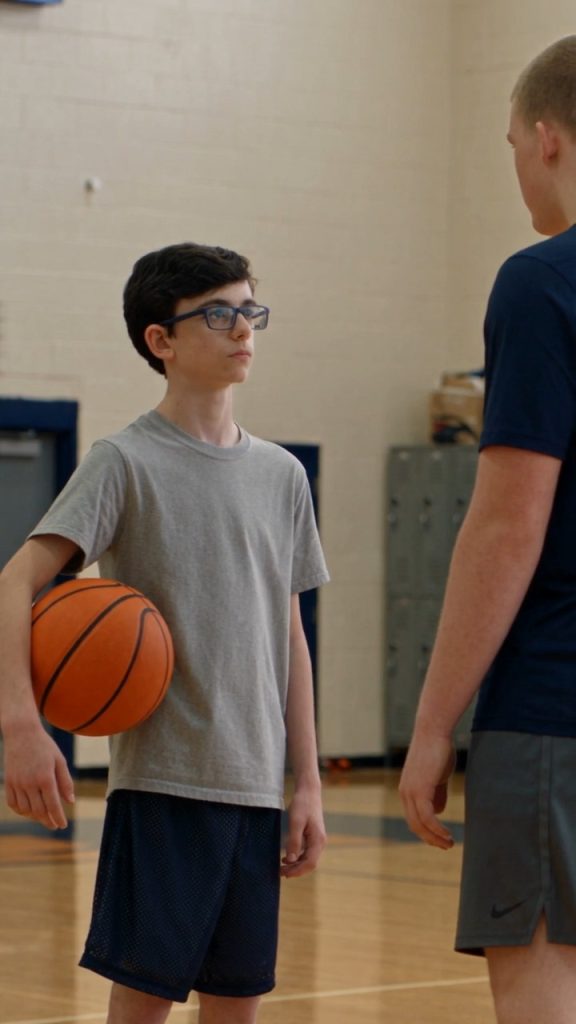
He saw one detail that needed fixing. When he’d first described the game aloud to Coach Parker, he’d said Mason’s second made basket was the one that used the backboard. He could now picture the first shot touching glass and dropping in, the second closer and quicker. He had remembered them in reverse during the hurried conversation. He told Ms. Brooks that and asked whether it should go in the record.
“Please,” she said. “Say what you previously recalled and what you recall now.”
“Will that make it sound like I made the whole thing up?”
She didn’t offer false comfort. “Someone could notice a difference. That’s one reason to explain it openly. Small memory mistakes don’t automatically mean an account is unreliable. Pretending you never make any might.”
He wrote a dated correction beside the earlier page and passed her a copy. The score remained the same: Mason had made two close shots, then missed; Eli had made three. The order of the first two shots had no bearing on why Mason had challenged him. Yet making the correction felt important. He could not demand that adults treat his words precisely if he treated his own words as decorations.
At lunch he found Zoe occupying a corner of the table where he usually ate. She’d brought a small container of rice and vegetables and was balancing an orange on its lid. Her presence drew a few looks from other students, but nobody made a declaration about it. She simply nodded at the empty seat across from her.
“People will think we’re organizing a resistance group,” Eli said as he sat.
“They can think I’m avoiding the terrible pudding at my old table.”
He laughed, and the sound startled him. Zoe smiled as though she’d been waiting for that much normality.
She told him she’d spoken to Ms. Brooks on Friday after classes. She had described seeing Mason bounce the ball close to Eli’s foot, hearing his dare, and counting the baskets. She had also said she didn’t know what Mason was thinking when he did it. That distinction had been easy because it was true. Eli felt grateful she hadn’t tried to improve the story with certainty.
“Did you tell her I looked scared?” he asked.
“I told her you looked like you were trying not to be,” Zoe said. “That’s what I saw. You can tell her how you actually felt.”
He considered that answer. It preserved his dignity more than a claim that he’d never been afraid. He had been afraid, and he’d acted anyway. His glasses adjustment hadn’t erased his fear; it had given his hands something deliberate to do while he made a decision.
A burst of laughter came from the center of the cafeteria. Mason sat two tables away with several boys from PE. His broad shoulders were turned toward them, and his gestures suggested he was retelling something. Eli couldn’t hear the words. He refused to supply them in his own head. When Mason looked across the room and saw him with Zoe, his expression tightened briefly, then he resumed talking.
“They don’t get to decide where we sit,” Zoe said without looking up.
“I know.”
“Knowing and doing are different things.”
He took a bite of his sandwich. It tasted like lunch rather than a test for the first time in days.
Late Monday, Noah came to Ms. Brooks’s office on his own. Eli learned only that Noah had gone; he saw him leave a hallway near student services and noticed that he seemed exhausted. Eli didn’t know what he had said inside, and he made himself not ask. The next morning Ms. Brooks confirmed to Eli that the school was considering more than one event, but she would not explain Noah’s private statement.
When he next saw Noah, Eli asked whether the next class felt any different. Noah said it was hard to tell. Coach Parker’s station instructions helped, but his stomach still tightened whenever somebody said his name too loudly. “I keep thinking people can tell I talked,” Noah admitted. Eli knew the feeling. He told Noah that Ms. Brooks had said the school couldn’t promise secrecy from every guess or whisper. Noah nodded. “I wish doing the right thing made you stop feeling nervous,” he said. Eli had no perfect answer. He said the nervousness might last a while, and they could still show up for class. Then they returned to the science quiz. Being listened to without being made into a symbol seemed to ease Noah more than a speech would have.
That answer bothered Eli at first. He needed those other experiences to matter. Then he remembered how he’d felt when Mason put him on display and decided he did not need to own Noah’s words in order for them to count. The process could be about him without belonging solely to him.
On Tuesday, October 20, the school shifted the PE assignments again. Coach Parker divided the class into marked stations and asked students to check in at the beginning of each rotation. He told everyone, without naming Eli or Mason, that practice choices needed to come from the teacher and that students should not order classmates to repeat drills. Mason rolled his eyes, but he completed his assigned station.
That should have made Eli feel safer. Instead he sensed the new structure drew attention to whatever had changed. Two classmates who had once traded equipment with him moved to another rack as soon as they could. One boy made a remark about “special rules,” too softly for Coach to hear clearly. Eli pretended he hadn’t heard it, then spent the next five minutes hating himself for the pretense. He reminded himself that he’d come to the gym to learn and participate, not to conduct a daily hearing.





