“Not yet. My mom says I should think about what it could mean for me.”
“She’s not wrong about thinking.”
“I’m not saying no forever.” Avery spoke the last sentence as if it cost her something. “I just need more time.”
The distinction mattered, though Maya wished it didn’t have to. By the time Avery left, the afternoon announcements were beginning. The school celebrated a community-service drive, a robotics competition and ticket sales for Friday’s game. The voice over the speaker was brisk and cheerful. It made the quiet indecision in the stairwell feel almost invisible.
At lunch, Chloe chose the same south-window table. Maya sat down only after asking. Two girls from Chloe’s biology class walked by, nodded awkwardly, and continued to another table. Chloe watched them go.
“Before Monday,” she said, “I thought the worst thing was people laughing right at me. Now they talk about me like I’m not even standing there.”
“What do they say?”
“That I was the reason Trent got embarrassed. Or that you got him in trouble because I couldn’t handle a joke. One boy said the whole thing was my fault for sitting there.”
Maya pressed her hands beneath the edge of the table. She imagined posting a detailed reply, naming everyone who had laughed, making them face what they had done. But Chloe hadn’t asked for that. Maya could see how public defense might turn into another week of strangers inspecting Chloe’s face for a reaction.
“I can post what I saw,” Maya offered. “Not pictures. Just what happened when I got there.”
“Would you want to?”
“No. But I would if it helped.”
Chloe considered. “Not tonight. Maybe we should let Price do her job. I want people to stop looking at me, not make a new list of comments.”
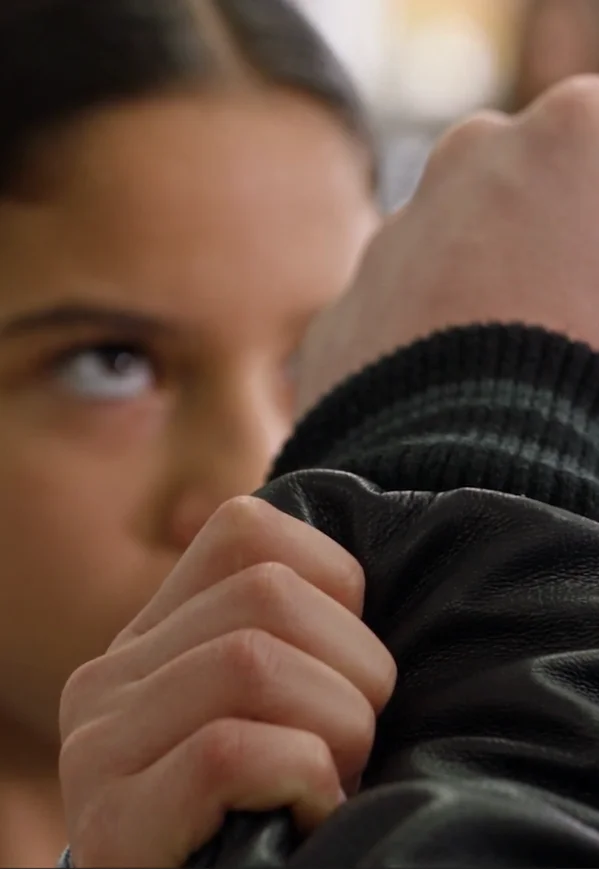
Maya nodded. Later, in her room, she composed a correction anyway—not to publish, but to know what she could honestly say if necessary. The paragraph included the threat, the fist, the brief sleeve grip, and the slip. It excluded the tray’s cause and any claim that a video proved more than it showed. She printed it for the school, then closed the document instead of posting it.
An email from Ms. Price arrived before dinner, inviting Maya and Alicia to a meeting the following week to discuss the physical contact as well as the threats. The office was still collecting accounts and had made no finding. Maya read the message twice. Even though Price had been careful with her words, the phrase physical contact made her feel as if the grip were floating alone, disconnected from the fist that had preceded it.
Chloe texted soon afterward: Someone in biology said you started the whole thing. I told them he kicked my notebook and threatened us. They told me I couldn’t prove the tray was his fault.
You never said you could, Maya answered.
Exactly.
Maya sat at her desk with the printed statement beside her, thinking about Avery’s unfinished decision. Chloe had spoken. Maya had spoken. There were people who had heard the threat. Yet the shortest clip was still the easiest story to tell, and it was spreading faster than anyone’s careful account.
At 8:47, Avery’s last message appeared: I can’t send it tonight. Please don’t tell everyone I have it.
Maya replied that she wouldn’t. She set down the phone and looked at the blue light of the screen reflected on her wall. For the first time she understood that rescuing Chloe from the circle had been the quick part. Making sure that circle did not close around her again would require people to choose courage when there was no dramatic moment to reward them.
On Thursday, Maya found an envelope in her locker. Inside was a folded sheet of copier paper with a badly drawn crown above the words Cafeteria Queen. There was no signature. She stood there long enough for the hallway to grow quieter around her, then took a photograph of the paper and carried it to the main office. She didn’t know who had left it and had no intention of making a guess sound like proof.
Ms. Price examined it without dramatizing the discovery. She asked where Maya had found it and whether anyone had seen it placed there. Maya said no. The note was added to the record as an anonymous taunt, not evidence of who had written it. Maya was both relieved and frustrated by the carefulness of the answer. At least the school was refusing to invent villains to fill gaps. At the same time, the person who had done it would probably walk down the hall without consequence.
Afterward, she sat on the bench outside the office waiting for the late bell. Mr. Grady passed carrying a clipboard, heading toward a scheduled meeting. He recognized her and stopped.
“How are you doing?” he asked.
“People keep asking me that.”
“Fair enough.” He shifted his clipboard. “I wish I’d gotten there sooner on Monday.”
“You were at the return station.”
“That’s where I was assigned. I heard the crash and thought it was another dropped lunch. By the time I worked my way through, I saw a boy on one knee and two girls near the mess.”
“So you didn’t see Trent’s fist.”
“No. And I’m not going to say I did. But I am telling the office exactly when I got there.”
Maya studied him. His honesty couldn’t rescue the earlier moment, but it could prevent an incorrect account from taking its place. “Thank you,” she said.
He hesitated. “The lunchroom shouldn’t have gotten that crowded around one student. We should have noticed faster.”
It was the first adult apology she’d heard that didn’t come attached to an explanation of why things were complicated. The bell rang before Maya could answer.





