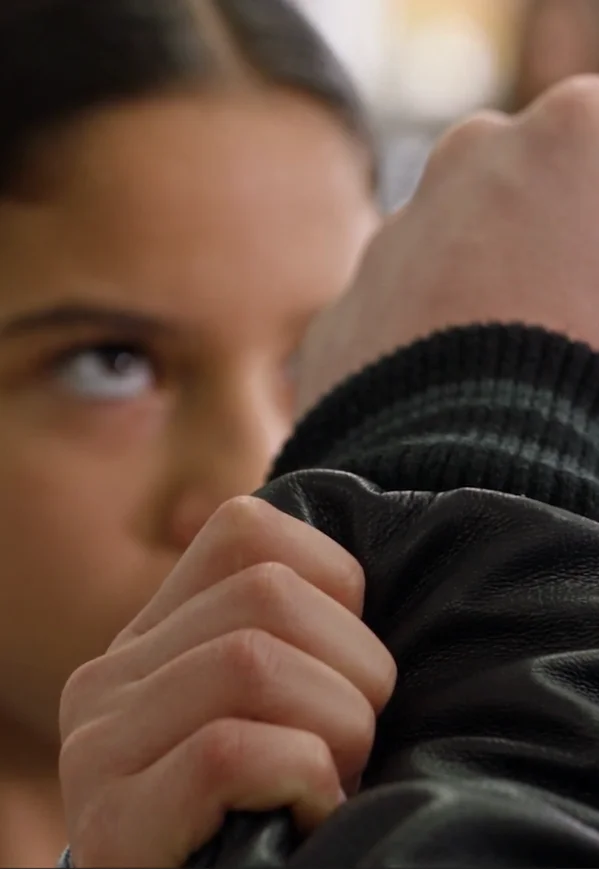
In art-club open studio that afternoon, Maya tried to finish a still-life sketch of a ceramic bowl. Her pencil kept returning to the bowl’s shadow as if she could darken it enough to make sense of it. She wasn’t in the club for competitions. She liked drawing because it demanded attention to what was really there, instead of what she wanted there to be. This week the habit was making her miserable.
The art-club adviser passed by and asked if Maya wanted to switch subjects. She did not mention the cafeteria. Maya said she was fine. A few minutes later she turned her paper over and began sketching a plan of the lunchroom from memory: windows to the south, central tables, west return station, east aisle. She drew the location of the tray, notebook and people as she had seen them. When she reached the position of Trent’s boot, she stopped. It had been near the milk, but she couldn’t remember the exact distance.
She erased the boot and wrote approximate beside the sketch. She didn’t intend to hand it in as evidence. It was simply a way of seeing why she had been so certain he hadn’t been pushed. Even with the exact location uncertain, she remembered letting go before he moved into the spill. That sequence hadn’t changed across her retellings.
Chloe met her outside the art room. She had a library book under one arm and the damaged notebook under the other. Her face was tired, but she looked directly at Maya.
“I talked to Price,” she said. “For real this time. Not just the two minutes after the nurse.”
“How did it go?”
“She let me finish. I started crying at one point and she didn’t take the paper out of my hands.”
Maya waited for Chloe to decide what she wanted to share.
“I told her I sat at an empty seat because there weren’t any chairs near the windows. Trent came over like he’d been assigned the whole table. I told her about the tray crashing, but I couldn’t tell her who moved it first. Everything happened so fast. I told her about my knees and the notebook. And how everyone stood around.” Chloe swallowed. “She asked what I wanted to happen next. Not just what punishment I wanted him to get.”
“What did you say?”
“That I want to choose where I eat. That I don’t want him talking to me. That I don’t want people making jokes every time I carry a tray.”
“That sounds right.”
“I also said I wasn’t sure exactly what your hand did. I could see you facing him and I could hear his voice. But your shoulder blocked some of it.”
“That’s exactly right, too.”
Chloe looked surprised. “I thought you’d want me to say you didn’t touch him.”
“I did touch him. I just didn’t knock him down.”
They walked toward the bus pickup, moving slowly because Chloe’s knee still stung on stairs. Maya told her about the lunchroom sketch. Chloe asked to see it and laughed when she noticed how carefully Maya had drawn the trash cans.
“You draw cafeteria trash cans?”
“Only during very important weeks.”
“I draw maps of imaginary places. Mostly towns from books. It’s easier when nobody says the town’s not accurate.”
Maya offered to show her the art studio sometime. Chloe agreed, but insisted they first get through the week without becoming another school’s cautionary poster.
That evening, Ms. Price emailed to say she had received additional information and would review it with the involved students in an appropriate setting. She didn’t name Avery. Maya wondered whether Avery had finally submitted her recording, but she chose not to send another message. She was beginning to see how easy it would be to turn a request for courage into a demand for obedience.
On Friday, Avery approached Maya before homeroom. She looked as though she had spent the night preparing a sentence that still wouldn’t come out.
“I gave Price the file yesterday,” she said at last.
Maya stopped walking. “You did?”
“After school. I kept the original on my phone and sent a copy directly to her. She asked me where I stood and when I started it. I showed her the whole thing without cutting anything.”
“Thank you.”
“Don’t make it public.”
“I won’t.”
“I mean it. Someone told me to put up the longer version so everybody could see who was right. But Chloe’s face is in it. Her jacket and all that. She doesn’t need another hundred thousand people looking at her.”
Maya felt an unexpected surge of gratitude. Avery hadn’t simply changed sides. She had recognized that proving a point could create another injury.
“Did Price ask you about the tray?” Maya asked.
“Yeah. I told her I didn’t record it and didn’t see exactly what happened. The clip begins when he kicks the notebook. The phone was already in my hand because I was reading a message, and I hit record when people started yelling.”
“Can you hear his threat?”
“Some of it. There’s a lot of noise. But you can see his arm. The fist is clearer than I expected.”
Avery took a breath. “I watched it over and over last night. I wish I’d put the phone down and helped Chloe instead.”
“Me too,” Maya said, before she could soften the words.
Avery nodded. “Yeah.”
They stood in the hallway, neither pretending the apology would settle anything. Then Maya said, “The important thing is you didn’t erase what you had. And you told Price the part you weren’t sure about.”
Avery pushed her glasses up. “I don’t know if that makes it enough.”
“I don’t either.”
It was the most generous answer Maya could give without pretending that Avery had been brave from the beginning.





