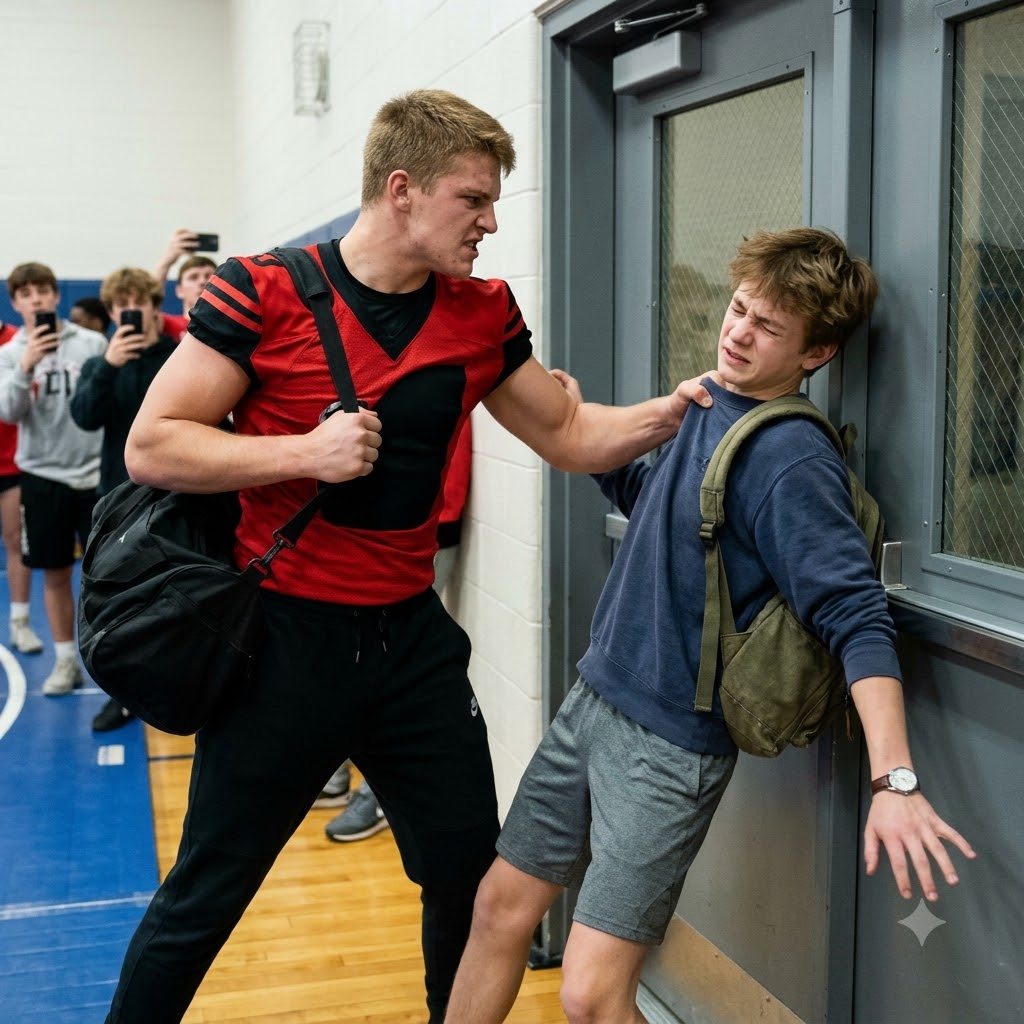
We discussed the watch last. The school had documented the damage and obtained an ordinary assessment of the property’s monetary loss. Brett’s family would provide restitution through the school-administered arrangement, without contacting us directly. Adler did not ask us to call the matter even once the payment was made. She understood that the amount was for property, not for Noah or for the years we’d lost him.
“Do I have to give them the pieces?” I asked.
“No,” she said. “The original stays with you.”
Mom reached for my hand. She didn’t squeeze hard. She knew I didn’t need a ceremony around that answer.
Before we left, I asked to put one more thing in the meeting record: I had been afraid of Brett’s claimed connection to the superintendent, and that fear was one reason I’d stayed quiet. Adler recorded it without pretending that Dr. Whitaker had intervened. The school decision had not come from a surprise powerful relative rescuing me. It had come from ordinary evidence and people willing, eventually, to describe what they had seen. I could respect that without pretending the system had worked quickly enough.
Outside the office Mom hugged me in the hallway. It was awkward because I was still holding the folder between us. She laughed once, a tired sound, and I laughed too. Neither of us was entirely happy. We had gotten something difficult and necessary, and the watch was still broken.
At lunchtime I walked into the cafeteria without choosing the emptiest corner. Maya was at the table near the window, her braid falling over one shoulder. She made a little space beside her. A moment later Jonah came over holding his tray. He asked if he could sit. Maya looked at me, and I said sure.
We didn’t immediately talk about Brett. We talked about the Friday meet. Jonah said the team bus had been loud on the way back, then stopped as if he wasn’t sure whether mentioning it was cruel. I told him I was glad they had gone. That was true. I told him I was angry I hadn’t. That was also true. He nodded without trying to make the two things agree.
“People are going to keep talking,” Jonah said after a while.
“Probably.”
“I told a couple guys I only saw the January shove. They wanted me to say I saw all the other stuff too, so they could decide whether I was on your side.”
“What did you tell them?”
“That I saw one shove and it was wrong.” He turned his fork between his fingers. “I’m not good at this.”
“Neither am I.”
Maya lifted her water bottle. “I vote for being bad at it and doing it anyway.”
That was the closest thing to a toast we managed. Nobody in the cafeteria stood up and applauded. A boy at the next table gave us a dirty look, and someone across the room still mimed a referee’s slap. The rumor hadn’t evaporated just because the official document had changed. I didn’t need it to evaporate before I could eat lunch with two people who had chosen to tell the truth in the ways they could.
Later Ms. Flores handed back my February tenth packet. My name was at the top, the same name Brett had been angry to see. There was a grade on it and a comment about the strength of one argument. She didn’t make a speech. She asked me to stop by after class the next week to review a couple of older assignments with her. I agreed. If there were academic consequences for the choices I’d made under pressure, I wanted to face them with the whole story known rather than hide behind silence again.
Near the end of the day Patel called me in for a brief check-in. She gave me the revised incident notice and asked whether the no-contact plan had been followed so far. It had. I asked about the foundation award. She reminded me that the principal couldn’t make that decision for an independent organization, but the school could send an accurate status confirmation with our permission. Mom had already requested one. I approved the limited school communication and went to the library while it was arranged.
The Access Foundation replied later that week, after reviewing the corrected school notice and the terms of my award. The incident did not disqualify me, and my existing assistance would continue. They didn’t congratulate me for pinning a football captain. They confirmed that I remained eligible for the program I’d worked to join. I printed the response and put it with the original scholarship letter. It was a small stack of papers, but it occupied far less space in my head than the fear had.
My first practice back happened under the ordinary brightness of the annex lights. Another trained adult stood near the entrance with the attendance list. Coach Miller was not alone in the room and did not pull me aside to explain himself. Brett was somewhere else on the school grounds, exactly where the written plan said he would be. The hardwood strip had been cleaned long before I returned. The blue mat was the same blue it had always been.
For a few minutes I was afraid my body would remember the fall instead of the practice. I stood at the edge with my shoes tied, waiting for someone to call me in. Maya passed and said, “You’re late to warm-up,” even though I wasn’t. I followed her onto the mat. We worked through ordinary movement, listening to instructions and leaving enough space for the people around us. Nothing extraordinary happened. It felt extraordinary anyway.





