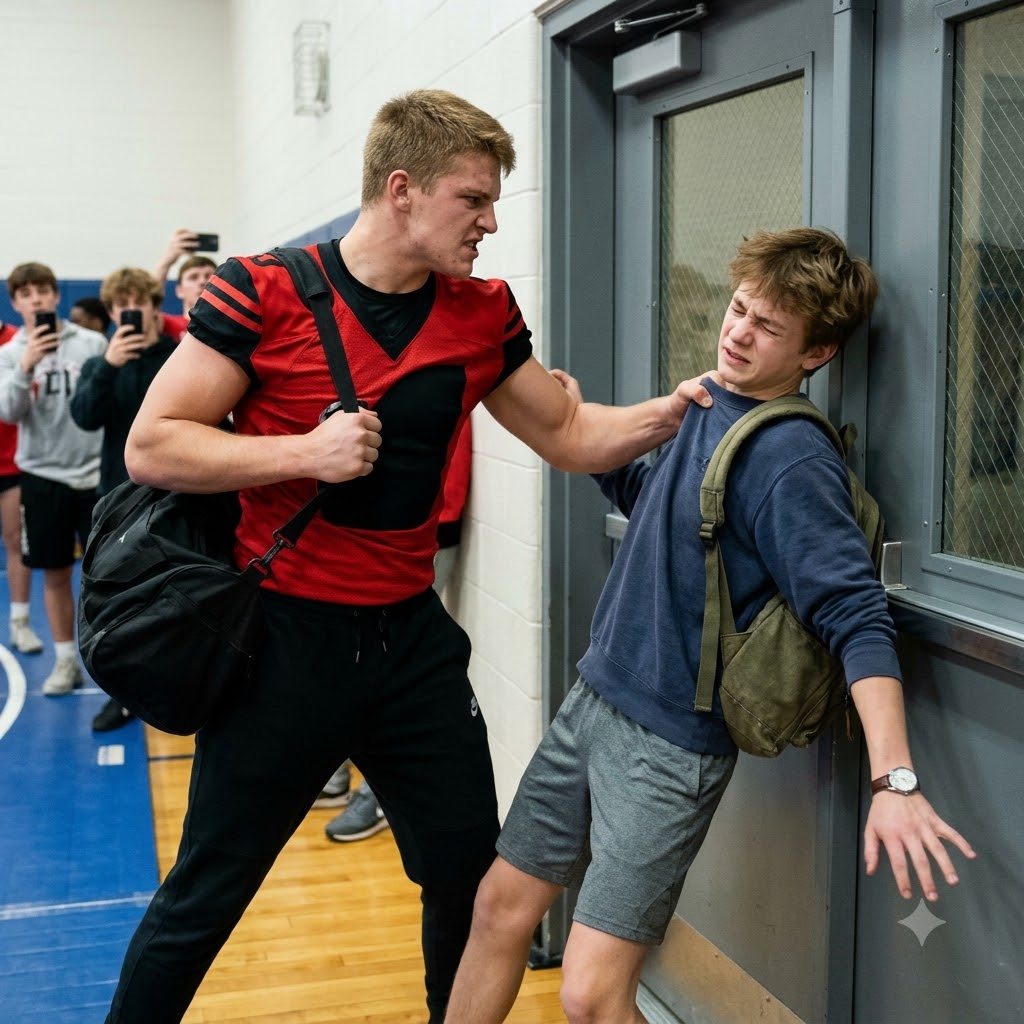
That afternoon I sat in the library instead of practicing. I could hear the distant thump of balls from the gym through the heating duct. I had expected to feel relieved that Brett couldn’t put his hands on me there. Instead I felt homesick for a place I was still inside. I sketched my regular practice schedule in the margin of a worksheet and crossed out the time I should have been drilling with Maya. Then I drew a neat box around the name of the meet scheduled for Friday.
It was a small local meet, not a championship. I had been looking forward to it because I was finally comfortable enough in my weight class to compete without making my own nerves the main opponent. Coach had told me the previous week that I could be useful to the team there. Now there was a chance I would miss it because someone else had grabbed my collar.
Mom called during my supervised departure window. She had spoken with Ms. Patel and arranged to come in on Friday if the review needed her. She had also found the number for the Greybridge Access Foundation on our scholarship paperwork. She wasn’t going to tell them a sensational story; she wanted to know what a pending school conduct review meant for my award. I asked her to hold off until the school had my full statement. She agreed, but reminded me that asking a question wasn’t the same as confessing guilt.
On the walk home, I passed the repair shop near the bus stop. Its window held watchbands and batteries and a clock shaped like a ship’s wheel. I stood outside long enough for a man behind the counter to look up. I knew what the pieces in my envelope looked like. I knew the difference between repair and replacement. Still, I pictured somebody opening the case, smoothing it flat, putting Noah’s old hands back into motion. Then I kept walking. I wasn’t ready to hear a stranger say no.
At home I did my own history reading at the kitchen table. It took longer than usual because I kept reaching toward the empty place on my wrist. I wrote my name at the top of every page, a small deliberate act that felt absurdly difficult after months of writing somebody else’s. When Mom arrived, we read the temporary school notice together. It contained no final finding, and it promised a follow-up. For a moment that seemed almost manageable.
Then an email arrived in the school portal. It was a routine notice summarizing the incident category attached to my file while the investigation remained open. The heading was plain: Mutual altercation — athletics area. My three handwritten pages had been received, but the classification had not changed.
I read it twice. I didn’t have to imagine how that phrase might be repeated by a teammate, a coach, or a scholarship committee seeing only a brief notice. It was already being repeated in the halls by people who had watched nothing. I showed Mom, and she asked whether I wanted her to call Principal Adler first thing in the morning.
“Yes,” I said. “But I want to be in the room when she explains it.”
The envelope lay between us on the table, no heavier than yesterday. I closed the portal and opened a new document. At the top I typed, I am requesting that my written account be reviewed before any finding describes the event as a mutual fight. It wasn’t a speech, and I didn’t know if anyone would listen. It was a record of my refusal to accept the wrong beginning.
On Friday morning I counted the times I reached for my absent watch before first period. Seven on the bus, two in the hall, one while opening my locker. My wrist had a pale band where the leather used to cover it. I kept brushing that mark with my thumb, like an animal checking a place where a limb should be.
Mom came with me to school wearing her work coat over a clean sweater. She’d traded shifts so she could attend a meeting later that day. We stood by the main-office window while the secretary checked the principal’s schedule. People moved past with their normal Friday plans: a chemistry quiz, a bake sale, a basketball game after dinner. I envied them the smallness of their problems, then felt embarrassed by the envy. Everybody had things I couldn’t see.
Ms. Patel met us before classes and took us into her office. She explained that she was collecting accounts, not conducting a trial. Brett had been asked for a separate written statement. Coach’s incident summary was on file, and the principal would review the school’s interim language once more information had been gathered. I handed over my typed request, which Mom had helped me make shorter and clearer.
“Have you spoken to the student who was recording?” Ms. Patel asked.
“Not about giving it to you. I asked her not to post it.”
“That was a good concern,” she said. “I can invite her to talk privately. She needs to decide for herself what she can provide.”
Mom asked how the school would handle images of minors. Patel explained that any recording obtained for the review would be stored with limited access and not shown around classes. She didn’t claim she could erase copies students might already have; she said the school would tell students not to circulate images of a disciplinary matter. The distinction was uncomfortable but credible.
When Mom went to the meeting she had arranged with her supervisor over the phone, I headed toward English. I saw Maya coming out of the stairwell. She looked like she hadn’t slept. I asked whether she had a minute before the bell. We stood near a display case full of ceramics projects, where people could walk past without having to squeeze between us.





