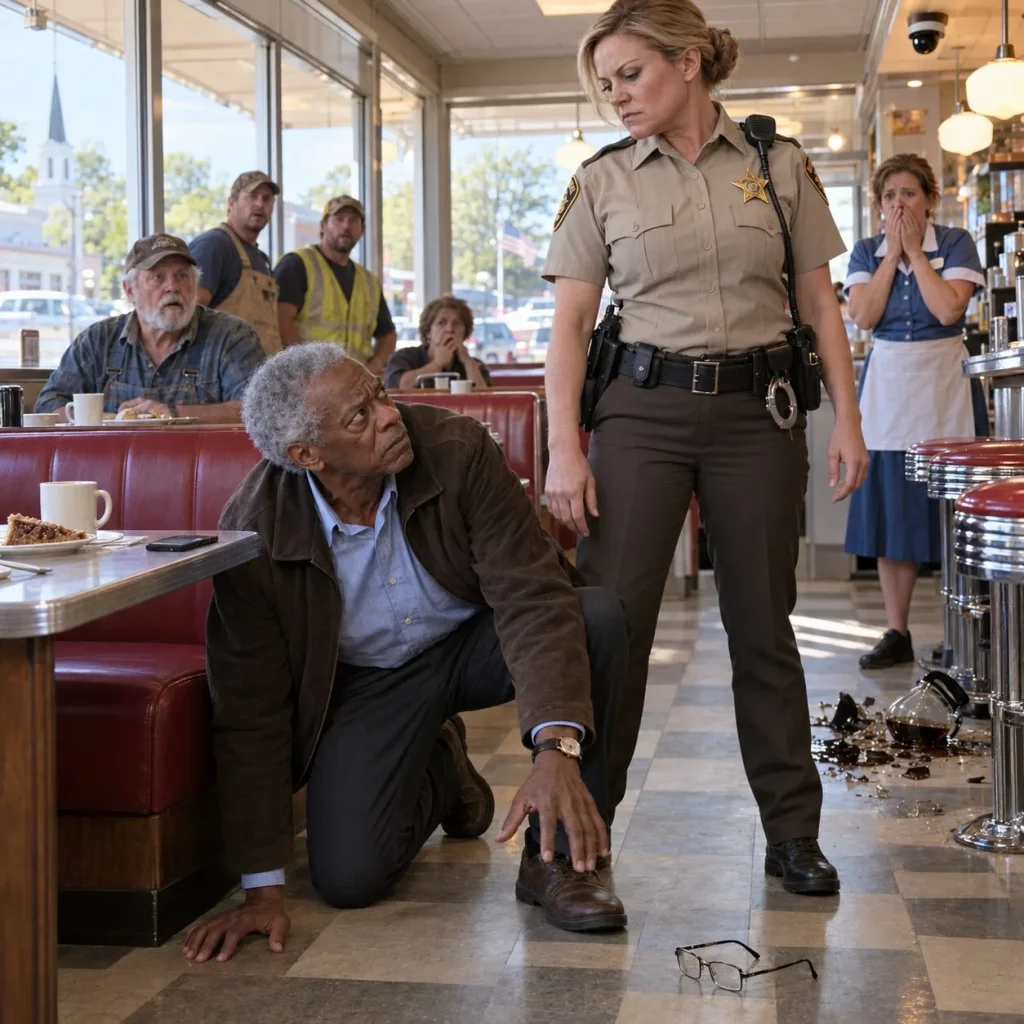
He learned developments from me or public filings.

At first that frustrated him.
“I know people working on adjacent issues and I still know less than Donna.”
“Welcome to being family.”
“I hate it.”
“Good.”
He laughed.
The boundary protected the process.
It also protected him.
If the outcome went against me, no one could credibly say he had controlled it.
If the outcome supported me, the evidence stood on its own.
I thought often about Thomas Mullen during those months.
Not as a villain.
As a father.
What stories had he told Erica at dinner?
Did he describe me as arrogant?
Dangerous?
Ungrateful?
Did he explain the students he searched?
Did he ever admit the description had been weak?
Did he frame the policy change as humiliation?
Children inherit stories before they inherit facts.
That does not absolve adults of later choices.
Erica was responsible for Erica.
But understanding transmission mattered.
I had inherited stories too.
My father told me about being denied service at a lunch counter as a teenager.
My mother told me about teachers who called her by her first name while calling white parents Mr. and Mrs.
Those stories shaped me.
I like to believe they made me alert to injustice rather than hungry for revenge.
But nobody is neutral about inherited pain.
The responsibility is to examine what we inherit before we turn it into action.
That became part of a lecture I gave at Riverside High.
A student asked, “So was Sheriff Mullen racist because her dad was?”
“I didn’t say her father was one simple thing.”
“But he searched Black kids.”
“Yes.”
“Was that racist?”
“It may have involved racial bias.”
“Why not just say yes?”
I smiled.
“Because history requires precision.”
The student frowned.
“That sounds like avoiding.”
“Sometimes precision feels like avoiding because certainty is emotionally satisfying.”
I pointed to the board.
“The evidence tells us what happened.
Interpretation must stay attached to evidence.”
Another student asked, “What about what she said to you?”
“You people?”
“Yes.”
“That statement carries racial meaning in context.”
“So she was racist.”
“I can say her conduct reflected racialized hostility.”
The class groaned.
“That’s lawyer talk.”
“No. Lawyer talk is worse.”
They laughed.
I continued.
“You are allowed moral clarity.
You are also responsible for accurate claims.”
That balance defined how I handled the case.
I refused to minimize.
I also refused to embellish.
No, she did not punch me.
No, she did not draw a weapon.
No, I was not hospitalized.
No, she did not call me a racial slur.
She slapped me.
She falsely arrested me.
She made racially loaded and retaliatory statements.
She attempted to shape the official narrative after evidence contradicted her.
Those facts were enough.
Truth does not need decoration.
That became another lesson the town slowly absorbed.
At the second community meeting, people stopped asking whether I hated Erica.
They started asking what systems had failed.
That was progress.
Not emotional.
Structural.
The kind that lasts longer if people keep showing up.
Before Erica entered her plea, the county commission held a public hearing about the department’s policies.

The hearing was not technically about her criminal case.
Lawyers repeated that several times.
The commission wanted testimony on oversight, complaint handling, body-camera retention, and internal reporting.
The meeting lasted six hours.
People arrived angry and left tired.
That is often how democracy looks in real life.
Not inspiring.
Fluorescent lighting.
Paper cups.
Bad microphones.
Citizens waiting three hours for two minutes at a podium.
I sat in the second row.
I had no plan to speak.
Then a commissioner described the diner incident as “an unfortunate interpersonal conflict.”
I felt my whole body tighten.
Interpersonal conflict.
That phrase attempted to shrink an abuse of office into two people failing to get along.
I raised my hand to speak.
The chair called my name.
I walked to the podium.
“Mr. Bennett, you have three minutes.”
“I won’t need all three.”
That was a lie.
Teachers always need all three.
I looked at the commissioners.
“What happened in the diner was personal to Sheriff Mullen.”
I paused.
“It was not merely interpersonal.”
The room quieted.
“She was not there as Erica Mullen, private citizen.
She was in uniform.
She used arrest authority.
She took my phone.
She directed a deputy.
She initiated a report.”
I looked at the commissioner who had used the phrase.
“When personal resentment uses public power, the public part matters.”
He nodded slowly.
I continued.
“I am not asking you to decide her criminal case.
That belongs elsewhere.”
I held up the policy packet.
“I am asking you to write rules for what the next deputy does when a supervisor turns personal anger into official action.”
The red light on the microphone blinked.
My time.
I stopped.
The chair said, “You may finish.”
I smiled.
“Thank you.
I already did.”
That clip circulated online.
Henry texted:
You absolutely rehearsed that last line.
I replied:
I absolutely did not.
He sent:
Liar.
The hearing produced specific proposals.
Longer body-camera retention for use-of-force incidents.
Automatic external notification for force complaints against the sheriff or senior command.
Written documentation when personal property is held as evidence.
Protection for employees who refuse to alter reports.
A public complaint portal.
None of those rules would have prevented Erica from walking to my booth.
That mattered.
Policy cannot prevent every bad impulse.
Good policy can limit what happens next.
It can create evidence.
It can protect refusal.
It can prevent a lie from becoming the only official version.
The commission debated cost.
Storage was expensive.
External review was expensive.
Training was expensive.
A man behind me muttered, “Cheaper than lawsuits.”
He was not wrong.
Donna testified too.
She hated public speaking.
I could see her paper shaking.
“My name is Donna Bell.
I own Riverside Diner.”
The chair thanked her.
She looked at the commissioners.
“When the sheriff hit Marcus, I was scared to move.”
Her voice cracked.





