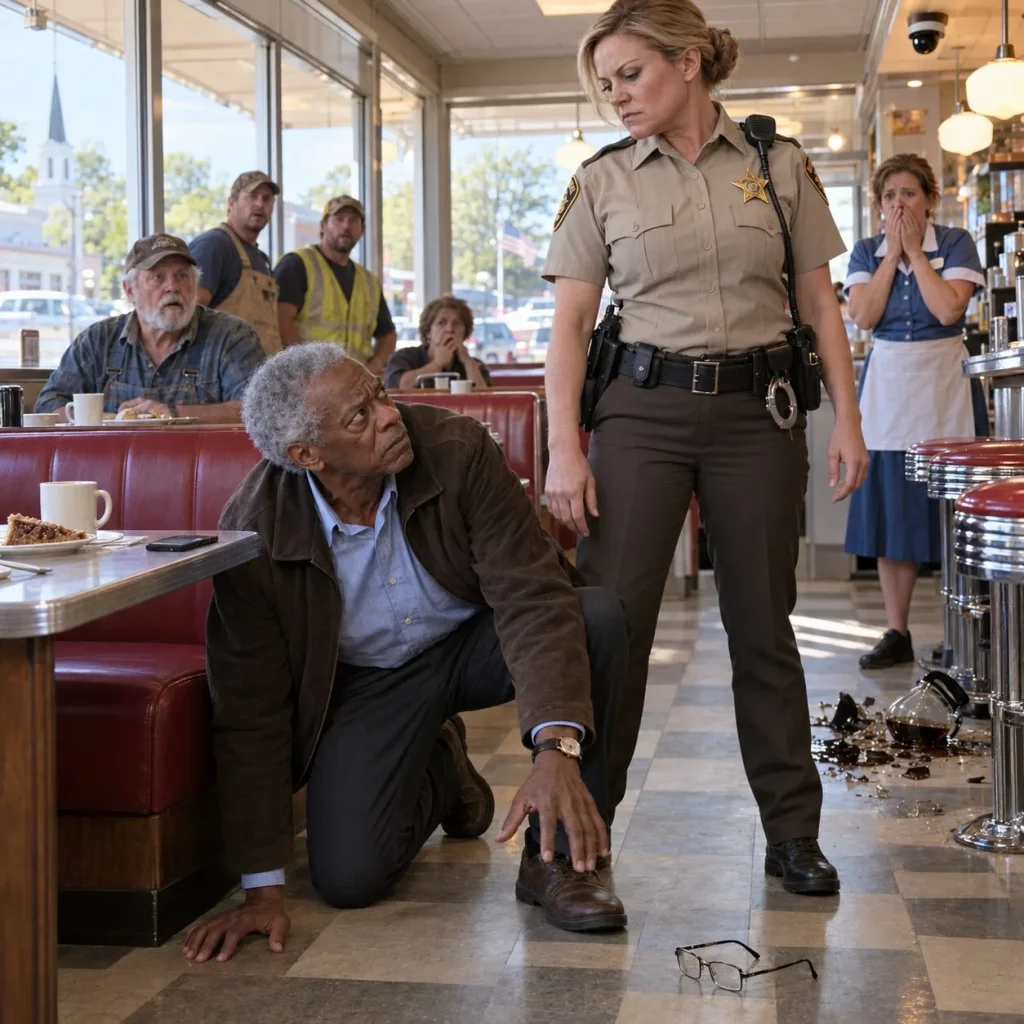
Expectation arrives before evidence.
A person enters the room already guilty of being who you expect them to be.
Erica had expected arrogance.
So a question became defiance.
A hand reaching for coffee became a challenge.
A phone call became interference.
The letter continued.
I do not expect your forgiveness.
I wanted you to know I understand now that I used public authority to act on a private story.
I folded the pages.
Then unfolded them.
There was no dramatic feeling.
No release.
No sudden mercy.
I felt sad.
A week later, through our lawyers, Erica asked whether I would participate in a restorative meeting.
The request was optional.
I discussed it with Dr. Price.
“What do you want from it?” he asked.
“I don’t know.”
“Then why go?”
“Because I have questions.”
“What questions?”
“Why me that morning?”
“You know why.”
“I know the general answer.”
“What else?”
I thought.
“I want to know whether she remembers Donna.”
“Why?”
“Because Donna’s fear is the part I remember most.”
Dr. Price nodded.
“Then decide whether hearing her answer could help or harm.”
I agreed to one meeting.
Neutral office.
No cameras.
Lawyers nearby but not in the room.
A trained facilitator sat between us.
Erica entered wearing ordinary clothes.
For a moment, I did not recognize her.
We sat.
The facilitator explained the rules.
No interruption.
No pressure for apology.
No requirement to forgive.
I asked first.
“Why did you walk over to my booth?”
Erica looked at me.
“Because I saw you and got angry.”
“That simple?”
“Yes.”
“What had I done?”
“Nothing that morning.”
The clarity hurt.
I asked, “Did you plan to arrest me?”
“No.”
“Did you plan to hit me?”
“No.”
“What changed?”
“You didn’t respond the way I expected.”
“What did you expect?”
She looked ashamed.
“That you would become loud.”
“I didn’t.”
“No.”
“And that made you angrier.”
“Yes.”
“Why?”
“Because I needed you to become the version of you I already believed.”
I sat back.
That may have been the most honest sentence she ever gave me.
I asked about Donna.
“Did you see her look at you before she picked up my glasses?”
Erica closed her eyes.
“Yes.”
“What did you feel?”
A long pause.
“Powerful.”
I appreciated that she did not soften it.
“Did you like it?”
“Yes.”
The room went silent.
Then she added, “For about five seconds.”
“What changed?”
“The camera.”
I almost laughed.
“Not my face?”
She looked at me.
“No.”
“Not the fact you hit an old man?”
“No.”
Her honesty was brutal.
“I was still telling myself you caused it.”
I nodded.
“What changed later?”
“The video.”
“Why?”
“Because I watched myself.”
She swallowed.
“I saw what everyone else saw.”
That answer did not heal me.
But it gave me something useful.
Accountability had begun when her private interpretation collided with an external record.
That reinforced everything I had come to believe about systems.
People need mirrors they do not control.
Cameras can be one.
Witnesses another.
Policies.
Review.
Courts.
Colleagues willing to say no.
I asked one final question.
“Do you want me to forgive you?”
Erica looked at the floor.
“I want to be someone who could deserve it.”
“That’s not the same.”
“No.”
I nodded.
“Good.”
She looked up.
“Do you forgive me?”
I thought about it.
“I don’t know.”
She accepted that.
The meeting ended.
Outside, Henry waited by my car.
“How was it?”
“Useful.”
“That sounds like a product review.”
“It was not pleasant.”
“Do you feel better?”
I considered.
“Clearer.”
He nodded.
We drove to lunch.
I never had another private conversation with Erica.
I did not need one.
Forgiveness, if it came, did not need to restore access.
Trust, if it returned at all, would belong to institutions and behavior, not sentiment.
I could release some anger without pretending the badge should ever return to her hand.
I could wish her a better life without wanting her back in authority.
Those distinctions gave me peace.
Not the cinematic kind.
The kind that lets a man sit at a kitchen table, fold a difficult letter, and then go outside to water tomatoes because the afternoon still needs living.
The next morning, I went to the diner again.
Donna set down my coffee.
“No sheriff today?”
“Please don’t ruin breakfast.”
She laughed.
I reached for the mug.
For the briefest second, my hand stopped.
My body remembered before my mind did.
The slap.
The glasses.
The floor.
The room going quiet.
Then I wrapped my fingers around the handle.
Donna noticed.
“You okay?”
“Yes.”
This time, the word was true.
I lifted the cup.
Nobody told me to put it down.
Nobody needed permission to move.
Nobody looked toward the door before speaking.
The camera above the register kept recording.
But I no longer needed it to prove the room belonged to everyone.
I drank my coffee.
And when a young deputy walked in a few minutes later, he nodded at me.
“Morning, Mr. Bennett.”
“Morning.”
He ordered breakfast.
That was all.
No dramatic reconciliation.
No speech.
No fear.
Just a public servant entering a diner and a retired teacher drinking coffee.
Ordinary.
After everything, ordinary felt like freedom.





