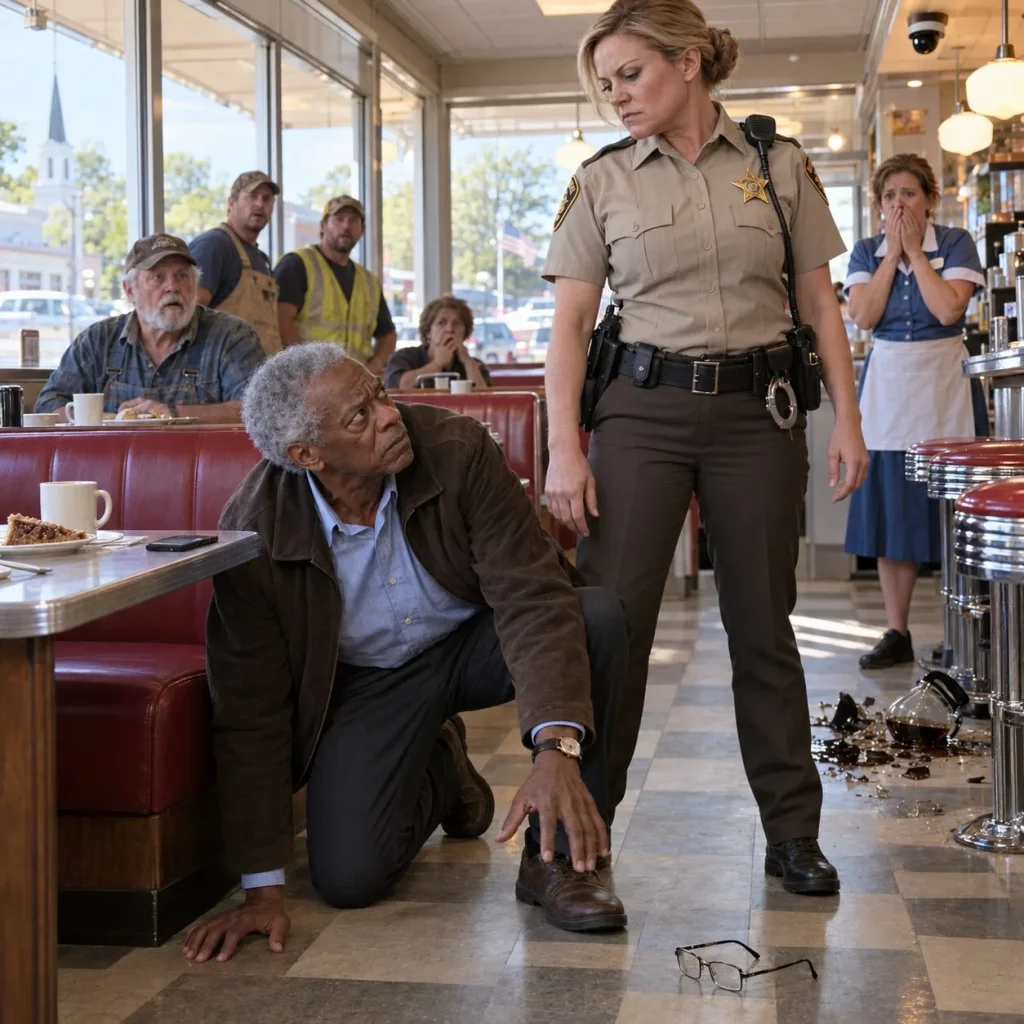
I refused invitations from national television shows.
I accepted one invitation from a state teachers’ association.
Why?
Because teachers understood what I cared about.
A classroom is also an institution.
Authority exists there too.
A teacher can humiliate.
A student can be falsely accused.
Records matter.
Witnesses matter.
Rules matter.
At the conference, I told the audience:
“Do not teach students only that they have rights.
Teach them what institutions should do when rights are disputed.”
A teacher asked, “How?”
“Teach process.”
“Process is boring.”
“So is a seatbelt until you need it.”
People laughed.
I continued.
“Teach them to document.
Teach them to ask what rule applies.
Teach them that a calm question is not disrespect.
Teach them that authority can be legitimate and still wrong in a particular moment.”
Afterward, a young teacher approached me.
“My principal says questioning a decision undermines leadership.”
I sighed.
“Sometimes questioning does undermine bad leadership.”
She laughed nervously.
“What should I do?”
“I don’t know your workplace.”
“That’s not helpful.”
“It’s honest.”
I thought.
“Ask questions in ways that create a record.

Be specific.
Stay factual.
Know policy.
Find allies.
Don’t confuse courage with recklessness.”
She wrote it down.
I realized I was still teaching.
Just not from a classroom.
Erica’s plea came months later.
The public statement she made did not make me feel triumphant.
It made me tired.
After court, I went home alone.
Henry wanted to stay.
I told him I needed quiet.
I sat on the porch until sunset.
I thought about Thomas Mullen.
The three boys from 1990.
Darryl.
Kevin.
Leon.
I had not spoken to them in years.
The next day, I found numbers for two of them.
Darryl answered from Atlanta.
“Mr. Bennett?”
“Hello, Darryl.”
He laughed.
“Nobody has called me that name in thirty years.”
“You’ll always be Darryl Foster in my grade book.”
“Man, I hated your grade book.”
We talked.
He had seen the news.
“I told my wife, ‘That’s my teacher.’”
I asked whether the old football incident had stayed with him.
He went quiet.
“Yeah.”
“How?”
“Mostly the part where everybody acted like we should be grateful they let us go.”
That sentence hurt.
“Did I help?”
“You did.”
“Enough?”
He laughed softly.
“You still asking teacher questions.”
“I’m serious.”
“So am I.”
He paused.
“You came the next day and said what happened wasn’t normal.
That mattered.”
I closed my eyes.
“What happened to you wasn’t normal either,” he said.
“I know.”
“Good.”
We talked for an hour.
Kevin called me later after Darryl gave him my number.
Leon had died several years earlier.
That grief surprised me.
I had not known.
Kevin said, “He remembered you.”
I cried after we hung up.
History is made of people whose lives continue after the chapter ends.
I had taught the 1990 incident as a private example in my mind for decades.
For Darryl, Kevin, and Leon, it had been their bodies on the curb.
The distinction mattered.
The diner incident had become a public lesson for other people.
I needed to remember it was also my body on the tile.
I was allowed to be tired.
Allowed to hate the replay.
Allowed to refuse interviews.
Allowed to want ordinary breakfast.
That realization helped me reclaim the diner.
Not as a symbol.
As a place that served good biscuits.
Months after the plea, Donna removed the shadow box with the coffee-pot shard.
“Why?”
I asked.
“I’m tired of people photographing it.”
I smiled.
“Good.”
“You said it was melodramatic.”
“It was.”
“So you approve?”
“Completely.”
She replaced it with a handwritten menu special.
PEACH PANCAKES.
I ordered them.
They were terrible.
“Donna.”
“What?”
“These are awful.”
“Then don’t order them.”
That exchange meant more to me than the display had.
The diner did not have to remain a memorial.
It could become a diner again.
Just as I did not have to remain evidence.
I could become a man drinking coffee.
That was the direction I wanted the story to end.
Not with Erica.
With ordinary life returning without denial.
A place remembers.

A body remembers.
A community remembers.
But memory does not have to occupy every chair forever.
There was also a private recovery that never appeared in a court file.
For months after the slap, sudden movement near my face made me flinch.
The first time it happened was ridiculous.
Henry reached across my kitchen table for the salt.
His sleeve moved through the edge of my vision.
I jerked backward.
He froze.
“Dad.”
“I’m fine.”
“No.”
“I’m fine.”
He put the salt down.
“You just flinched.”
“I’m sixty-eight.
We flinch.”
“That was not old-man flinching.”
I wanted to make a joke.
He did not let me.
So I told my doctor.
My doctor suggested a counselor who worked with people after violent or coercive incidents.
I resisted.
Not because I thought therapy was weak.
I had recommended therapy to students and parents for decades.
I resisted because the word trauma felt too large for what happened.
One slap.
One false arrest.
A few hours in custody.
Other people survived worse.
The counselor, Dr. Samuel Price, listened to me explain all of that.
Then he said, “Pain is not a competition.”
“I know.”
“You just spent five minutes competing.”
I looked at him.
“I’m a history teacher.”
“Retired.”
“Everyone keeps saying that.”
He smiled.
“We can call it a stress response if trauma bothers you.”
“That sounds less dramatic.”
“Fine.”
So we worked on my stress response.
He asked what I remembered most.
“The room.”
“What about it?”
“Silence.”
“Not the impact?”
“The impact was one second.”
“And the silence?”
“Longer.”
That surprised me.
I had thought Erica’s hand was the central injury.
My nervous system remembered the room.
People looking down.
Donna waiting for permission.
The sense that one person could redefine reality and everyone else might cooperate.
That was what returned in dreams.
Not the slap.
The silence after.
Dr. Price asked, “What changed the silence?”





