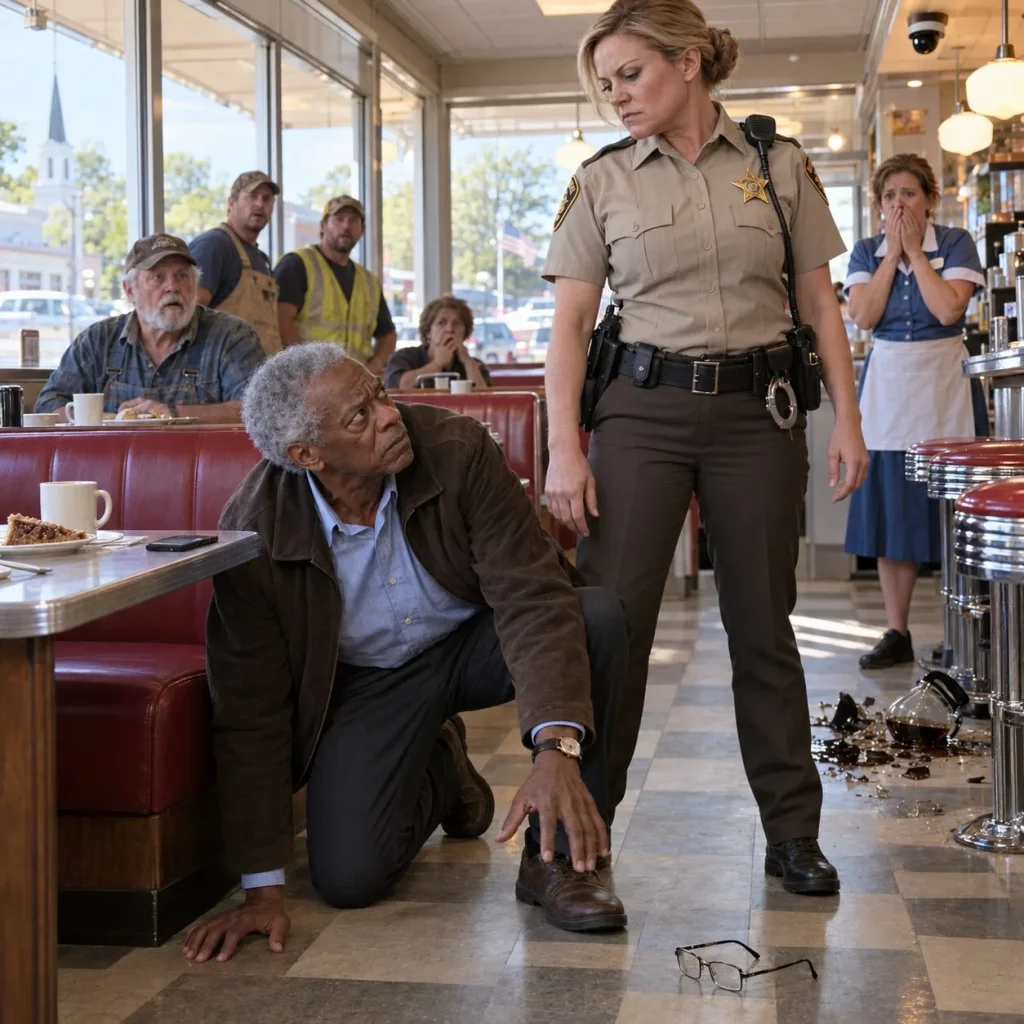
People do.
Human scale matters.
So whenever reporters asked about constitutional principles, I sometimes answered with breakfast.
“I was drinking coffee.”
“You were discussing civil rights?”
“No.”
“You were protesting?”
“No.”
“You were making a statement?”
“No.”
“What were you doing?”
“Eating eggs.”
That ordinary fact stripped away the temptation to mythologize the confrontation.
I did not stage a courageous act.
Power came to my booth.
That distinction mattered.
The case also changed how former students contacted me.
Some wrote to thank me.
Others confessed stories.
A woman named Patrice emailed:
Mr. Bennett, I never told anyone that a deputy searched my car when I was nineteen and said he could “make this difficult” if I complained.
I don’t know if it matters now.
Your video made me think maybe I should have said something.
I did not tell her what to do.
I gave her the number for an independent legal-aid organization.
Another former student wrote about being stopped repeatedly on the same road.
One said Erica had always treated him fairly.
I saved that email too.
Confirmation bias is comfortable.
I did not want only evidence that fit anger.
If people had different experiences, those experiences mattered.
At a church discussion, someone asked, “Why are you defending people who say she was good to them?”
“I’m not defending her.”
“Then why mention it?”
“Because truth can contain contradiction.”
That answer frustrated people.
They wanted a coherent villain.

Coherent villains are easier than real institutions.
A sheriff can help one family and abuse another.
A teacher can inspire one child and fail another.
A parent can love and harm.
Human consistency is overrated.
Accountability must focus on conduct.
What happened?
What evidence supports it?
What rules apply?
That was how I kept from becoming consumed by hatred.
I did not need to prove Erica had always been bad.
I needed the system to address what she did to me and what she did afterward.
The distinction protected the case.
It also protected me.
Hatred asks for a total story.
Justice can work with a specific one.
Henry noticed the change.
“You’re less angry.”
“No.”
“You hide it better.”
“I’m a teacher.”
“You’re retired.”
“Habits remain.”
We were sitting on my porch.
He looked toward the street.
“Do you want her to go to prison?”
I did not answer immediately.
“I want consequences that make sense.”
“That’s not what I asked.”
“I don’t know.”
He nodded.
“That’s allowed.”
“I thought you’d have an opinion.”
“I do.”
“What?”
“I’m not telling you.”
“Why?”
“Because I don’t want your victim-impact decisions shaped by what your son from DOJ thinks.”
I stared at him.
“You are incredibly irritating.”
“Ethics.”
“Your mother would tell you to stop being dramatic.”
“She would tell us both to eat.”
We went inside and made sandwiches.
Ordinary life again.
Always ordinary life.
It kept the case from swallowing the man.
Riverside changed after the video.
Not completely.
Not permanently.
But enough that people began saying things they had kept private.
Donna put a handwritten sign on the diner door.
WE SERVE BREAKFAST.
WE ALSO SAVE OUR SECURITY FOOTAGE.
I told her it was too much.
She said, “It makes me laugh.”
Business doubled for a week.
Then normalized.
Some regulars stopped coming.
Others returned after avoiding the diner for days.
Fear does not disappear just because a video goes public.
It changes shape.
One morning, a man I had known for thirty years sat in my booth.
“Marcus, I owe you an apology.”
“For what?”
“I was there.”
I recognized him.
He had been near the kitchen.
“I know.”
“I didn’t speak.”
“I know.”
He stared at his coffee.
“My wife asked me why.”
“What did you tell her?”
“That I was scared.”
“That’s honest.”
He looked up.
“You weren’t?”
“Terrified.”
“But you said no to her.”
“I was already the target.”
He nodded slowly.
That distinction mattered.
Bystanders often believe courage is easier for the person being harmed because that person acts.
Sometimes action is forced on the target.
The bystander has a choice.
Choice can be its own burden.
“I should have stood up,” he said.
“Maybe.”
He looked surprised.
I continued.
“But you can decide what you do next time.”
That became the tone of many conversations.
Not shame.
Preparation.
What do we do next time?
The church held a community forum about public trust.
I almost refused to attend.
Then Donna said, “If you don’t go, everyone will talk about you while you’re eating at home.”
So I went.
The fellowship hall was packed.
Former students filled three rows.
Deputies sat in the back.
Henry attended but refused to sit onstage.
“This is your town,” he said.
“You grew up here.”
“I also work for the federal government.
That changes how people hear me.”
He was right.
I sat beside a pastor, a county commissioner, a civil-rights advocate, and a retired judge.
The first question came from a woman whose son had been stopped by deputies twice.
“How are we supposed to trust an investigation run by law enforcement?”
The state investigator was not there.
The retired judge answered about independent review.
Then I said, “Trust should not be demanded.”
The room quieted.
“It should be supported by transparent rules, honest records, and consequences when rules are broken.”
A deputy in the back stood.
“What about people who lie about us?”
I looked at him.
“They should face the truth too.”
He crossed his arms.
“Easy to say when the camera helps you.”
“Yes.”
I nodded.
“The camera helped me.”
I let that sit.
“What happens when there is no camera?”
Nobody answered.
“That is exactly why the credibility of reports matters.
It is why supervisors matter.
It is why witnesses matter.
It is why people inside institutions have to tell the truth when telling it is expensive.”
Aaron was sitting two seats away from him.

He looked down.
The forum lasted three hours.
People were angry.
Some defended Erica.





