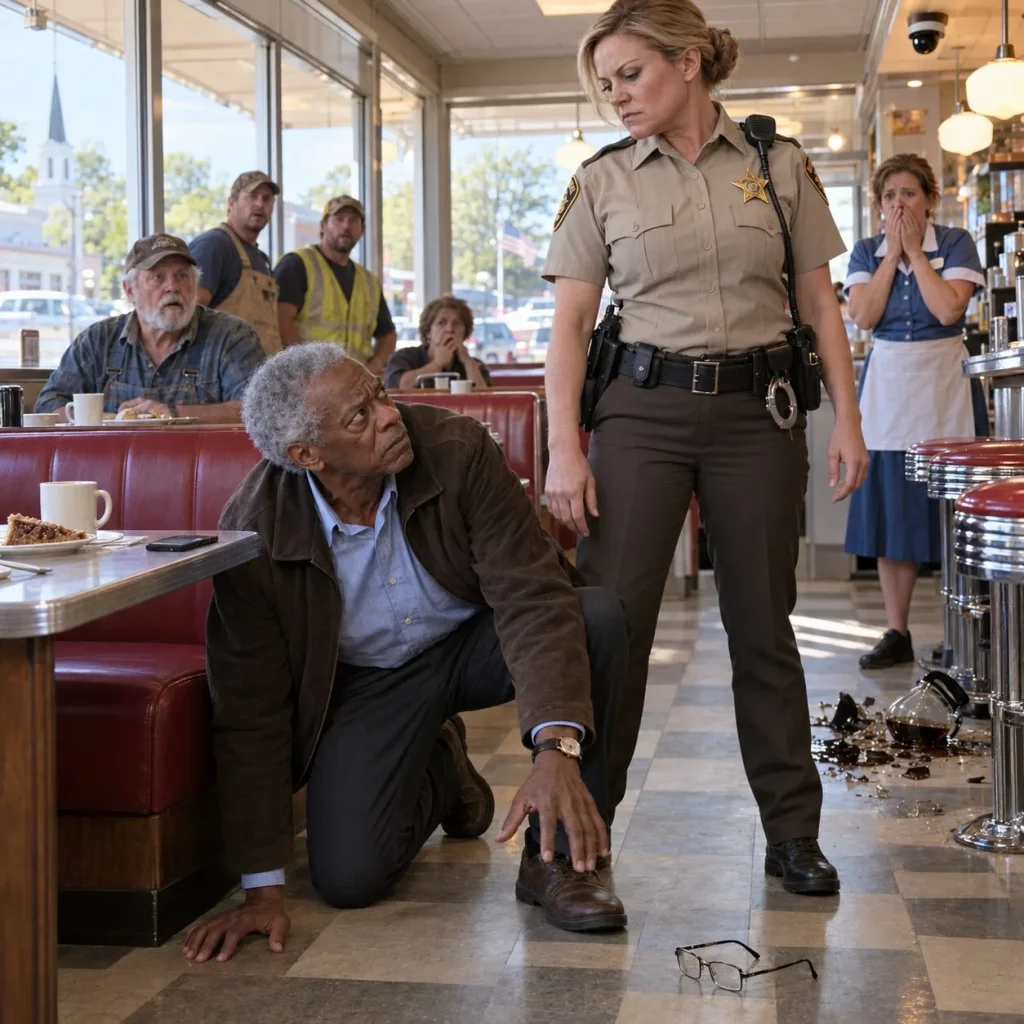
She had admitted facts publicly.
That mattered.
After court, reporters surrounded us.
“Mr. Bennett, are you satisfied?”
“No.”
That surprised them.
I continued.
“Satisfied is not the word.”
“Do you think the sentence is enough?”
“I think the court has imposed a lawful sentence after a lawful process.”
“Do you forgive her?”
Again.
Always that question.
“I have not decided what forgiveness means here.”
“Would you meet with her?”
“If there were a useful reason.”
“Do you regret releasing the video?”
“No.”
“Do you believe Riverside is racist?”
The question was too large for a courthouse sidewalk.
“I believe Riverside contains people capable of prejudice, courage, fear, honesty, denial, and change.”
A reporter frowned.
“That’s not a yes or no.”
“History rarely is.”
Henry laughed behind me.
We left.
My civil case settled later.
The county’s insurer agreed to compensate me for the unlawful detention, medical costs, damaged property, and legal fees.
Part of the settlement funded independent training on use of force and report integrity.

I insisted on that.
Paul warned me not to romanticize settlement terms.
“Training doesn’t fix culture.”
“I know.”
“It may do nothing.”
“I know.”
“Then why insist?”
“Because doing nothing definitely does nothing.”
He smiled.
“Teacher.”
“Lawyer.”
We shook hands.
I donated part of the settlement to a scholarship at Riverside High for students studying public service, law, history, or journalism.
I named it after Evelyn.
Not myself.
Henry cried when I told him.
“Mom would hate having her name on something.”
“Exactly why I did it.”
He laughed.
The scholarship essay prompt was simple:
Describe a time when telling the truth carried a cost.
The first year, eighty-seven students applied.
I read every essay.
Some were dramatic.
Some were ordinary.
A girl admitted cheating on a chemistry test.
A boy told a coach about hazing.
A student confronted a friend over a racist joke.
Another told her parents she did not want the career they had chosen for her.
Courage has many sizes.
We gave the scholarship to a young man who wrote about correcting a rumor that benefited him.
He had been blamed for nothing.
Someone else had.
He could have stayed quiet.
He did not.
That essay reminded me of the diner.
Silence can benefit the wrong person.
Speaking can cost the right one.
The morning after Erica resigned, I went back to Riverside Diner.
Same booth.
Same time.
Donna saw me and held up a coffee pot.
“You sure?”
“About coffee?”
“About sitting there.”
I looked at the booth.
“Yes.”
She poured.
The camera still hung above the register.
I noticed it now.
I would always notice it.
Mr. Keene came in.
Then Aaron.
He was off duty.
He hesitated when he saw me.
I waved him over.
“Sit.”
He sat.
Donna poured him coffee.
He looked at my new glasses.
“Those straight?”
“Mostly.”
He smiled.
For a minute, none of us spoke.
Then Aaron said, “I’m thinking about leaving the department.”
“Why?”
“Feels poisoned.”
“Maybe.”
“You think I should stay?”
“I think you should decide why you’d stay.”
He looked at the coffee.
“To make it better sounds arrogant.”
“Only if you think you can do it alone.”
He nodded.
“What if I can’t change it?”
“You will never control an institution by yourself.”
“That’s depressing.”
“It’s liberating.”
“How?”
“You only control your choices inside it.”
He laughed.
“You always do this?”
“Do what?”
“Turn breakfast into class.”
Donna called from behind the counter.
“Yes, he does.”
We laughed.
That was the first time the booth felt like mine again.
Months later, Aaron became a training officer.
He developed a scenario based on an unnamed diner confrontation.
When he asked permission to use details, I said yes.
He showed me the training questions.
What is the lawful objective?
What specific behavior justifies detention?
What alternatives exist before force?
What must be documented?
What should a subordinate do when an order appears unlawful?
I pointed to the last question.
“Spend more time on that.”
“I knew you’d say that.”

“Why?”
“Because you kept my essay.”
We both smiled.
Donna replaced the broken coffee pot but kept one shard.
She put it in a small shadow box behind the counter.
Under it she placed a label:
THE DAY EVERYONE FINALLY TALKED.
I told her that was melodramatic.
She said, “You’re a retired history teacher.
You don’t get to complain about labels.”
Fair.
The old newspaper article about Thomas Mullen eventually became part of the investigative record.
Experts could not determine who wrote “BENNETT NEVER LEARNED HIS PLACE.”
It did not matter as much as people expected.
Erica’s own recorded words established motive more clearly than anonymous ink.
That taught me something too.
We often search for the dramatic smoking gun when the truth is already visible in ordinary evidence.
Words.
Actions.
Records.
Patterns.
My relationship with Henry changed after the case.
Before, I had been careful not to talk about his work.
I worried about seeming proud in the wrong way.
Afterward, I realized pride was not corruption.
Using his job to avoid rules would have been wrong.
Being proud that my son had devoted his life to enforcing them was not.
One evening, we sat on my porch.
“You know what bothered me most?” he asked.
“The slap?”
“No.”
“The arrest?”
“No.”
“What?”
“When she said, ‘Your son doesn’t give instructions in my jurisdiction.’”
I laughed.
“She was right about that.”
“Exactly.”
He smiled.
“I wasn’t calling because I outranked her.
I was calling because basic rules outranked her.”
“That sounds like something a federal lawyer would put on a mug.”
“I might.”
We sat in silence.
Then Henry said, “You scared me.”
“I’m sorry.”
“When you said, ‘I’m standing,’ I knew you were minimizing.”
“Your mother taught you that.”
“She did.”
I looked at him.
“I called because I knew you would tell me what to do.”
“You already knew what to do.”
“No.”
“You stayed calm.”
“Because I heard your voice.”
He looked away.





