“I want public authority exercised by people who understand that a badge does not erase accountability.”
“Do you forgive her?”
That question almost made me laugh.
“I am not the investigation.”
Then I added:
“And forgiveness is not the same as public trust.”
That line made the evening news.
I wished they had used the whole answer.
Television prefers one sentence.
History teachers prefer context.
After the old article surfaced, I spent an entire weekend rereading documents from 1990.
I had kept more than I realized.
Copies of school-board minutes.
A letter from the county attorney.
A handwritten note from Darryl’s mother.
A newspaper clipping yellowed at the edges.
I had saved them because teachers are terrible at throwing away paper.
Now they became context.
The school-board minutes recorded my question:
What policy governs the detention and search of students returning from sanctioned school events?
No accusation.
No speech.
A question.
Thomas Mullen’s response appeared in the newspaper the next day.
“Certain people would rather criticize law enforcement than appreciate the work we do.”
I remembered how angry that made me.
Not because he disagreed.
Because he refused the question by attacking the questioner.
The pattern felt familiar.
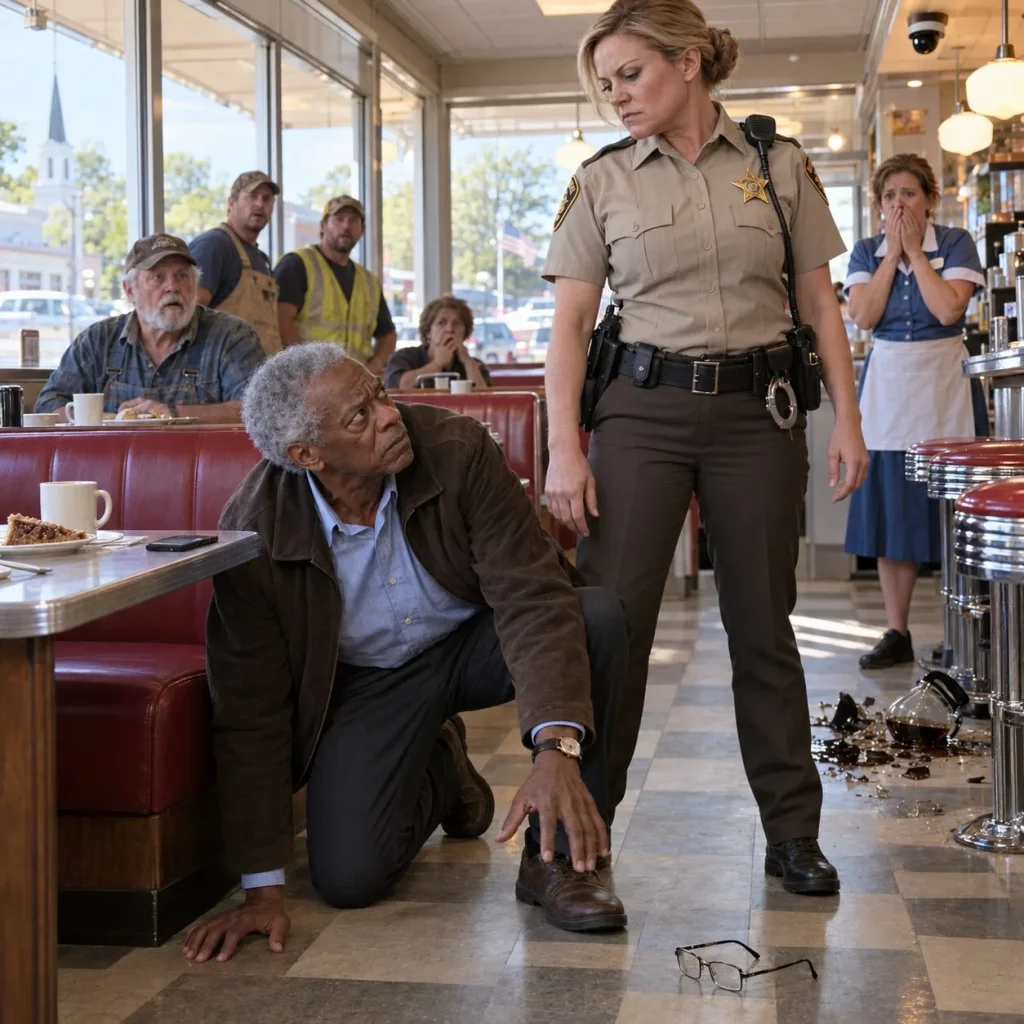
At the diner, Erica had done the same.
“What rule did I break?”
“You think you’re smarter than everybody.”
“What crime did I commit?”
“Your attitude.”

The subject moved from action to identity.
From what happened to who was asking.
That is a common tactic.
I had taught it in propaganda units.
Attack the messenger.
Redefine dissent as disloyalty.
Make the question itself evidence of bad character.
Seeing the pattern across thirty-six years frightened me more than the family grudge.
It suggested a culture of authority built around not being challenged.
I showed the old documents to Paul.
He spread them across his conference table.
“This helps context.”
“Does it help the case?”
“Maybe.”
“I hate lawyer answers.”
“You hired one.”
He smiled.
“Legal relevance and historical relevance are different.”
“Explain.”
“The old dispute may support motive if connected by Erica’s statements or other evidence.
But we don’t get to try her father’s conduct in your case.”
“I know.”
“You say that now.
Juries hear stories.
Lawyers have to keep stories tied to admissible facts.”
“You sound like me.”
“That is the worst thing anyone has said to me this week.”
We laughed.
The investigators interviewed retired Sheriff Thomas Mullen.
I was not present.
I later learned only what became part of the public record.
He acknowledged discussing me at home.
He denied teaching Erica to hate me.
He described the 1990 dispute as “political theater.”
He said his daughter had “always been sensitive” to criticism of the family.
That phrase stayed with me.
Sensitive to criticism.
Not responsive.
Sensitive.
As if scrutiny were an injury.
I thought about how institutions teach people to experience accountability.
If every question is treated as attack, every critic becomes enemy.
If every correction is humiliation, truth becomes threat.
Those habits can grow inside families and departments alike.
Thomas appeared on local radio after the video release.
He was eighty-one.
His voice sounded thinner than I remembered.
“My daughter made a mistake.”
The host asked, “Was it criminal?”
“I’m not a lawyer.”
“Do you think Marcus Bennett provoked her?”
A pause.
“Marcus has been provoking people for forty years.”
I heard the clip while driving.
My hands tightened on the wheel.
Then Thomas said:
“But she should not have hit him.”
I almost missed the sentence because I was angry at the first one.
Henry called later.
“Did you hear?”
“Yes.”
“What do you think?”
“He still thinks my questions are provocation.”
“He also said she shouldn’t have hit you.”
“I heard.”
“Both can matter.”
I smiled sadly.
“You’re becoming annoyingly mature.”
“You raised me.”
“Your mother raised you.”
“True.”
Thomas’s statement did not repair anything.
But it complicated the inherited story.
Even he could see a line had been crossed.
Erica’s supporters attacked him for saying so.
That fascinated me.
Once loyalty becomes absolute, even a father can become a traitor for acknowledging obvious evidence.
The newspaper published an editorial about that.
I did not read comments.
Mostly.
Another part of the investigation focused on my arrest report.
The first draft claimed I had “stood suddenly and advanced toward the sheriff.”
The diner video showed otherwise.
I stood only after the slap and after asking what crime I had committed.

A second draft softened the language to “became physically noncompliant.”
Aaron refused to sign it.
A third version eventually described the sequence more accurately.
The existence of multiple drafts became part of the inquiry.
I had taught students that archives matter.
Here was proof.
Version history can expose how institutions negotiate reality.
Who changed a word?
When?
Why?
What did the first account say?
What disappeared?
Digital records are often less romantic than secret letters.
They can be more revealing.
The state investigator showed Paul and me timestamps.
The original report was created before Erica learned the diner video had audio.
The revision came after.
That did not automatically prove intent.
But combined with the interview-room recording, it mattered.
Paul explained carefully.
“Intent is often inferred from sequence.”
“History is too.”
“Law and history are cousins who argue at Thanksgiving.”
“That is the smartest thing you’ve said.”
“Please don’t put it in a speech.”
I did.
The first time I saw the phrase “false arrest” in a legal document, I felt strange.
I had been teaching about wrongful state action for decades.
Now the language referred to me.
It made me think about every person whose case I had taught in one paragraph.
Plaintiff.
Petitioner.
Defendant.
Victim.
Those labels compress lives.
Behind each one is a morning.
A family.
A body.
A phone call.
A person who had plans for lunch.
I had planned to buy mulch after breakfast.
That detail became absurdly important to me.
I had mulch coupons in my wallet when I was arrested.
History does not care about mulch.





