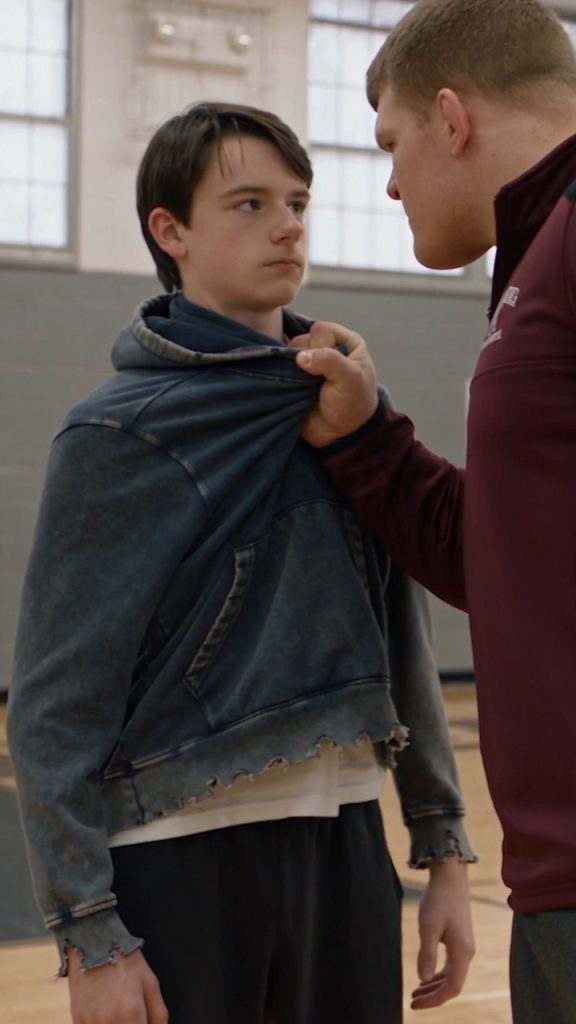
As I put the training description into words, I remembered my first year at the center. I had been smaller than nearly everybody in the room and painfully afraid of making a mistake in front of them. The instructor never told us that being able to redirect force meant we had defeated another person. She reminded us that a partner was a person who had agreed to practice, not an object to throw or a problem to solve. When someone lost their footing, the exercise stopped and everybody checked that they were all right.
That agreement had been absent in the gym. Brody had not given me a choice about whether to participate, and nothing in my years of practice guaranteed an outcome. I had seen the edge of the bleachers close behind me. I had known I might still be hurt. The only part of that training I could claim with confidence was the decision to stop my own movement once there was space to leave. Remembering the difference between practice and danger helped me explain why I had felt so shaken afterward, even though the video made me look composed.
Outside Ruiz’s office, school continued to grind through Thursday. Someone was practicing trumpet in the music wing. A delivery cart rolled down the corridor. Two students argued about who had borrowed a calculator. I thought of how the gym encounter had lasted less time than any of those ordinary exchanges and yet seemed capable of swallowing the entire week.
That afternoon Sarah told me she’d signed her statement. She approached me near the library entrance, where other students could see us but couldn’t easily hear our conversation.
“I told her about the collar, both charges, and what I said when I came down,” she said. “And that I didn’t ask Brody to confront you.”
“Did she ask whether you heard him tell the wrestlers to block the doors?”
“Yes. I said I didn’t. By the time I was paying attention to that side of the gym, they were already there.”
It was the answer I expected. I was grateful she’d told Ruiz the same thing she told me. Her statement wouldn’t transform her into a witness for something she hadn’t heard. That made the things she could describe more trustworthy.
“People keep acting like this happened because of me,” she said after a moment. “I don’t want my name used to justify hurting somebody.”
I looked toward the library’s glass door. “He said I didn’t belong at that table.”
“I heard.”
“He says a lot of things like that.”
“I know,” Sarah said. “I don’t think I ever noticed what it cost you to hear them.”
That was almost harder to hear than an apology. I didn’t want people turning my school life into a lesson designed for them. But she hadn’t asked me to reassure her. She’d acknowledged something she had previously overlooked. We stood for a moment as a group of freshmen passed between us, then went to our separate classes.
By Friday, the school had begun interviewing the JV wrestlers one at a time. I knew only that because Ruiz told me the process was underway, not because I could see what each boy said. Their answers weren’t mine to collect. Still, pieces of the social atmosphere reached me without anyone trying to deliver official information.
Two younger wrestlers quit talking when I entered a stairwell. Another approached me outside the computer lab and said, stiffly, that he’d been told to stand near the doors but had thought it was a stupid team joke. He wanted me to know he hadn’t expected anybody to be hit. I told him he’d need to tell Ruiz what he knew. He looked relieved that I hadn’t asked him for a statement on the spot.
In the gym, all eight had looked like one wall. Hearing that boy speak made me realize how much a wall depended on people deciding individually to keep standing there. Their responsibility didn’t vanish just because a captain told them what to do. But neither did every person inside it necessarily know every part of Brody’s plan.
That distinction mattered. I could resent them for helping trap me without claiming they were all there to watch me get punched. The more I thought about it, the more I wished adults had taught us that sort of difference before we had to learn it through somebody’s fear.
Brody did not approach me. The temporary plan kept him away from my classes and from the path I used to leave after school. Rumors kept reaching me anyway. One version had him badly injured. Another had me trained by some mysterious expert. A third said I’d arranged the whole thing because I wanted attention. Each was wrong. The injuries hadn’t required an emergency response; I’d named the community center openly; and there was not an amount of attention in the world worth being grabbed by the throat of my clothes while people cheered.
Owen began sitting at the back table on Friday. He didn’t ask permission or announce solidarity. He brought his lunch and a book and sat across from me, where there was an empty place. We spent most of the period comparing answers from our English reading. Near the end he said, without looking up, “They’ve been asking if I gave them anything.”
“What did you tell them?”
“I said I talked to the office. That’s true. I didn’t tell them what the video showed.”
“You don’t have to.”
He turned a page. “I wish I’d stopped filming and helped.”
I thought about the way I’d asked him to keep recording after the fall. It had been the only useful thing I could think to request at the time. But if a camera could preserve context, it could also make people feel they were helping when they weren’t.
“You could have called Coach,” I said. “Or told them to stop.”
“I know.”





