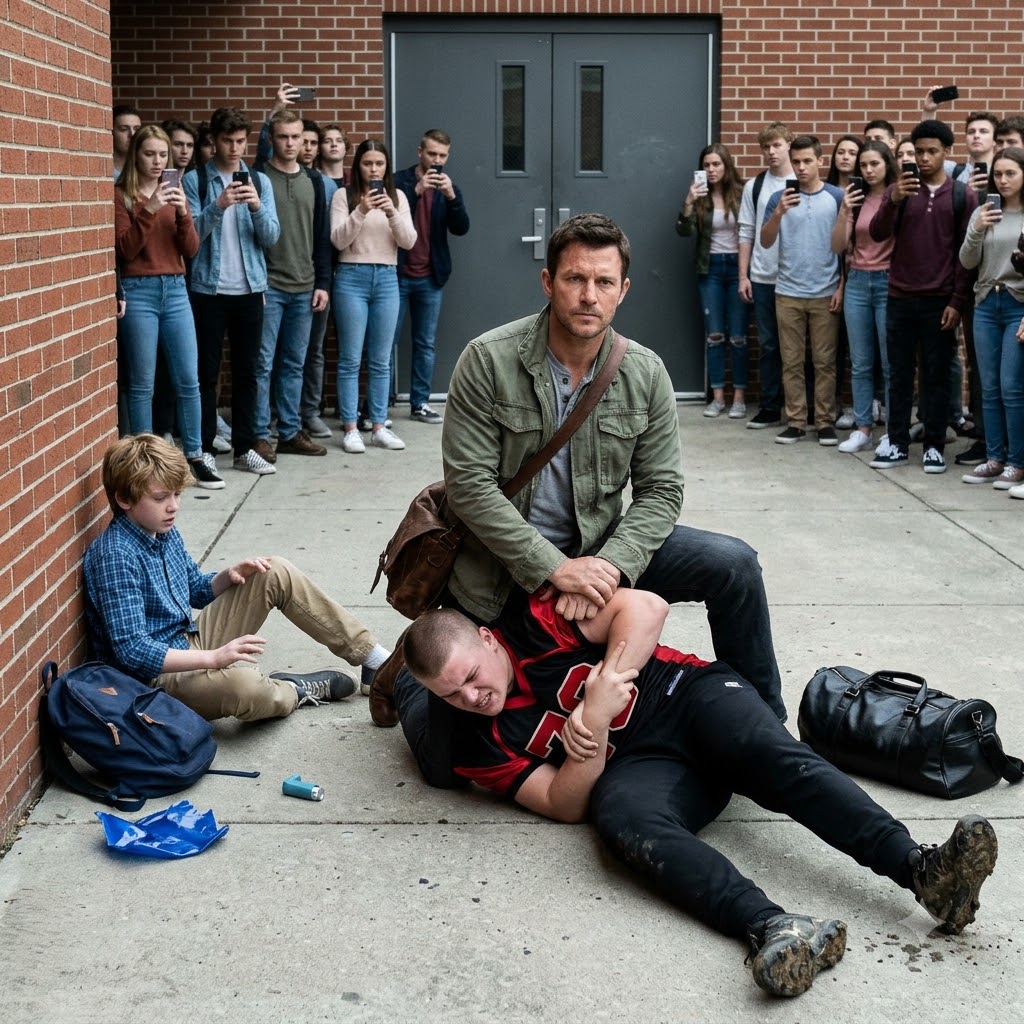
Coach Miller’s silence had finally become part of the record. The showcase was only days away. The recordings were clearer, the evidence stronger, and the official scrutiny of my threat more serious than before. I realized that the hardest test of the promise I’d made seven years earlier was no longer in the courtyard. It was about to happen in a room where nobody would even raise a fist.
I had always pictured accountability as a door that opened when someone finally found the right key. The morning of the review taught me that it was more like a room full of chairs, documents, and people who had to listen to one another when they would rather leave.
I attended from a private conference room near the district office, where I could sit comfortably and avoid the bustle of the school. Naomi had driven me. My ribs still complained when I moved too quickly, and I could not teach a full day yet, but I could speak clearly for an hour at a time. A district representative met us outside the room and explained which parts of the process concerned me and when I could be present. Marcus’s information and Toby’s medical information would not be offered to me simply because I was a witness and an injured employee.
“Good,” I said.
The representative looked surprised.
“I don’t want Toby exposed just to make my testimony easier,” I explained.
Inside, Higgins sat beside the student-services director, a district administrator and a note-taker. The school had offered Marcus an opportunity to respond to the specific allegations and review the relevant evidence under its rules. He had chosen to bring his mother as a supporter. He was eighteen; she was not appearing because the school pretended he was a small child, but because he wanted someone beside him. I saw them briefly in the corridor. His mother held a folder pressed against her chest. Marcus was in an ordinary gray sweatshirt rather than his navy team pullover. Without football insignia, he looked less like a public institution and more like a worried young man who had made terrible choices.
He saw me. For a moment I expected him to square his shoulders. Instead he turned toward the conference room door. That small retreat did not erase what he had done. It made me remember the fear I had deliberately put into him with my whisper.
The first portion of my statement concerned what I saw on Thursday, October fifteenth. I began with Toby backed against the gym wall and Marcus holding the inhaler. I described the drop, the right cleat, the punch to my left side and the fall. I did not imitate the sound of my ribs breaking. The hospital note confirmed two fractures; exaggerating the noise wouldn’t make them more fractured. I distinguished what I saw from what I inferred about Toby’s breathing. The nurse’s treatment record was a different document, handled by people authorized to consider it.
“Were you carrying anything when you approached?” the administrator asked.
“I’d left my coffee on a planter. My hands were free.”
“Did you touch Marcus before he struck you?”
“No. I stood near him and told him to return the inhaler.”
“Did you anticipate that he would hit you?”
“I thought he might try to intimidate me. I didn’t expect the punch at that moment.”
“And after you stood?”
I recited the exact whisper without changing a word. The note-taker asked me to repeat the final sentence, which I did. Hearing the threat in an ordinary meeting room stripped it of the theater I had wrapped around it in the courtyard. It sounded like a man indulging his worst self, not a hero delivering justice.
“What did you mean by taking his life apart?” the director asked.
“When I said it, I wanted him frightened. I pictured consequences, not another assault. But I chose language that could reasonably sound like a promise of harm. I was wrong to do that.”
“Was this an official disciplinary warning?”
“No. I wasn’t acting under a school procedure then. I spoke out of anger and pain.”
“Did you have any intention of seeking him out afterward?”
“No. I wanted medical help for Toby and for myself. I have not contacted Marcus since.”
I could see how badly some people wanted the answers to take a simpler shape. If I’d declared the whisper righteous, I could have become the dangerous teacher in Marcus’s telling. If I’d pretended I hadn’t said it, I would have asked officials to take my honesty on faith while withholding a relevant fact. I could do neither. The only useful thing was to tell the truth and accept that a truthful answer might cost me.
The director asked about my old fighting background, which had been mentioned in my own explanation of the seven-year reference. I described it without embellishment. The bouts were unofficial, often reckless, and had ended seven years before I arrived at Oak Creek. I did not hold a championship title. I did not claim secret training or a history of lethal violence. The main relevance was that I had once relied on aggression and had deliberately stopped doing so. That history explained my shame; it did not excuse the whisper.
At the end of my session, the administrator thanked me and said my professional conduct would be reviewed separately. I stepped into the hallway while others spoke. Naomi had brought a paperback, which she closed when she saw me.
“How was it?”
“Difficult. Necessary.”
“Both can be true,” she said.
For a while we sat without talking. I heard doors open and close down the corridor. I knew Marcus would have his own time to answer. I wanted to hear what he said and resented not being entitled to it. That resentment told me more about my appetite for control than about fairness.





