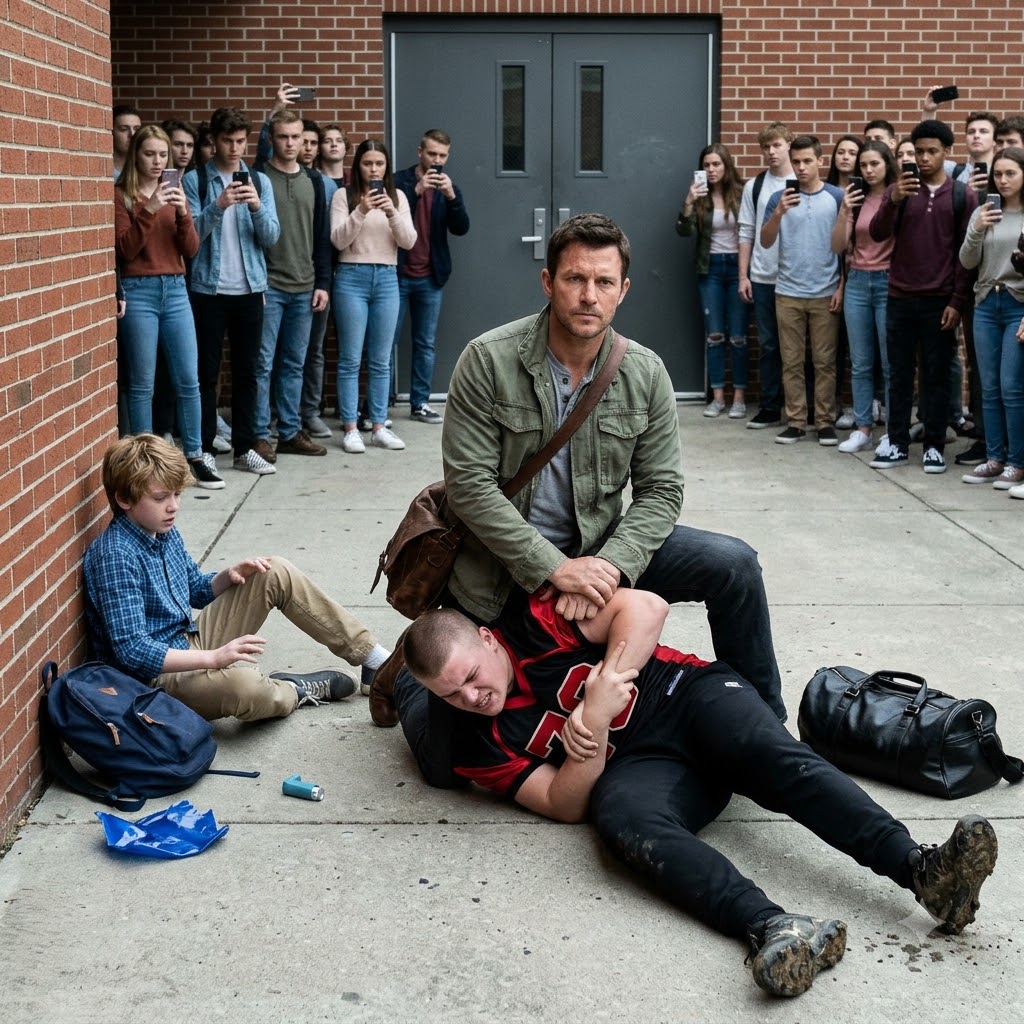
The hearings offered a kind of courage with none of that excitement. Marcus had to sit while his actions were described, and I had to do the same. The panel could accept medical facts without revealing every private detail of Toby’s care. It could find that Marcus broke an inhaler without pretending to know every thought he had when his foot descended. It could recognize my injury without deciding that my own response was beyond criticism. Those distinctions would never make a thrilling twenty-second video. They were what made the outcome worth trusting.
Before bed I looked again at the schedule for the showcase. I remembered how Miller had talked about the recruiting representatives who might attend, as though their presence enlarged Marcus’s rights. The opportunity mattered enormously to a young athlete. So did the chance of going to school without being trapped against a wall, which belonged to Toby no matter how many people came to watch football. A responsible decision would have to hold both realities in view without treating them as equal claims on someone’s safety.
The next morning I woke after an uneasy night and found two notices waiting. One said the factual findings regarding Marcus were ready for formal communication, with sanctions to follow from the authorized decision-makers. The other set the date for my own conduct determination. I looked from one to the other, suddenly aware that the story could end with the school’s football star removed from the field and me removed from a classroom I loved.
The showcase was approaching. No one had yet told Marcus whether he could take part. No one had told me whether I would be teaching when my ribs healed. For once, the silence wasn’t being created by fear of the largest boy in the courtyard. It was the sober interval before people entrusted with authority had to decide what their findings actually required.
The decision arrived on a Wednesday in two separate envelopes, although I received only the portions that concerned me. I had imagined the moment for nearly two weeks. I thought I would recognize it by some release of pressure, a sensation as clear as the first breath after stepping into cold air. Instead, I opened a letter at my kitchen table while the bakery downstairs unloaded flour and a truck backed through the alley with a steady electronic beep.
Principal Higgins had arranged a call to explain what the school could tell me. The district’s review had found that Marcus Thorne deliberately withheld and destroyed Toby Hendricks’s inhaler and struck me without justification. The school imposed a ten-school-day out-of-school suspension under its fictional conduct code. On his return, Marcus would have a documented reentry agreement, counseling requirements and a no-contact plan designed to protect Toby. His education would continue under the ordinary arrangements for a suspended student, and he would have a path to complete his schoolwork and graduate if he met the requirements.
The athletic decision was separate and unequivocal. Marcus was removed from Oak Creek High’s football roster for the remainder of the season. He could not participate in the regional recruiting showcase the school had advertised for the following week. There was no signed scholarship for the school to revoke, no decree preventing a college from ever considering him, and no promise that his life would be permanently ruined. He had lost a specific opportunity and the protection he’d assumed would always put him back on the field.
I sat with the letter in my hand. The language was ordinary and specific. It did not use the words I had whispered into Marcus’s ear. It did not need to.
“Does his family know?” I asked Higgins.
“Marcus received the decision through the procedure explained to him. He’s been informed of the available review options. I can’t discuss private family conversations.”
“All right.”
“The school has also completed its review of the football program’s handling of prior concerns,” she continued. “Coach Miller has received a formal reprimand. Athletics will no longer have the informal role it previously exercised in student-discipline and eligibility decisions. Those matters are being managed by the appropriate offices, with additional oversight.”
I recalled Miller saying that a young man could lose everything over one bad minute. The district had recognized that the minute did not emerge from nowhere. His failure to take earlier warnings seriously had not caused Marcus’s fist to move, but it had helped create a world in which Marcus believed nobody would challenge him. Removing that false assurance might protect students who would never know our names.
Higgins did not describe the reprimand as the end of all institutional work. She said the district would review referral practices, make the distinction between athletic coaching and student safety explicit to staff, and check whether reports were reaching the people empowered to respond. No one could guarantee another student would never be bullied. They could create a better chance that the next warning wouldn’t disappear inside an office marked TEAM BUSINESS.
“What about Toby?” I asked.
“He and his guardian have a safety plan. He has a replacement personal inhaler, and the school-held backup remains available under his care plan. We’re working with him on what he wants his school day to look like. He knows whom to contact and how to report a concern without confronting Marcus.”
I closed my eyes briefly. Of all the decisions announced that morning, this one felt closest to the center. A child who needed help had a plan made around his needs, not around the athletic schedule.
“Please tell his guardian I wish them well,” I said.
“I can pass that along if they want.”
We spoke about my return to work, which still depended on medical clearance and an agreement about safe activities. Then Higgins said there was a second letter that would arrive through my employee representative. The professional-conduct review of my whisper was complete.





