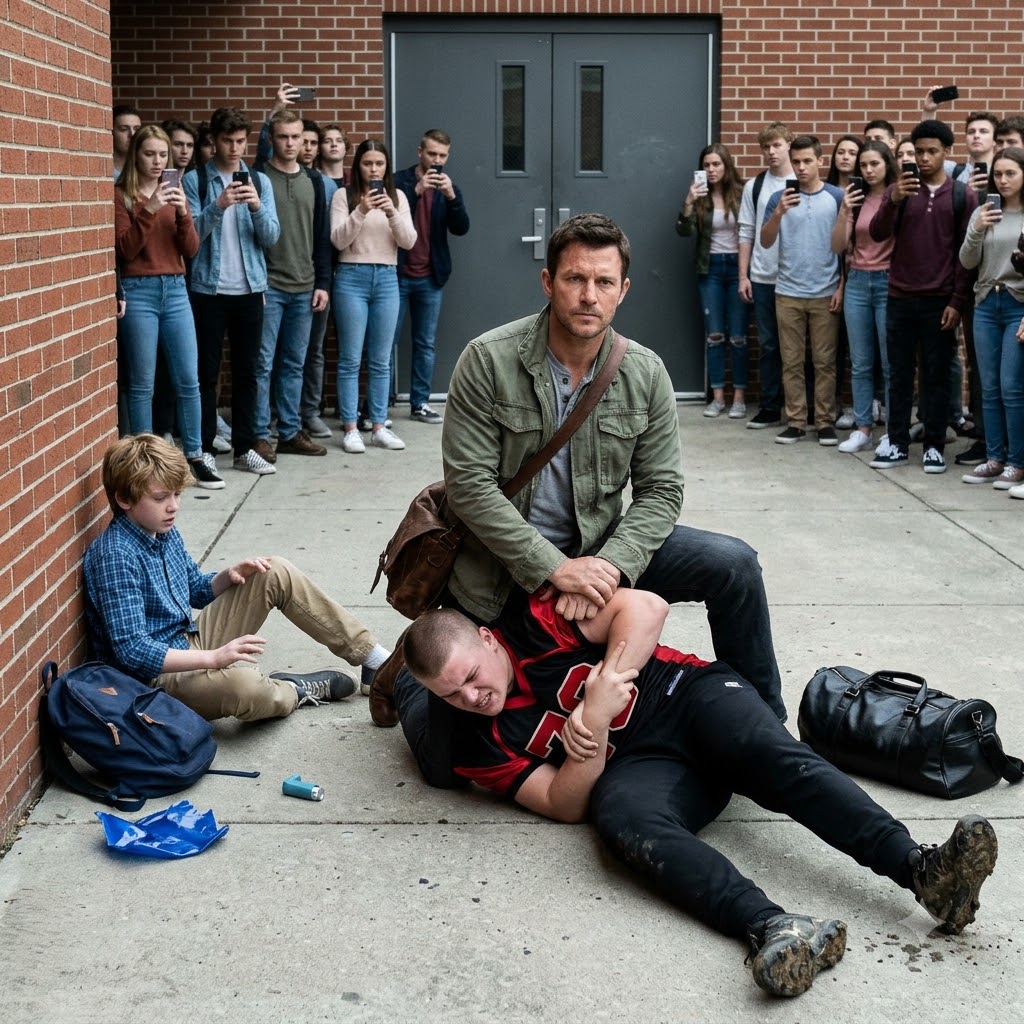
I began making brief, timely reports when concerning behavior occurred, and I followed up with the appropriate staff rather than assuming a nod meant the issue was resolved. Most of the incidents were ordinary: students shoving at a crowded locker, a group excluding someone during a project, a child whose joking voice became less certain when the audience laughed. Nothing resembled the courtyard crisis. That was exactly the point. Intervention ought to begin before a situation becomes unforgettable.
I saw Marcus only once that term, from across a hallway after his suspension had ended. He was carrying a folder rather than wearing his athletic gear, and a staff member was walking nearby as part of the agreed reentry arrangements. He glanced in my direction, then kept going. We did not exchange threats, apologies or dramatic looks. There was a no-contact arrangement protecting Toby and a school process for any future concerns. I did not need to force a private reckoning to prove the public one had happened.
He had missed the showcase. The team had played the remainder of its season without him. He faced schoolwork to make up and counseling obligations to meet. I could not say whether he accepted the reasons or merely resented the consequences. I hoped, without being entitled to expect it, that he might eventually understand the difference between having a talent and having permission to hurt people. The future had not been erased from him. He would have to build it without the same shortcuts.
Toward winter break, my juniors returned their final essays. I gave them a choice among questions about Gatsby’s ambition, Daisy’s choices, and Nick’s responsibility as a witness. One student wrote that witnessing harm did not automatically make a person heroic; it created a responsibility to describe what happened as accurately as possible and to act when another person needed help. I circled the sentence and wrote, What does responsible action look like before a crisis? It was a question I was still answering.
On the last day before break, I took my coffee outside. The courtyard was nearly empty, and the wind had calmed. I stood beside the planter where I’d left my cup that October afternoon. The wall had been washed by rain. No visible mark remained where the inhaler had broken. There was nothing in the paving to show where I’d fallen.
For a long time I had thought my life could be divided into two kinds of men: the one who fought and the one who walked away. The courtyard had shown me the limits of that story. Walking away from violence wasn’t the same as walking away from people in danger. Standing up wasn’t always the same as preparing to strike. And making someone afraid wasn’t the same as making them accountable.
I had once told Marcus I would take his whole life apart. The words were wrong. I could not know or control the whole of his life, and I had no right to try. What followed was not the destruction I’d promised in anger. It was a record of his choices, a fair opportunity to answer, consequences proportionate to what had been established, and a chance—if he chose it—to change the choices he made next.
Toby was back in school. He could reach his medication, speak to adults who would listen, and decide whether to write about mysteries rather than the worst lunch period of his life. That was the future I cared about protecting. I could not guarantee he would never face cruelty again. I could help make sure he was not expected to face it alone.
I lifted the cup, felt the familiar but fading tenderness in my ribs, and went inside when the bell rang. My students were waiting, and there was work to do.





