I opened the planner to September. My handwriting was small, economical and sometimes impossible even for me to read. On the seventeenth I had written: Outside east lockers, 12:27. Thorne blocked smaller student; moved after I intervened. Student declined to give name. On the thirtieth: Auxiliary gym entrance, lunch. Thorne and two teammates surrounding boy with gray backpack. Told them to separate. No physical contact observed. The third note described Marcus laughing at a freshman who dropped a cafeteria tray. I had written that I could not tell whether any threat had been made.
The qualifications mattered. A fair record does not become more useful because its writer is angry. I had no magical catalog of Marcus’s wrongdoing, only three observations, dated before today, with their limitations intact.
I opened an email draft to Principal Higgins. At first I wrote: Marcus attacked me without provocation. The statement was true as far as the punch was concerned, but it skipped what would come later in the chronology. I added a line about the inhaler. Then I stopped at the part where I had risen from the pavement.
There was a temptation to describe my whisper as a warning that I would take official action. That was what I intended to do now. It was not what I had said. If I disguised the words, my account would have the same flaw as those cropped videos: technically recognizable pieces arranged to steer the viewer away from an inconvenient fact.
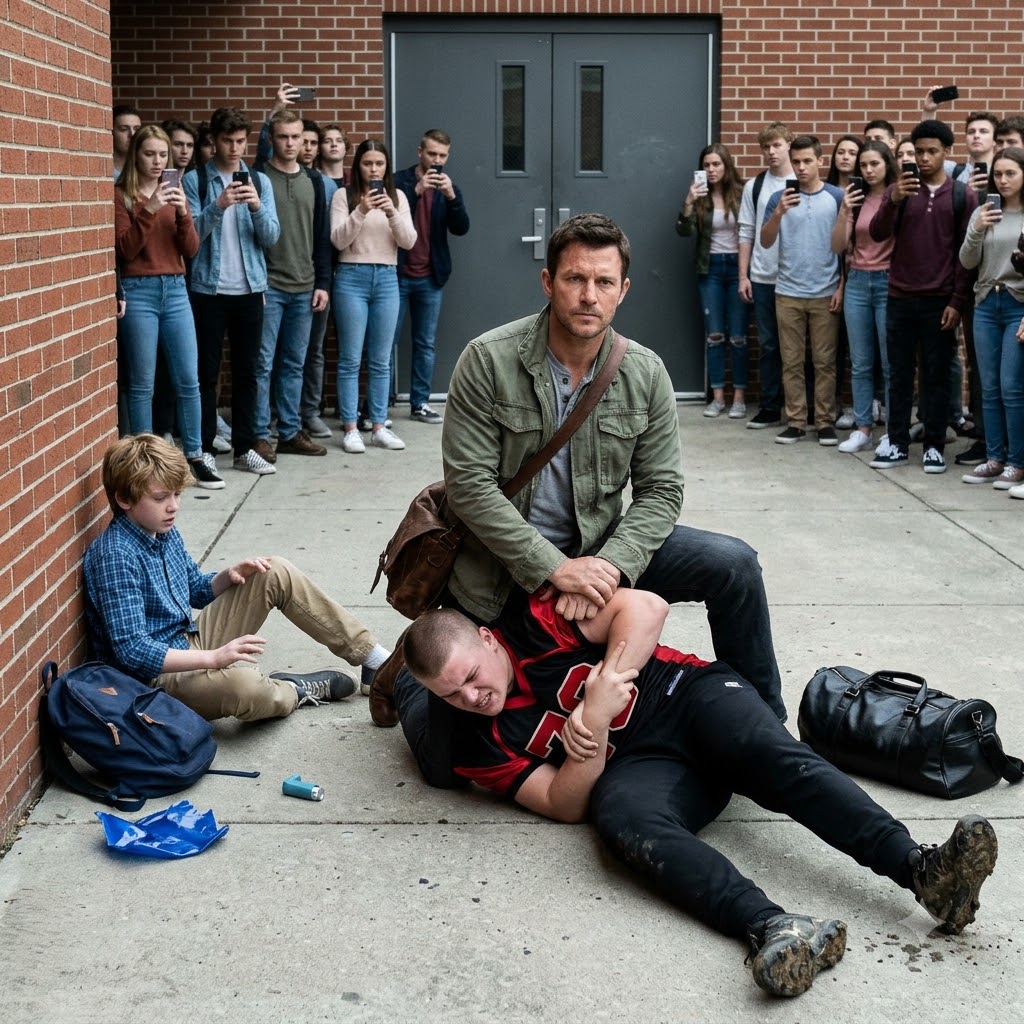
The photograph of the broken inhaler appeared in my mind. Somebody had put it in an envelope because damaged objects do not get to explain themselves. I thought about Toby, sitting frightened and short of breath while the adults argued over a star player’s reputation. I thought about the way Marcus’s expression had changed when I whispered. It was easy to feel powerful when the other person was afraid. That was precisely why I had promised to stop.
I deleted the half-true sentence and began again from the moment I first saw Toby pinned against the brick. I wrote until the paragraph reached the moment I had stood up, and left my cursor blinking there. In the morning I would have to decide whether to type the words that could put my own job under review. Marcus had already begun telling his version. Mine could not remain unfinished forever.
The next morning I woke before my alarm because my ribs had decided to make sleep an unreliable activity. It took several minutes to sit upright, a careful movement that left me irritated at the basic architecture of the human body. The doctor had given me a plan for managing pain and preserving normal breathing. I followed it. Nothing about the old fights qualified me to improve upon medical advice.
Outside, delivery trucks made their rounds beneath the bakery windows. It was Friday. At Oak Creek High, that meant the football players would wear their school colors, the pep club would hang banners for the evening game, and students would gather at lunch to speculate about who had earned a place in the starting lineup. Yesterday I would have known the rituals without thinking about them. Today I wondered how many people had already decided that the day’s most important problem was whether Marcus could play.
I returned to the email draft. I described what I had seen of Toby’s distress, Marcus’s grip on the inhaler, the deliberate stomp, the punch, and my fall. Then I wrote the exact words I had whispered. I acknowledged that Marcus alone could have heard them and that I had intended to frighten him. I added what I did next: requested medical assistance, told Marcus to step away, and did not strike anyone. Finally, I listed the limited prior observations from my planner, making clear they were separate incidents and not firsthand knowledge of every rumor circulating at school.
Reading the finished account was unpleasant. It showed someone who had tried to protect a vulnerable child, someone who had been hurt, and someone who had answered an act of cruelty with threatening language. All three descriptions belonged to me. I signed, dated and sent it to Higgins and the district employee she had identified for incident reports.
The reply arrived within the hour. She thanked me for giving a detailed account and asked whether I could attend a brief remote conversation that afternoon, with a representative for employees available if I wished. She also told me not to contact students to gather statements. The school had a process for voluntary submissions and parent communication, she said, and she wanted to keep the children from feeling pressured by an injured teacher.
I appreciated the instruction more than I might have a day earlier. My concern for Toby did not entitle me to use his experience as ammunition in an argument with Marcus.
At ten, Naomi delivered the reading materials I’d left in my classroom. In the bag was my annotated copy of The Great Gatsby and a thick envelope of get-well cards. She looked at the email open on my laptop.
“You wrote it all?”
“Including the part I’d rather forget.”
“Good,” she said. Then, more gently, “I know it cost you something.”
I wanted to tell her that truth was easy for an English teacher. It isn’t. Grammar lets us put difficult things into passive constructions. A threat was made. A student was struck. We can write sentences that conceal the actor so thoroughly that responsibility becomes a weather event. My account used names and verbs.





