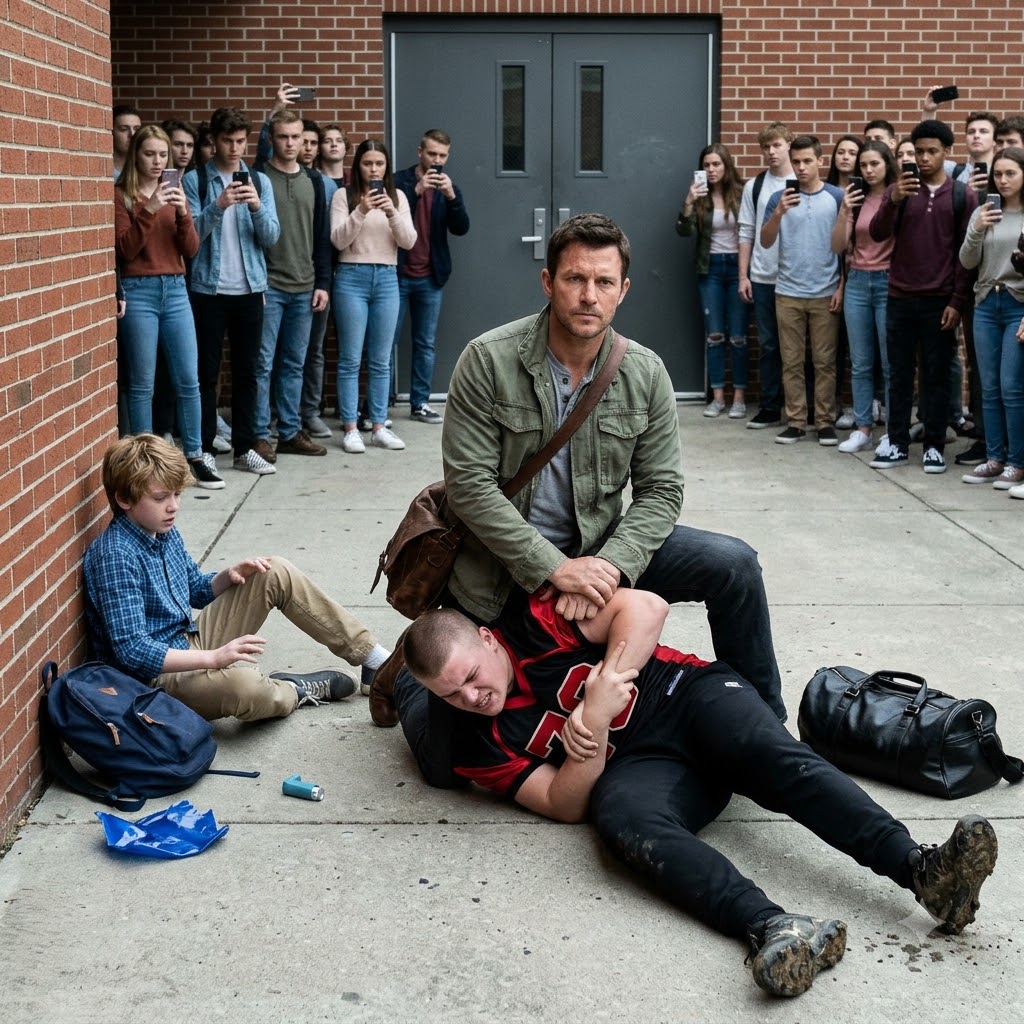
I had spent much of the week wanting to reduce the issue to a single moral question: could the school stop a bully? The calendar reminded me that even an outcome I considered deserved would land inside a complicated life. Marcus would have to explain an absence to coaches and perhaps to people he hoped would recruit him. He might lose an opportunity he’d trained years to reach. That prospect did not make his conduct less serious. It made the decision more serious, and therefore worth doing correctly.
On Thursday morning, a week after the assault, Toby’s guardian sent a brief message through the school office. Higgins asked permission before passing it to me. It said Toby had wanted to thank me for approaching Marcus and for calling for help. He did not want to discuss his health publicly. He was tired of people treating him as a symbol in their arguments about football, and he hoped I would understand.
I wrote a reply for the office to forward if his guardian wished. I told him he did not owe me thanks, that I was glad he was receiving care, and that I would respect his privacy. I wanted to say I was sorry I hadn’t stopped Marcus before the inhaler broke. After several minutes, I included the sentence without asking him to absolve me. Apologies can be demands in disguise when we expect the person who suffered to make us feel better. I left him free not to respond.
That afternoon the district held an information meeting with relevant staff. I attended remotely for the portion concerning my prior observations and the professional response. Coach Miller was there, visibly uncomfortable, his school-logo quarter-zip filling most of his square on the screen. Higgins and the student-services director kept the discussion narrow. They did not ask him to diagnose Toby or to evaluate my ribs. They asked about his knowledge of earlier complaints and his attempts to influence the interim athletic process.
Miller began with a description of a competitive football program. He said his players experienced stress and scrutiny. He said that successful students could become targets of exaggeration and resentment. None of these claims addressed why Toby’s inhaler had ended up crushed under a shoe. Higgins let him finish and asked when he had first been told that Marcus intimidated younger students.
He rubbed his jaw. “Kids come to me about disagreements all the time. Most of it gets sorted out.”
“That’s not a date,” the director said.
“I don’t keep notes on every argument.”
“We’re asking whether you recall a report made to you before October fifteenth.”
He remembered, eventually, that another coach had mentioned Marcus blocking a student’s path near the field house. He had told the staff member to speak with the boys and get them back to class. He also recalled hearing that a teacher had objected to Marcus’s behavior in the gym corridor. He hadn’t checked whether either concern had been recorded beyond athletics.
“I thought keeping it in the program would let us handle it quickly,” he said.
Higgins asked whether he’d checked with the affected students afterward.
“Not personally.”
“Then you don’t know whether they felt safe afterward.”
Miller’s face tightened. “I know Marcus. I’ve coached him for three years. He’s emotional, yes. But he works hard.”
“Those facts can coexist,” Higgins said. “They don’t answer the question.”
I watched him take in the distinction. He wasn’t a caricature rubbing his hands over a championship ring. He looked like a man who had allowed the ordinary advantages of his job to shape what he considered important. Players came to him wanting field time. Parents wanted wins. Donors wanted banners. The younger children who found Marcus frightening had no comparable audience at the stadium. Over time, being useful to the program had become his private measure of a student’s worth.
The director asked about the request to clear Marcus for practice. Miller said the showcase mattered and that waiting might impose a consequence before anyone had reached a formal finding. She acknowledged that interim measures should not be punitive findings in disguise. Then she explained that an interim safety assessment was meant to protect students and prevent further contact while facts were checked. Athletic convenience did not remove those responsibilities.
“I understand,” he said. He did not sound as though he did.
At the end of the meeting he made a statement that lingered with me. “I always thought we’d know when something truly serious happened.”
Higgins did not raise her voice. “A student telling us he’s being cornered is serious enough to assess. We shouldn’t have to wait for an ambulance.”
Miller looked down at his desk. I couldn’t tell whether he agreed or was calculating the implications. The answer mattered less, at that moment, than the fact that somebody had finally said it where the responsible adults could hear.
That evening I returned to the Gatsby essays. My concentration lasted about twenty minutes at a time, so I worked in short sessions. A student had written that Gatsby built his entire life around a green light and never checked whether the person he wanted could be happy inside his dream. Another argued that the novel showed how wealth could turn the consequences of carelessness into someone else’s burden. I marked both passages with questions instead of verdicts. It was a reminder that I knew how to help young people examine difficult choices without deciding their futures for them.





