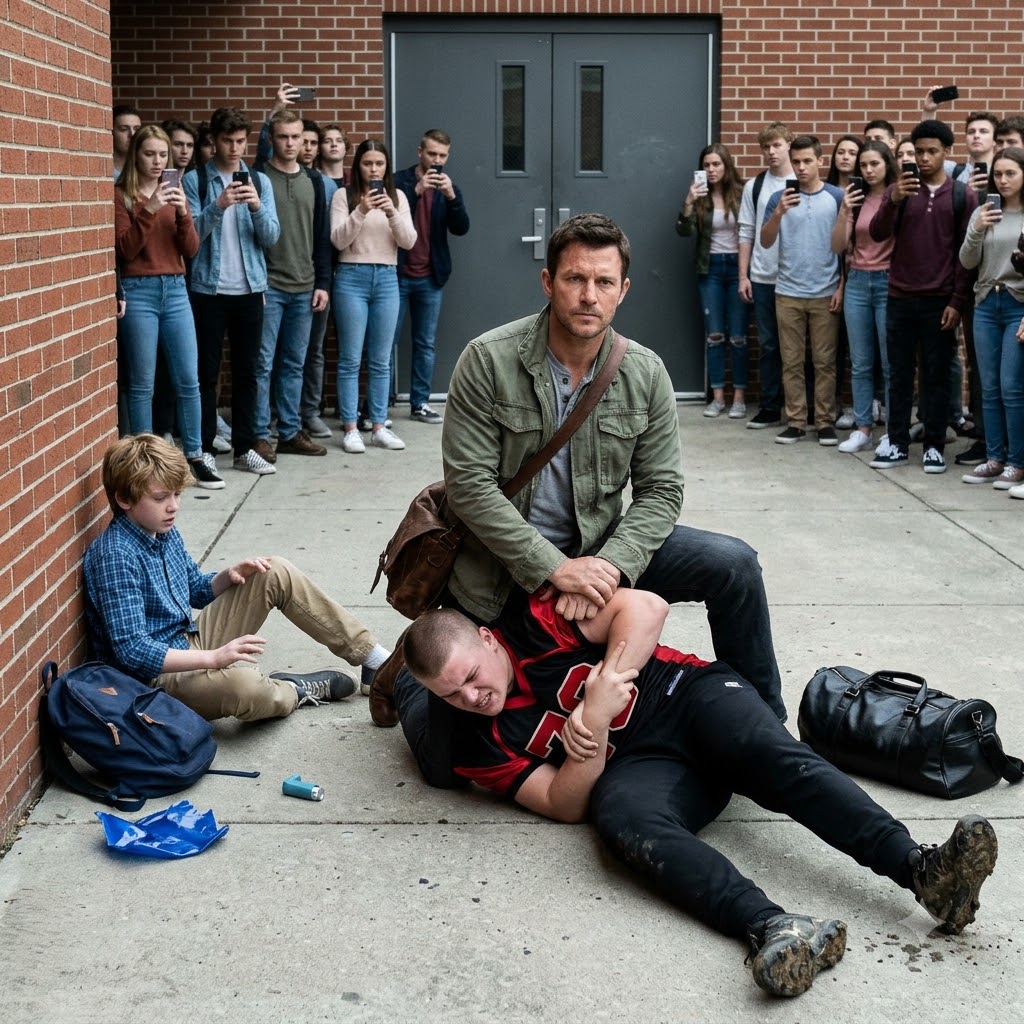
The phone vibrated. This time it was a call from a number I knew: a fellow English teacher, Naomi Bell. Naomi taught tenth grade, helped organize the school literary magazine, and had an irritating habit of noticing when I was tired before I admitted it.
“Are you all right?” she asked.
“Two ribs broken. Not a sentence I’d put in a recommendation letter.”
“Don’t joke.”
“I’m listening to the doctor.”
“Toby’s guardian is with him. He’s being monitored. That’s what the office told us, and that’s all I know.”
“Good. That’s enough.”
Naomi hesitated. “A few students are saying Marcus told them you said you would kill him.”
I closed my eyes. The fluorescent light still seemed visible through my eyelids.
“Did you?” she asked.
“I said something close to that.”
“Eli.” She almost never called me by my first name. “What exactly?”
I told her.
She remained silent long enough that I could hear voices outside my cubicle. Finally she said, “You need to tell Higgins that yourself. Not because Marcus deserves a clean version of what he did. Because you can’t let someone else become the only person willing to say what happened.”
“I know.”
“Do you?”
I looked again at the screenshot, at the frame of me reaching forward, and understood how badly I wanted to answer the accusation by pointing at everything Marcus had done. His acts had been worse. They had endangered a child and injured an adult. That did not turn my own words into good ones.
“I will write it down,” I said.
Naomi asked whether I needed someone to pick up groceries or to drive me home after discharge. I accepted the ride. It embarrassed me. I let it embarrass me. She had been trying to teach me for three years that accepting ordinary help was not a surrender.
By the time I was cleared to leave with instructions and follow-up, the school day had ended. The parking lot outside the hospital held the same imported SUVs that lined Oak Creek driveways. Naomi arrived with a pillow for me to hold gently against my chest during the ride and a look that discouraged heroics. I eased into the passenger seat inch by inch. The motion proved that breaking two ribs did not confer any special insight about the human condition. It made getting into a car miserable.
“Your students are worried,” she said as she pulled out. “The juniors from your last class asked whether you’d be back tomorrow.”
“Tell them to finish their Gatsby annotations.”
“They’ll be comforted to know you’re still annoying.”
The road curved past a shopping plaza and a row of houses with fresh fall wreaths on the doors. Oak Creek was one of those communities that treated the schools as a symbol of prosperity. The football stadium had a digital scoreboard, a donor plaque beside the gates, and lighting bright enough to reach the farthest parking row. The library’s ceiling leaked when the snow melted. The contrast had seemed funny when I arrived. It stopped being funny after I learned which student complaints could be quietly postponed until after a championship game.
I had seen Marcus corner a ninth grader near the vending machines in September. The younger boy had escaped by squeezing sideways between two lockers. Two weeks later I saw Marcus and his friends surround another student outside the auxiliary gym. I intervened each time and wrote down what I had personally observed in the small dated planner I used for lesson preparation. On one occasion I spoke to a staff member who said the football program could handle its own boys. I had not witnessed everything students whispered about Marcus. I knew better than to record rumors as facts. Still, I wondered whether my habit of making a note and walking on had become another form of staying down.
“You’ve gone quiet,” Naomi said.
“I was thinking about the first time I saw him scare a smaller kid.”
“He has a reputation,” she answered.
“A reputation isn’t a report.”
“No. And a report isn’t much unless somebody reads it.”
That was the kind of sentence I would have given a student to examine for its hidden assumptions. The more I thought about it, the less I liked what it said about me.
At my apartment, Naomi carried my bag while I climbed the stairs slowly. I lived in a two-bedroom place above a bakery that started work before dawn. Books filled the second bedroom, which I called a study in an attempt to disguise the fact that I never had visitors. On my desk sat a stack of essays about whether Gatsby’s hope was admirable or destructive. I had assigned the question before the incident. It felt unfair to discover that it now applied to me.
Naomi set a container of soup on the counter. “You’ll need another adult if things get worse tonight,” she said. “Call me or get medical help as directed.”
“I heard the doctor.”
“Then practice listening.”
After she left I placed the hospital papers beside my lesson planner and unfolded the discharge instructions carefully, as if they were an examination I had not prepared for. I called the designated medical number to clarify one of the warnings and wrote the answer down. I was not going to make my own recovery an argument between pride and common sense. Toby had already had enough of adults making foolish decisions around a medical emergency.





