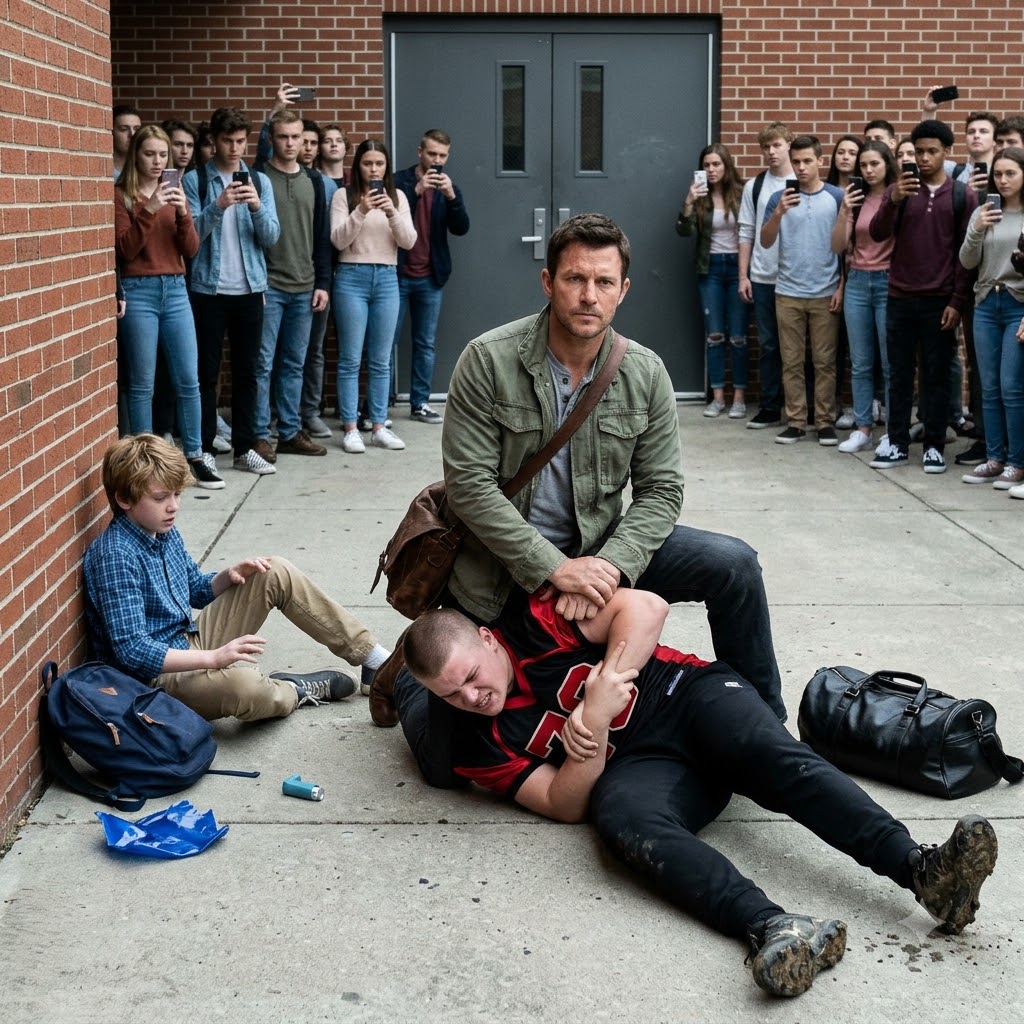
There were other priorities in that building. Somewhere behind another closed door, a freshman had described being frightened enough to cry while people played keep-away with his rescue inhaler. That boy would go back to school whether the team won another game or not. I wanted the adults choosing his safety plan to think about the moment when he would first have to walk past the gym again.
I asked Higgins, during a permitted break, whether someone was planning that return with Toby and his guardian. She said the student-services team had already met with them and would keep adjusting the plan to his preferences. She did not offer the details. The refusal was reassuring. It meant the plan belonged to Toby, not to the teacher who had become its most visible witness.
Late in the day the student-services director informed us that the panel had completed its review of the central factual allegations. The images, firsthand statements and physical record were sufficiently consistent for the panel to find that Marcus had knowingly kept Toby from his inhaler, destroyed the device under his cleat, and struck me without a physical attack from me first. The medical documents established that Toby required urgent attention and that I’d sustained two left rib fractures. They did not prove every allegation about previous incidents, and the panel did not pretend they did.
The final school and athletic consequences had not been decided. The officials were to apply the district’s conduct code, consider interim measures already taken, and communicate their decisions in writing. They also had to review what the adults had done with earlier concerns. The finding was serious. It was not a verdict on Marcus’s entire remaining life.
I had expected to feel victorious. Instead I sat very still. The danger Toby had faced was finally described in language no one had to embellish. There was relief in that. But an official finding could not travel backward to put the inhaler intact in his hand or erase his fear. It could only shape what happened next.
The director said my professional-conduct matter would proceed independently. “Mr. Vance, we have the account you gave and the context of the assault. A separate written determination will follow. You are entitled to know that a serious threat, even when made after injury, is a matter the district must address.”
“I understand.”
“Do you wish to add anything?”
I had thought about that question for days. A younger version of me might have said Marcus deserved to be terrified. Another version might have insisted I was too badly hurt to be accountable. The room was quiet. Nobody was forcing a theatrical confession.
“I want Toby to have a safe school day,” I said. “I want the record to say what Marcus did. And I want the record to say what I did. I don’t ask you to pretend my words were harmless. I’m asking you to judge them as words I did not act on, in the circumstances where I said them.”
The director wrote something down. I could not know whether it helped.
When we finally left, the sky had grown dark and the wind had turned sharp. Naomi guided me to her car, refusing my offer to carry the folder. We drove past the stadium entrance, where students were setting out signs for the recruiting showcase. The event was scheduled for the following week, close enough that the athletes’ preparations were already visible. I remembered Marcus on the day of the punch, looking from my face to the crowd to judge whether he’d retained his authority. A week and a half later, his power was being measured by very different people, with criteria a shove could not change.
“You got the finding you hoped for,” Naomi said after a while.
“The facts were recognized. I didn’t know how much I needed that.”
“And what about the rest?”
“We still don’t know the consequences.”
At home I found a message from the school asking employees not to speculate publicly about confidential decisions. I agreed. The local discussion page was already inventing outcomes: expulsion, arrest, a permanent college ban. None had been announced, and several were far beyond the school’s authority. I wanted to correct the falsehoods but understood that doing so could expose private student details. Sometimes silence is negligence. Sometimes it is restraint. The difficult work was learning which one I was practicing.
I put the phone aside and tried to write a note to Toby. I began with a sentence about how pleased I was that the school had recognized what happened. Then I saw how easily the note turned into a request: tell me that I did enough, tell me that you feel safer, tell me that my injuries meant something. I set the paper down. Toby had already sent the message he wanted me to receive through his guardian. I did not need to create another occasion for him to comfort an adult.
Instead I wrote in my teaching journal about the distinction between courage and performance. I had once watched a terrified man win an underground fight by refusing to back away. The audience cheered because he kept coming forward. What happened after the fight was less memorable to them: the man’s swollen hands, his confusion about why he had agreed to participate, the quiet ride home. The spectators had bought the shape of a victory without accepting any responsibility for its cost. In the school courtyard, the crowd had looked at Marcus and me as though an answer must be delivered by the stronger body. I had nearly complied, not by punching but by reaching for the old language of fear.





